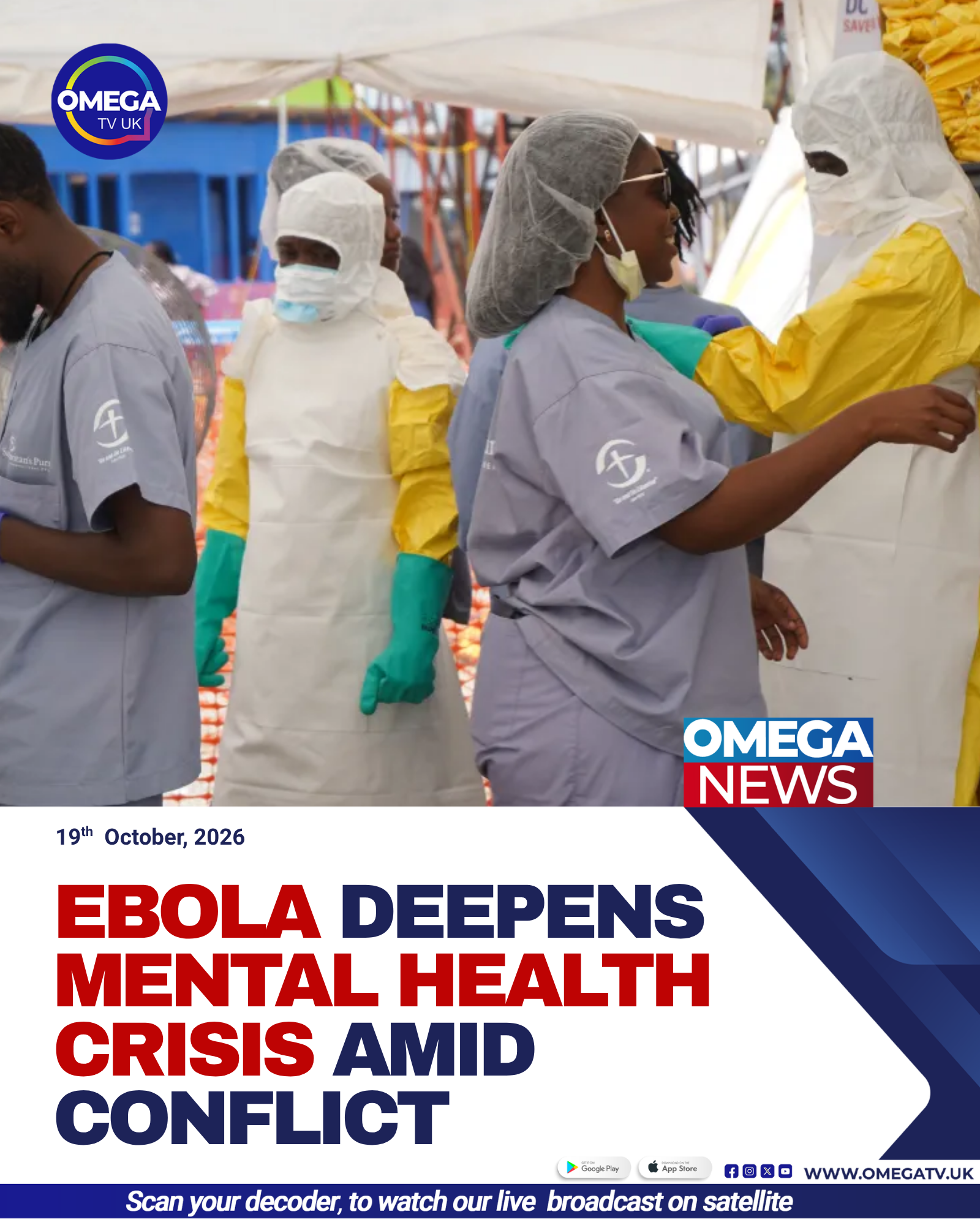
Ebola Deepens Mental Health Crisis in Congo
The Ebola outbreak in eastern Democratic Republic of Congo is worsening an already fragile mental health situation, with health workers warning that stigma, bereavement and armed conflict are adding to the psychological suffering of patients, survivors and affected families.

Families face grief and isolation
At a mental health treatment centre in Bunia, one woman is receiving psychological support after losing two close relatives and three members of her extended family to Ebola. Beyond the pain of losing loved ones, she says fear of the disease has left her feeling isolated from her community.
“We were afraid, but we went to the hospital. Everyone at home was afraid. The neighbours are afraid to come near us,” she said. “It is as though you are alone because of this disease.”
Her experience highlights how the effects of an outbreak can extend beyond physical illness, leaving families struggling with grief while facing rejection and fear from people around them.
Stigma affects patients and survivors
Healthcare workers say stigma surrounding Ebola affects not only those infected but also survivors, relatives and medical personnel. The fear of transmission can lead to social isolation, making it harder for affected people to receive emotional support during recovery.
Anicet Katembo Vyaluva said the impact reaches across the healthcare community and the wider population. Patients receiving treatment may feel abandoned, while survivors can face discrimination after recovering from the disease.
He explained that isolation within communities can deepen the psychological distress experienced by people already coping with the consequences of Ebola.
Health workers warn that these experiences may leave lasting emotional effects, particularly for people who have lost several family members or faced rejection while seeking treatment.
Conflict increases community vulnerability
The outbreak is unfolding amid continuing armed conflict and displacement across eastern Congo, where insecurity has left many communities vulnerable.
Mirella Riccardi, who works in mental health and psychosocial support for Médecins Sans Frontières, said conflict has weakened communities that were already struggling with difficult circumstances.
“The crisis, the war, the conflict, internal conflict makes an already fragile community even more vulnerable,” Riccardi said. “So Ebola, it’s one more element to fragilize the condition of mental health of people.”
Her comments underline how disease outbreaks can compound existing humanitarian challenges. People dealing with displacement, insecurity and disrupted access to essential services may have fewer resources available to cope with bereavement and psychological distress.
Psychological support remains essential
Aid workers say mental health care must remain part of the response to Ebola, alongside medical treatment and efforts to control transmission.
Psychological support can help patients, survivors and grieving families process their experiences while addressing the fear and isolation associated with the disease. Health workers also stress the importance of helping communities understand Ebola to reduce stigma against those affected.
Without adequate support, families may continue to experience emotional distress long after their immediate medical concerns have been addressed.
Community support can help reduce stigma
The experiences of patients and survivors highlight the need for communities to respond with compassion rather than fear. Health workers say reducing isolation and improving access to psychosocial care are important parts of supporting people affected by the outbreak.
As eastern Congo continues to face Ebola alongside conflict and displacement, aid organisations warn that the psychological consequences must not be overlooked. Addressing grief, stigma and emotional trauma will remain an important part of helping affected communities recover.