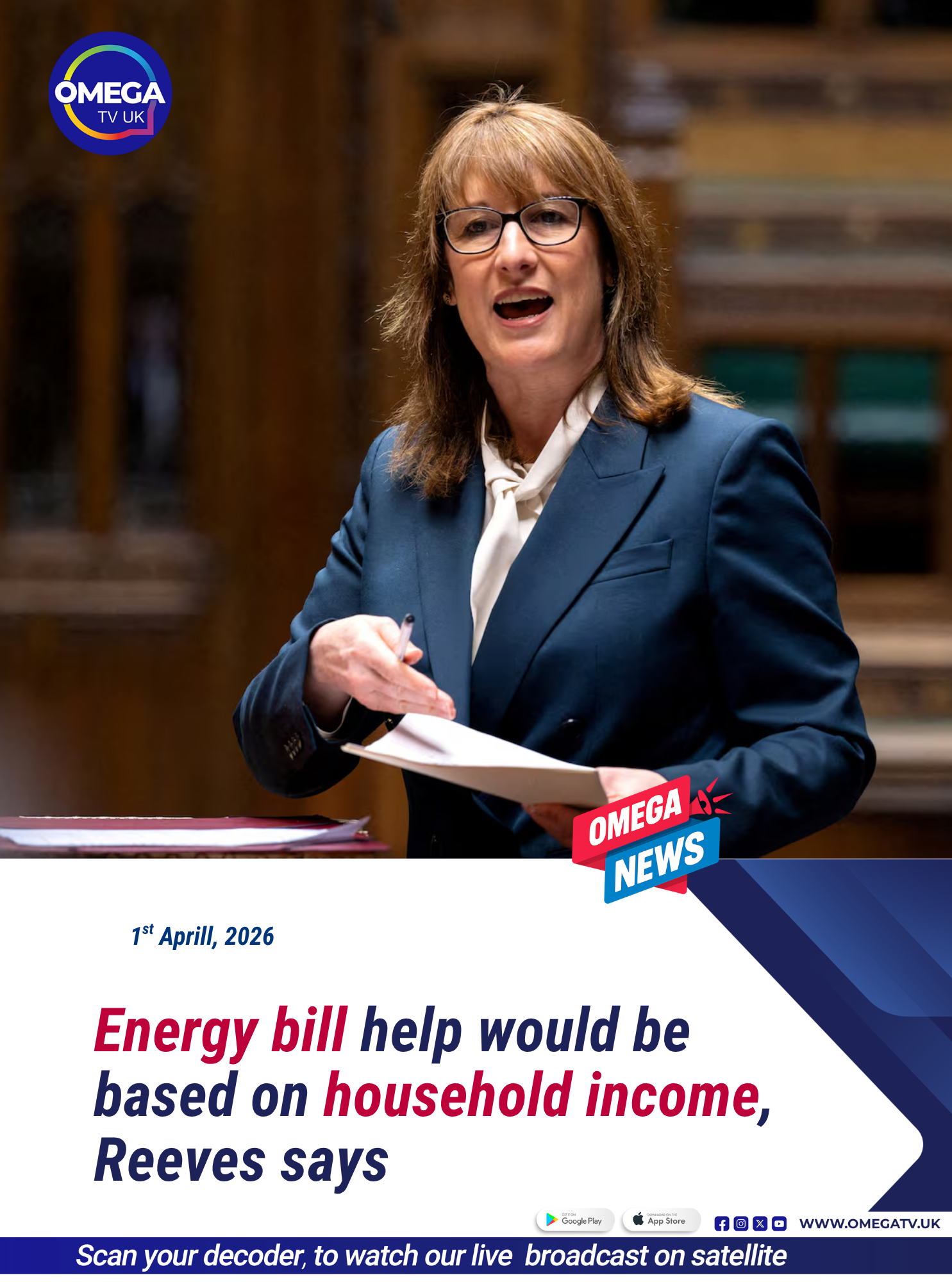
UK households facing rising energy costs could receive targeted financial support based on income, but any assistance is unlikely to arrive before autumn, according to Chancellor Rachel Reeves.
Speaking amid growing concern over surging global energy prices, Reeves indicated that the government is preparing a more selective approach to support, focusing on those most in need rather than offering universal relief. The shift comes as oil and gas prices have climbed sharply in recent weeks, largely driven by ongoing conflict in the Middle East and disruptions to supply routes.
Although energy bills are expected to fall slightly between April and June under the current cap set by Ofgem, forecasts suggest a significant increase later in the year. Reeves pointed out that demand for gas is typically lower during the summer months, meaning the real pressure on households is likely to emerge as temperatures drop.
She stressed that it was still too early to outline exactly who would qualify for assistance but confirmed that eligibility would extend beyond those currently receiving benefits. Instead, ministers are exploring ways to assess support based on overall household income, aiming to avoid past mistakes where aid was distributed too broadly.
Reeves referenced the government response during the 2022 energy crisis under Liz Truss, when support measures were applied universally. She argued that approach allowed wealthier households to receive a disproportionate share of the funding, which she believes was inefficient and unfair.
“We need to make sure help goes to the people who actually need it,” Reeves explained, adding that better targeting would ensure public money is used more effectively during a period of economic strain.
Despite mounting pressure, the chancellor declined to commit to immediate measures such as cutting fuel duty or reducing VAT on petrol. She warned that broad tax cuts could have unintended consequences, including higher inflation, increased borrowing costs, and future tax rises.
Instead, Reeves suggested that the most effective way to ease energy costs would be to stabilise global markets. She pointed to the disruption in the Strait of Hormuz, a critical shipping route responsible for transporting a significant portion of the world’s oil and liquefied natural gas. Since the outbreak of conflict, traffic through the strait has been heavily restricted, contributing to price volatility.
Reeves also backed the UK government’s cautious foreign policy stance, arguing that avoiding deeper involvement in the conflict would help limit economic fallout at home. She said reducing geopolitical tensions remains key to bringing energy prices back under control.
Opposition parties, however, have criticised the government’s approach, warning that delays in support could leave households struggling as costs rise again later this year. Critics argue that many families are already under financial pressure and cannot afford to wait months for relief.
The Conservative Party has proposed temporarily removing VAT on household energy bills to ease the burden, while Reform UK has called for both VAT and green levies to be scrapped entirely. Party figures have accused Reeves of failing to act decisively, suggesting the government is not responding quickly enough to the cost-of-living challenges facing the public.
Meanwhile, the Liberal Democrats have focused on structural reform, advocating changes to the way renewable energy projects are funded. They argue that decoupling electricity prices from gas markets could help reduce long-term costs for consumers.
Other political groups have also put forward alternative solutions, including calls for price guarantees, increased taxation on energy company profits, and greater investment in renewable energy infrastructure. In Scotland, the Scottish National Party continues to argue that devolved control over energy policy would provide a more effective route to lowering bills.
As the debate continues, uncertainty remains over both the scale of the expected price increases and the timing of any government intervention. With energy demand set to rise later in the year, households across the UK are bracing for another potential spike in living costs.