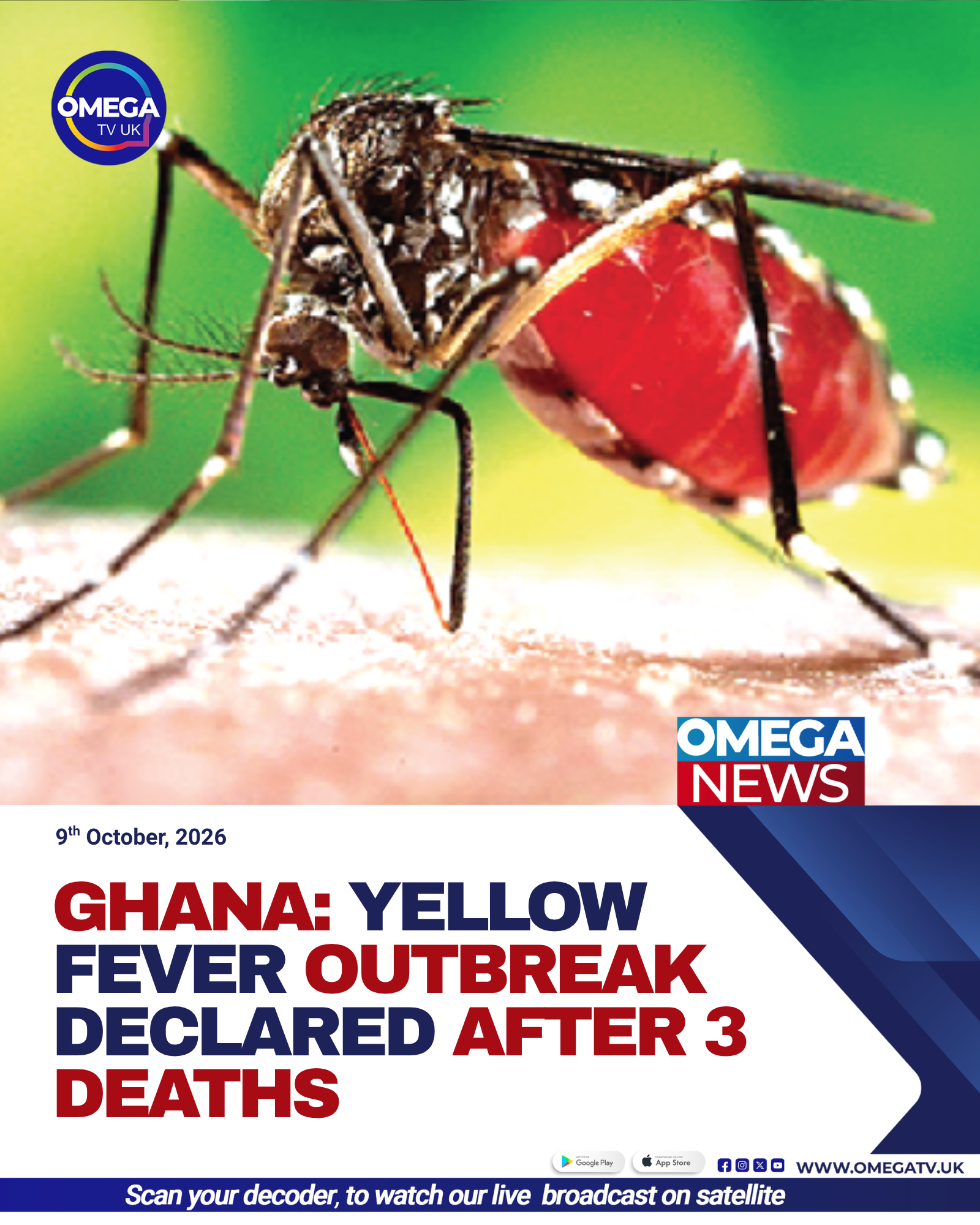
Ghana’s Ministry of Health has declared a Yellow Fever outbreak in the country’s Upper West Region after laboratory tests confirmed three cases of the viral illness.

In a statement issued on 9 October 2026, the Ministry said cases began in the local health facilities in Sissala West and Wa West on 9 September, when patients presented with fever, jaundice and bleeding.
Authorities then conducted initial tests in Ghana followed by further laboratory analysis in an accredited World Health Organisation (WHO) facility in Dakar, Senegal, which confirmed three cases of the infection.
Despite the intensive management of the patients, three patients died in the line of duty, the Ministry said.
Health Minister Kwabena Mintah Akandoh declared the outbreak in the districts in Ghana in accordance with the International Health Regulations (2005) and the Public Health Act, 2012 (Act 851) and directed the Ghana Health Service (GHS) to intensify efforts to curb the spread.
The Ministry, in collaboration with WHO, has activated the National and Regional Public Health Emergency Operations Centres whilst Rapid Response Teams have also been deployed to the communities to step up case finding and surveillance activities and to educate the communities.
It has also planned a targeted emergency mass vaccination campaign for the month of October for communities affected and at risk of Yellow Fever in the three districts of Wa West, Sissala West and Sissala East.
Other measures being taken to manage the outbreak include: strengthening case management in designated health facilities; enhancing surveillance at the regional level; and stepping up community engagement efforts.
GHS has advised people to use mosquito repellents and insecticide-treated bed nets and to help eliminate breeding sites such as stagnant water around their homes.
Yellow Fever is a mosquito-borne viral hemorrhagic fever. The Ministry has advised people experiencing any sudden fever, headache, muscle pains, yellowish discolouration of the eyes or skin and abnormal bleeding to seek medical assistance.
It has also advised against self-medication and recommended that people follow instructions from the Ministry of Health and GHS.
Traditional and religious leaders, media houses, civil society organisations and the general public have been requested to play their part in fighting the outbreak.
The Ministry has pledged its commitment to protecting and promoting the well-being of all Ghanaians.