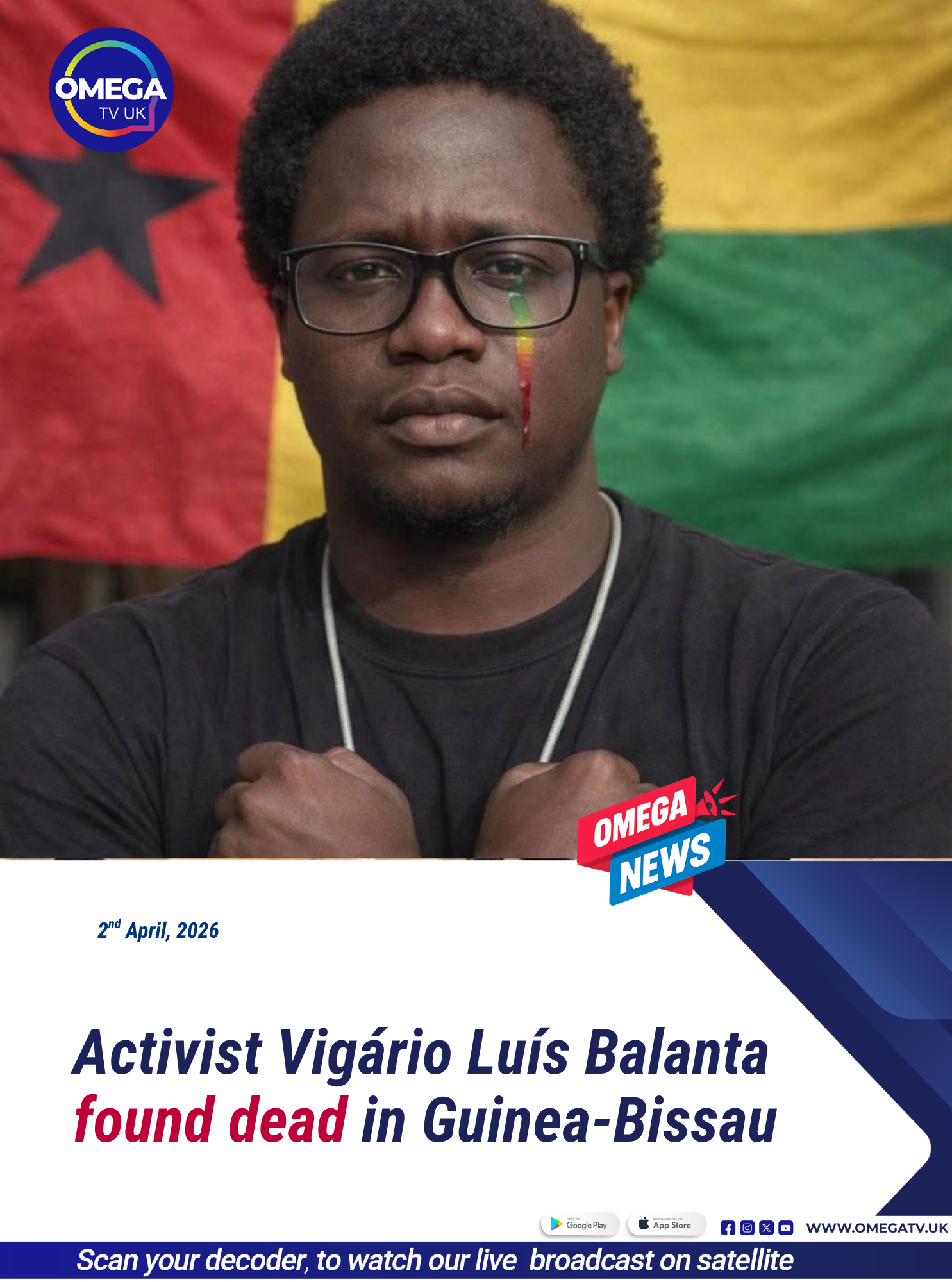
The death of prominent Guinea-Bissau civil society activist Vigário Luís Balanta has triggered widespread concern and renewed calls for accountability in a country already facing political instability. The 35-year-old, known for his outspoken criticism of the military-led transitional government, was found dead on Tuesday under violent circumstances.
According to local media reports, Balanta’s body was discovered in the Ndam area, located roughly 30 kilometres from the capital, Bissau. Early accounts from fellow activists and news outlets indicate that he may have been brutally attacked and beaten to death, although the exact circumstances surrounding his killing remain unclear.
Balanta was widely regarded as a passionate advocate for social change and youth empowerment in Guinea-Bissau. As a leading figure in civil society, he consistently urged young people to invest in building a future within the country, rather than seeking opportunities abroad. His activism focused on promoting dignity, accountability, and democratic governance in a nation that has long struggled with political upheaval.
The Civil Society Social Pact, an organisation in which Balanta served as spokesperson, paid tribute to him as an “inspiring figure” for the country’s youth. The group emphasized his dedication to national development and his belief in the potential of Guinea-Bissau’s younger generation. In response to his death, the organisation has called for an independent investigation, urging authorities to involve both the Guinean League for Human Rights and the Office of the United Nations High Commissioner for Human Rights to ensure transparency and credibility.
Balanta was also the president of the Pó di Terra revolutionary movement, where he used his platform to challenge government policies and advocate for democratic reforms. In recent months, he had become increasingly vocal in condemning the actions of the country’s transitional authorities. Among his key concerns were the government’s ban on protests and its failure to release the official results of the presidential and legislative elections held in November 2025.
Guinea-Bissau has been under the control of a military junta led by General Horta N’tam since a coup ousted former president Umaro Sissoco Embaló following the disputed elections. The political climate has since been marked by restrictions on civil liberties and growing tensions between authorities and opposition voices.
Balanta’s criticism of the junta made him one of the most visible dissenting voices in the country. His demands for transparency and democratic accountability resonated with many citizens but also placed him at odds with those in power. His death has therefore raised concerns among observers and activists about the safety of government critics and the shrinking space for civil society in Guinea-Bissau.
In a statement released shortly after news of the killing emerged, the transitional government condemned what it described as a “barbaric” act. Authorities pledged to launch an immediate investigation into the incident and to identify those responsible. However, given the country’s history of political instability and limited trust in institutions, many remain skeptical about whether a thorough and impartial inquiry will be carried out.
The international community is also expected to closely monitor developments in the case, particularly as calls grow for external oversight. Human rights organisations have long warned about the risks faced by activists in politically volatile environments, and Balanta’s death may further intensify scrutiny of Guinea-Bissau’s leadership.
For many in the country, the loss of Vigário Luís Balanta represents more than just the death of an individual—it is seen as a blow to the broader struggle for democracy, accountability, and human rights. As tributes continue to pour in, there is a growing sense that his legacy will depend on whether his death leads to meaningful action and reform.
The coming days will be crucial in determining whether justice is served and whether Guinea-Bissau can address the deeper issues that his activism sought to confront.