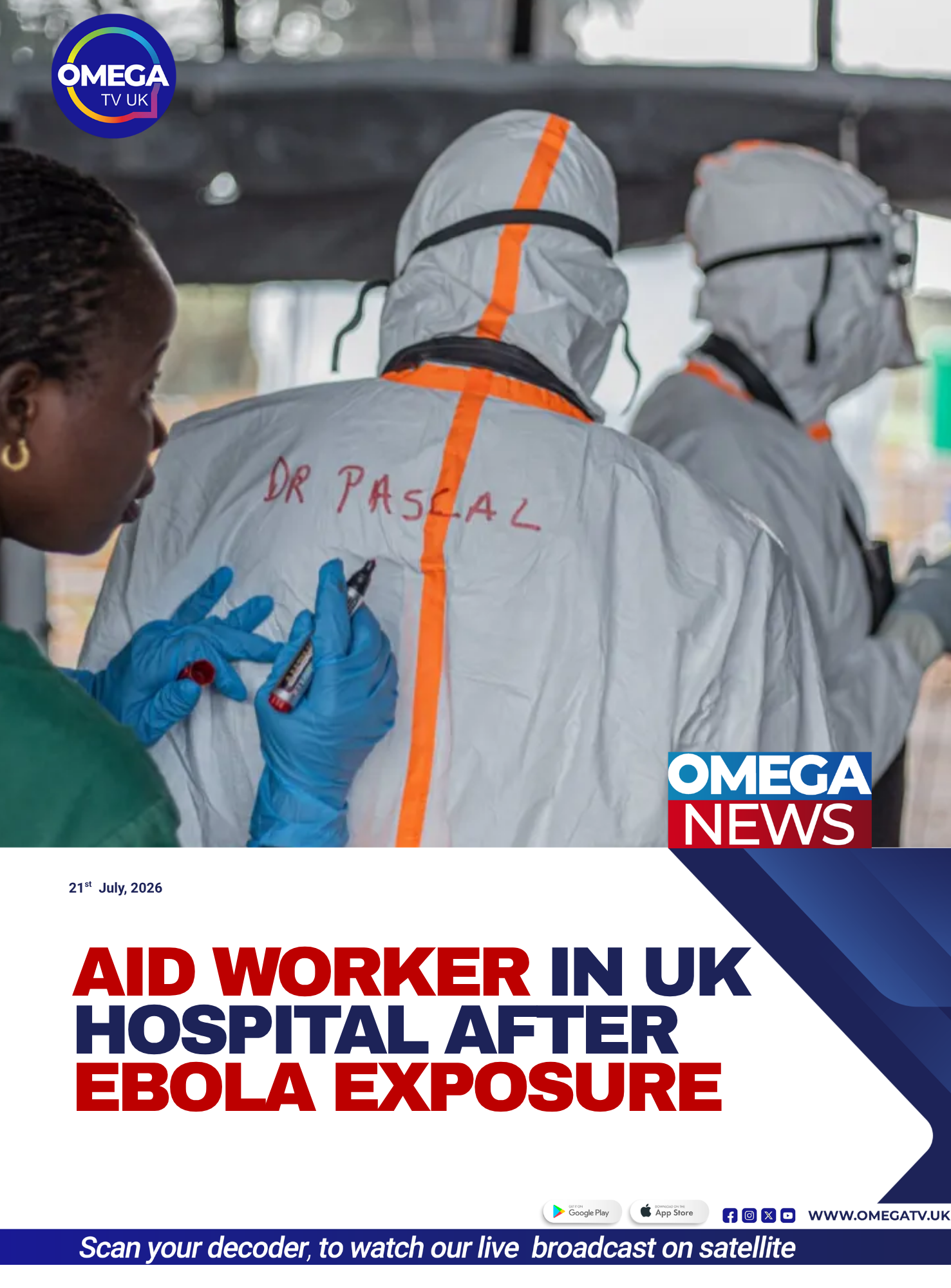
Health Officials Say Patient Has No Symptoms but Is Being Monitored
A humanitarian worker has been admitted to a London hospital for specialist monitoring after a potential exposure to the Ebola virus while working in the Democratic Republic of Congo (DRC).

According to the UK Health Security Agency (UKHSA), the individual, who is a UK resident, had been treating Ebola patients before being evacuated to Britain as a precaution.
Health officials stressed that the person is not showing any symptoms and remains in good health.
Precautionary Evacuation Ordered
The UKHSA said the evacuation was arranged after what it described as a potential healthcare-related exposure to the virus.
The humanitarian worker was flown to the UK on a specially chartered flight used exclusively for the medical evacuation.
The patient is now being cared for in isolation by infectious disease specialists at a London hospital while undergoing assessment and monitoring.
Health authorities said the incubation period for Ebola ranges from two to 21 days, during which the individual will remain isolated and under close medical supervision.
Public Risk Remains Low
Richard Pebody, Director of Epidemic and Emerging Infections at the UKHSA, reassured the public that there is currently no significant risk.
He said the evacuation was carried out purely as a precaution and confirmed that the humanitarian worker remains well.
Officials also emphasised that there is no evidence of transmission in the UK.
DRC Battles Worsening Ebola Outbreak
The incident comes as the Democratic Republic of Congo faces its fastest-growing Ebola outbreak on record.
Government figures show that the country has recorded 2,423 confirmed cases, including 967 deaths, since the outbreak began.
The current epidemic is caused by the Bundibugyo strain of the Ebola virus, a less common variant for which there is currently no approved vaccine or specific treatment.
Medical charity Médecins Sans Frontières (MSF) recently warned that the virus is spreading faster than efforts to contain it.
The organisation said delays in responding to the outbreak are allowing more people to become infected.
What Is Ebola?
Ebola is a rare but severe viral disease that spreads through direct contact with the bodily fluids of an infected person, including blood, vomit and other contaminated fluids.
The virus can also spread through contaminated surfaces and medical equipment.
Early symptoms include fever, fatigue, muscle pain and headache, which can later develop into severe illness.
Health experts continue to stress that while Ebola is highly infectious through close contact, it does not spread through the air, and the risk to the UK public remains very low.