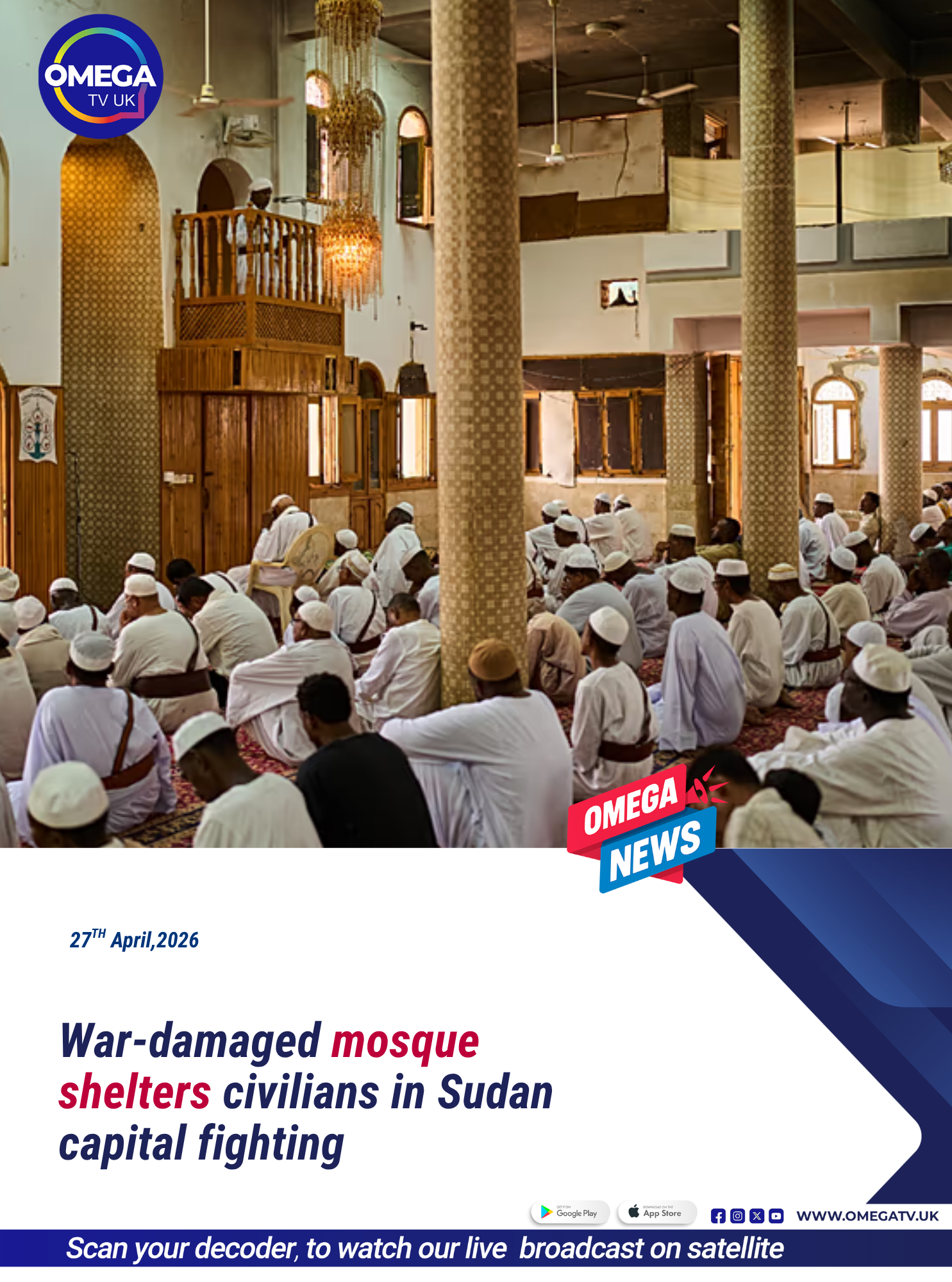
War-Damaged Mosque in Khartoum Becomes Lifeline Amid Sudan Conflict

A historic mosque in Sudan’s capital Khartoum has become a refuge for civilians caught in the country’s ongoing civil war, serving as both a place of worship and a sanctuary amid intense fighting.
The Gharib Allah Sufi mosque, which has stood for more than a century, remained operational throughout most of the conflict, only closing briefly in 2025 when heavy fighting made the area too dangerous. Even after sustaining damage, including bullet-ridden walls and shattered windows, it quickly reopened to continue supporting the local community.
Community leaders say the mosque became far more than a religious space during the war. It functioned as a shelter, a coordination point for aid, and even an informal hospital for those affected by the violence.
“This mosque was the shelter, the hospital, it was the safe place that people came to,” said youth leader Wael Shafiq, noting that efforts were made to keep it open as long as possible during the conflict.
Residents describe how the mosque helped maintain a sense of community during the most difficult periods, offering food distribution, charity kitchens, and a space for families to check on one another while much of the city was engulfed in violence.
“It is not just a mosque where people would pray and be finished,” said community member Mahmud Mirghani Salman. “People were missing each other… there were so many things bringing people together.”
Although Khartoum was retaken by the army in March last year, bringing a degree of stability to parts of the capital, large sections of Sudan remain affected by ongoing fighting between the military-backed government and the Rapid Support Forces (RSF).
The conflict has effectively split the country, with the army controlling the north, east, and central regions, while the RSF holds Darfur and parts of Kordofan.
According to conflict monitoring groups, at least 59,000 people have been killed since the war began, though the true toll is believed to be significantly higher due to limited access and reporting challenges.