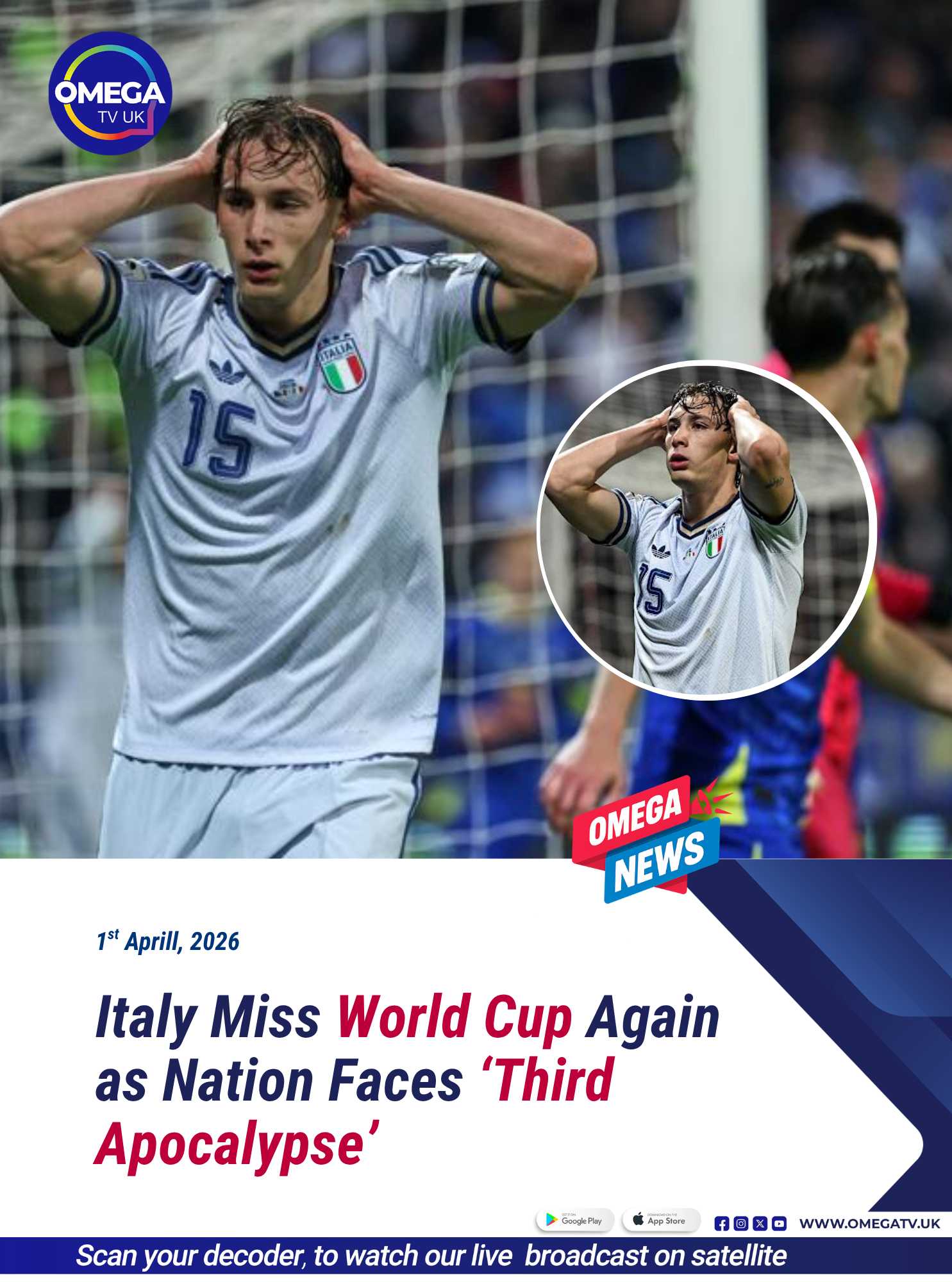
Italy’s failure to qualify for the World Cup for a third consecutive time has sparked widespread anger, disappointment, and soul-searching across the country, with many describing the latest setback as a “third apocalypse” for one of football’s most historic nations.
The Italy national football team were eliminated after a dramatic penalty shootout defeat to Bosnia and Herzegovina national football team in Zenica. The match ended in heartbreak following a tense encounter in which Italy were reduced to 10 men before halftime, ultimately losing 4-1 on penalties despite moments of promise during the game.
In Rome and across the country, fans reacted with disbelief. For many, this latest failure represents not just a poor result, but a deeper crisis in Italian football. The team, once a dominant force on the global stage, has struggled to maintain its identity and competitiveness since lifting the World Cup in 2006.
The sense of decline is particularly stark given Italy’s rich footballing legacy. Apart from their triumph at UEFA Euro 2020 — where they defeated England at Wembley — the Azzurri have consistently fallen short in major tournaments over the past two decades. This latest exit has intensified concerns that the glory days of Italian football are fading further into the past.
Political figures have joined the chorus of criticism. Ignazio La Russa publicly expressed his frustration, saying many had feared this outcome despite their hopes. His reaction reflects a broader national mood, where disappointment has quickly turned into introspection about the state of the sport.
Critics argue that the problems go beyond the pitch. Writer Roberto Saviano pointed to systemic issues within Italian football, including poor governance, lack of investment in youth development, and overreliance on foreign players. According to him, these long-standing structural weaknesses have hindered the growth of homegrown talent and weakened the national team’s foundation.
Fans share similar concerns. Many believe that younger players are not being given enough opportunities, while others question the overall direction of the sport in Italy. The frustration is compounded by the emotional toll of missing out on yet another World Cup — a tournament that has historically been a source of pride and unity for the nation.
At the centre of the defeat was head coach Gennaro Gattuso, who was visibly emotional after the match. Appointed less than a year ago, Gattuso struggled to contain his disappointment as he apologised to supporters and acknowledged the team’s shortcomings. Despite the loss, he praised his players’ effort, insisting they had given everything on the pitch.
The match itself offered glimpses of hope before ultimately ending in frustration. A goal from Moise Kean briefly lifted spirits, but missed chances and defensive lapses proved costly. Gattuso admitted that failing to convert opportunities had once again punished the team — a recurring issue that has plagued Italy in recent years.
Football analysts say rebuilding will take time and patience. Journalists and experts warn that quick fixes are unlikely to solve the deeper issues affecting the national team. Instead, they argue for a long-term strategy focused on developing young talent, improving domestic structures, and restoring a sense of identity and cohesion within the squad.
There is also concern about the impact on younger generations. With three consecutive World Cup absences, some fear that enthusiasm for the national team could decline among younger fans who have never experienced Italy competing on football’s biggest stage. This could further weaken the cultural connection between the team and its supporters.
Despite the gloom, many still believe Italy can recover. The country has a long history of overcoming setbacks and producing world-class players. However, the latest failure has made it clear that significant changes are needed if the Azzurri are to reclaim their place among football’s elite.
For now, the mood remains one of disappointment and reflection. As Italy looks ahead, the challenge will be turning this moment of crisis into an opportunity for renewal — and ensuring that the “third apocalypse” becomes a turning point rather than a lasting decline.