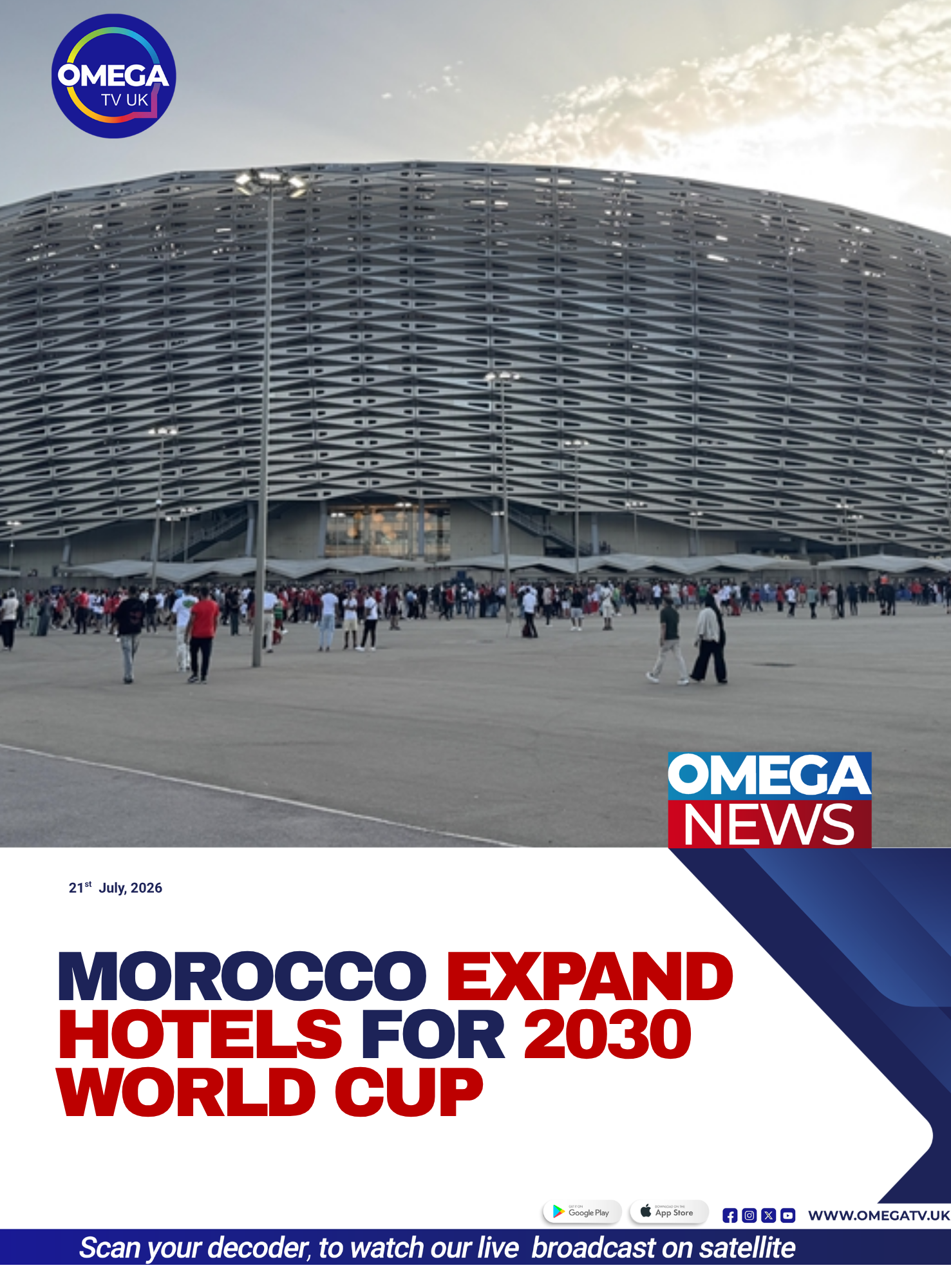
Morocco Expands Hotel Capacity Ahead of 2030 FIFA World Cup
Morocco is accelerating preparations for the 2030 FIFA World Cup, unveiling ambitious plans to significantly expand its hotel capacity as it gets ready to co-host football’s biggest tournament alongside Spain and Portugal.

For the first time in the country’s history, Morocco will host FIFA World Cup matches, with officials aiming to ensure visitors enjoy world-class hospitality and infrastructure throughout the tournament.
Tourism Minister Fatim-Zahra Ammor announced that Morocco plans to add 60,000 new hotel beds by 2030, boosting accommodation capacity to meet the expected influx of millions of football fans and international visitors.
The expansion forms part of a broader strategy to strengthen Morocco’s tourism industry, which contributes around 7% of the country’s Gross Domestic Product (GDP) and supports thousands of jobs across the kingdom.
The investment also builds on the excitement generated by Morocco’s remarkable performances on the international football stage, including the Atlas Lions’ historic run at recent FIFA World Cup tournaments, which helped elevate the country’s global profile.
Morocco welcomed nearly 20 million international tourists last year, making it Africa’s most visited destination. Authorities are now targeting 26 million annual visitors by 2030, with the World Cup expected to play a major role in achieving that goal.
The country has already expanded its accommodation sector by adding 45,000 hotel beds over the past four years, bringing its total hotel capacity to more than 300,000 beds.
Beyond hotels, Morocco is investing heavily in transport and public infrastructure to ensure the tournament leaves a lasting legacy.
The government has committed more than 190 billion Moroccan dirhams (approximately €17.8 billion) toward major development projects, including new railway lines, improved roads, expanded airports, upgraded stadiums and urban renewal programmes.
Officials say these projects are designed not only to support the World Cup but also to improve connectivity, attract investment and enhance the country’s long-term economic growth.
Looking ahead, Morocco plans to expand its tourism markets by improving air connections with countries such as China, the United States and nations across the Middle East.
The government also hopes to encourage visitors to explore destinations beyond the traditional tourist hotspots of Marrakech and Agadir, while promoting the capital, Rabat, as a leading destination for culture, sports, conferences and business tourism.
With major infrastructure projects already underway and tourism continuing to grow, Morocco is positioning itself to deliver a successful 2030 FIFA World Cup while strengthening its reputation as one of Africa’s leading travel destinations.