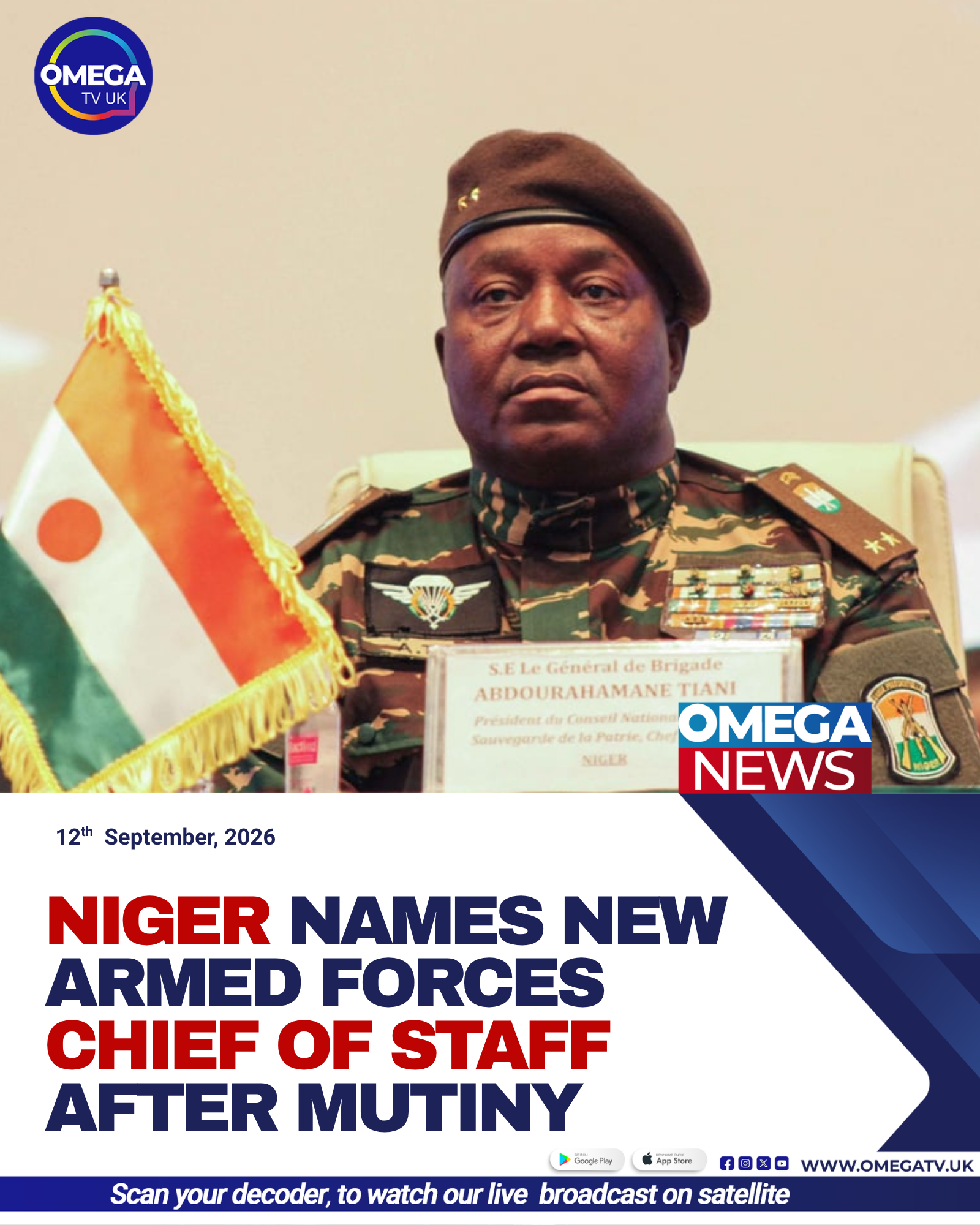
Niger’s military government has appointed new senior commanders of the armed forces, two weeks after a foiled mutiny attempt raised concerns about growing unrest within the military.

The changes come after disgruntled soldiers reportedly attacked sensitive locations in the capital, Niamey, last month in an attempted uprising against the ruling junta. The rebellion was eventually contained by government forces with assistance from Russian paramilitary allies.
Brigadier General Mamane Sani Kiaou has been appointed Chief of Defence Staff, while Brigadier General Abdourahmane Abou Zataka has been named Chief of Staff of the Army.
The appointments were announced on Friday by Abari Amitti, director of Niger’s public television channel Télé Sahel.
The leadership changes come at a sensitive period for Niger’s military government, which has faced increasing security challenges since taking power in a 2023 coup.
General Abdourahmane Tiani seized power after the coup that removed President Mohamed Bazoum. Since then, Niger has dramatically changed its foreign and security partnerships, cutting ties with several Western countries and strengthening its relationship with Russia.
The junta has increasingly relied on Russian security support as it battles armed militant groups operating across the country and the wider Sahel region.
Niger has experienced persistent attacks by militant groups, resulting in significant casualties among security forces. The continued violence has reportedly contributed to frustration and dissatisfaction among some members of the military.
The recent mutiny attempt highlighted tensions within the armed forces and represented a significant challenge to Tiani’s authority.
Authorities have not publicly provided extensive details about the circumstances surrounding the attempted uprising or identified all those involved. However, the appointment of new military leaders is likely to be closely watched as the junta seeks to maintain control and strengthen the chain of command.
The changes also come as Niger continues to face pressure from militant groups operating in its territory and across neighbouring parts of the Sahel.
Since the 2023 coup, Niger has joined Mali and Burkina Faso in moving away from traditional Western security partnerships and pursuing closer cooperation with Russia.
The military government has presented the shift as part of its effort to regain control over national security and reduce dependence on former colonial and Western allies.
However, militant violence remains a major challenge, with security personnel and civilians continuing to face attacks in several parts of the country.
The latest appointments therefore come as Tiani’s government attempts to reinforce the military leadership while confronting both external security threats and signs of internal discontent.