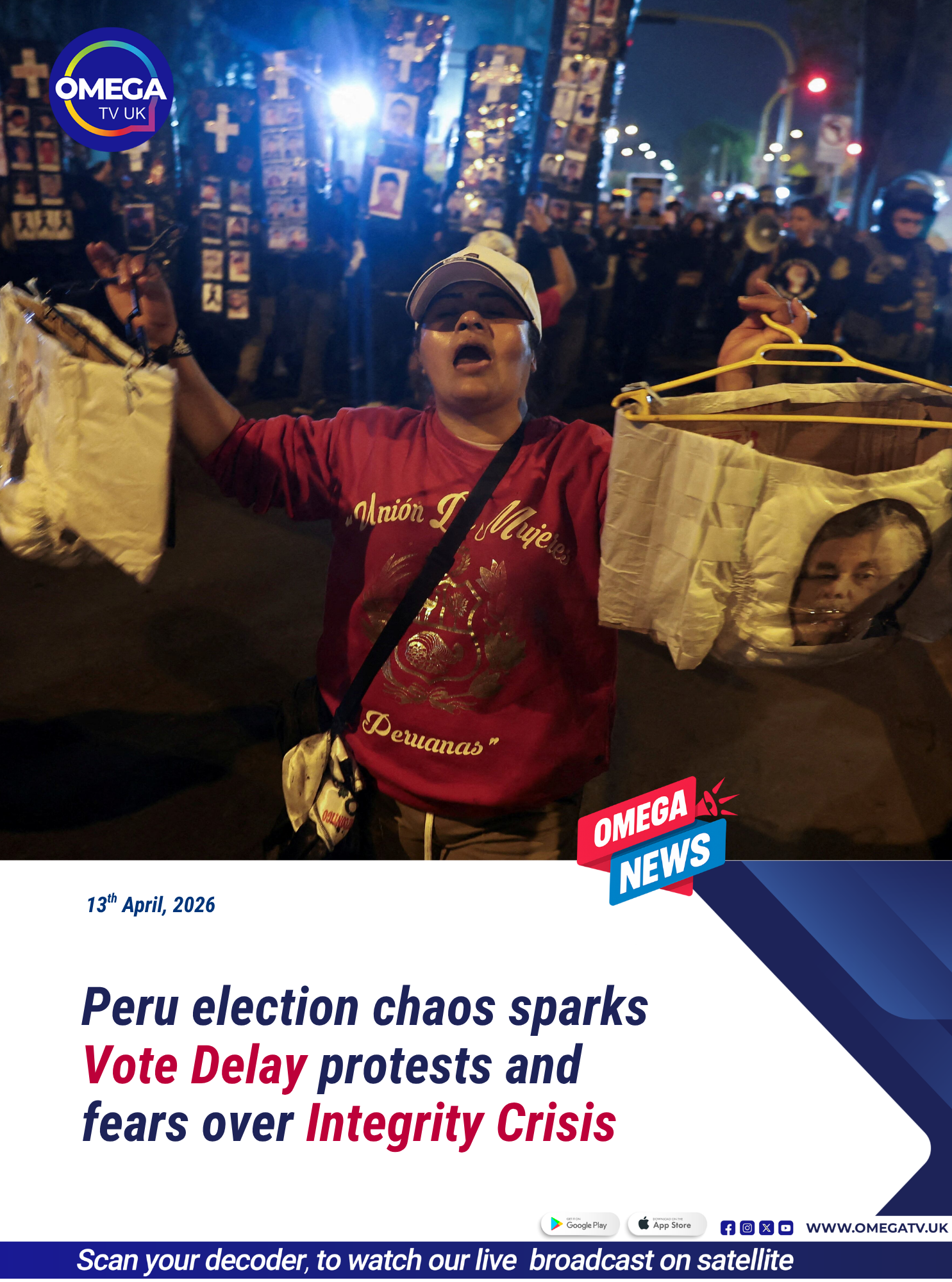
Peru is facing mounting political tension as election delays and logistical failures have triggered protests and raised fresh concerns about the integrity of its electoral process.
The disruption has affected thousands of voters, particularly in the capital Lima and other regions, after ballot papers failed to arrive at dozens of polling stations on election day. Authorities have confirmed that more than 63,000 voters—including some living abroad—will now be given a second opportunity to cast their ballots on Monday, April 13.
While electoral officials insist the situation is under control and that the final results will accurately reflect the will of the people, the delays have fueled skepticism among voters and opposition groups. Many see the incident as another sign of systemic weaknesses in a country already struggling with political instability.
The postponement of voting in affected areas means that official results are unlikely to be announced before April 14 at the earliest. This has intensified fears about transparency, particularly given the highly competitive nature of the election, which features an unusually large field of 35 candidates.
Public frustration has spilled onto the streets, with demonstrations reported in several parts of the country. Protesters have pointed to what they describe as irregularities and poor organization, demanding clearer explanations from electoral authorities. The situation has further eroded trust in institutions at a time when confidence is already fragile.
Peru’s political landscape has been marked by frequent upheaval in recent years. The country has had nine presidents in just over a decade, reflecting deep divisions within both government and society. This instability has made elections particularly sensitive, as citizens look for signs of credible leadership and effective governance.
More than 27 million Peruvians are registered to vote in this election, including approximately 1.2 million living overseas. Voting is compulsory for citizens between the ages of 18 and 70, with fines imposed on those who fail to participate. The requirement is intended to ensure broad civic engagement, but the recent disruptions have complicated efforts to maintain high turnout.
Adding to the complexity of the situation is the likelihood that no single candidate will secure an outright majority. Under Peru’s electoral system, a candidate must win more than 50 percent of the vote to avoid a second round. With such a crowded field, analysts widely expect a runoff election to take place in June.
In addition to choosing a president, voters are also electing a new bicameral Congress for the first time in more than three decades. Recent constitutional reforms have reintroduced a Senate, consisting of 60 seats, alongside a 130-member lower house. The move is designed to strengthen legislative oversight of the executive branch and improve governance.
Supporters of the reform argue that a bicameral system will provide greater checks and balances, helping to stabilize the country’s political system. However, critics warn that institutional changes alone will not resolve deeper issues such as corruption, inequality, and public distrust.
The election is also unfolding against a backdrop of rising crime, which has become a major concern for many voters. Security issues, combined with economic pressures, have dominated campaign debates and shaped public opinion.
Despite the challenges, electoral authorities continue to urge calm, emphasizing that measures are being taken to ensure all eligible voters can participate. They have called on citizens to remain patient and to avoid spreading misinformation during the counting process.
As Peru navigates this critical moment, the outcome of the election will not only determine its next leadership but also test the resilience of its democratic institutions. For many Peruvians, the hope is that the process despite its flaws will ultimately deliver a legitimate and widely accepted result.