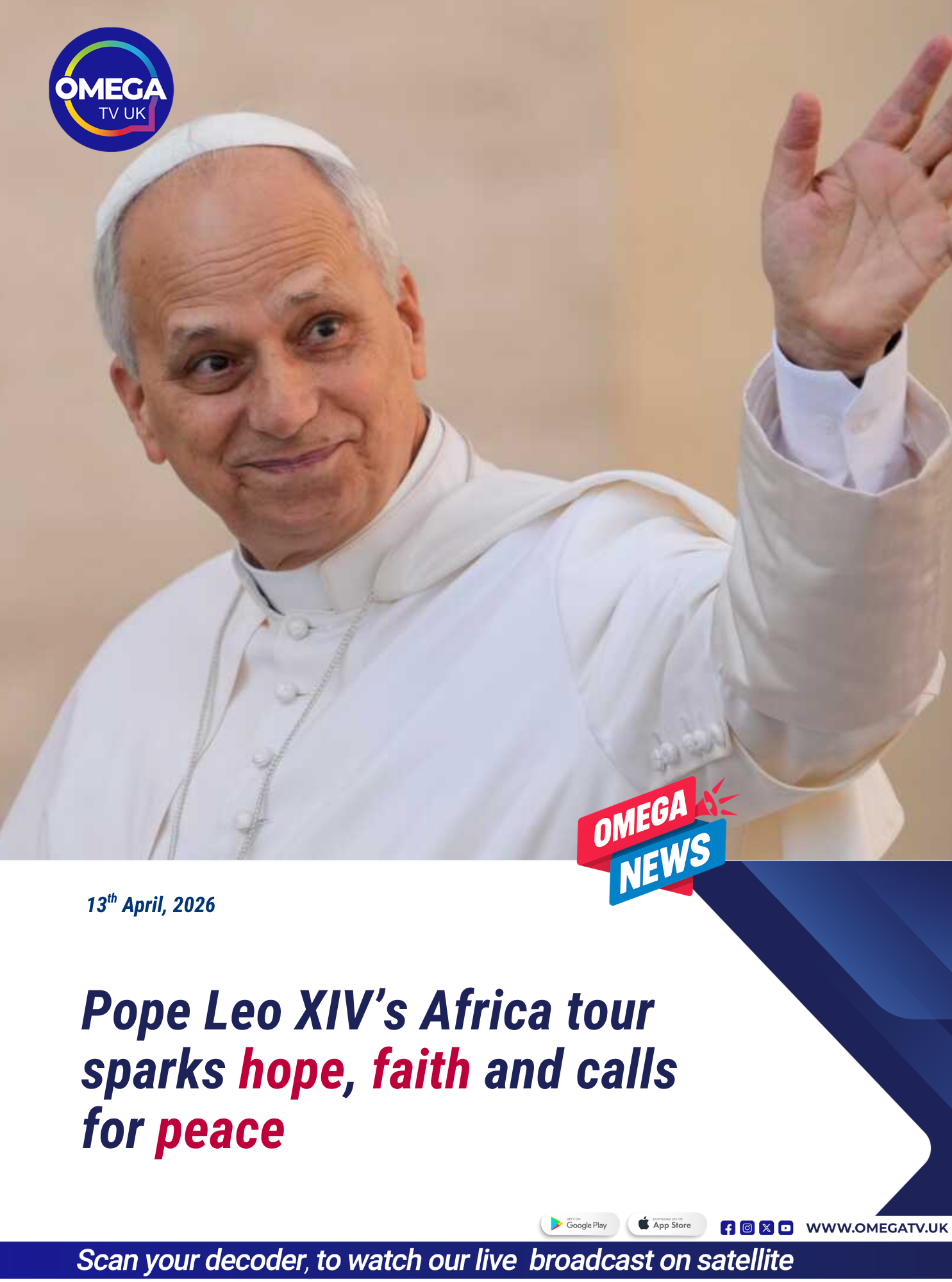
Pope Leo XIV’s Africa tour sparks hope, faith and renewed calls for peace

Anticipation is rising across Africa as Pope Leo XIV prepares for a significant 11-day tour across four nations, a journey expected to inspire millions of believers while addressing pressing social and political challenges.
The papal visit will take him to Cameroon, Angola, Equatorial Guinea and Algeria—a route that reflects both the diversity and growing importance of Africa within the global Catholic community.
In Cameroon, where nearly one-third of the population identifies as Catholic, the visit carries deep symbolic meaning. For many believers, it is not just a religious event but a moment of national reflection. Citizens hope the Pope’s presence will bring comfort and unity, particularly in regions affected by the long-running Anglophone crisis.
One worshipper, Simon Pierre Ngombo, described the visit as a spiritual boost, saying it would strengthen both faith and the bond between communities and God. His sentiments echo a broader expectation that the Pope’s message could help calm tensions and promote dialogue in divided regions.
A major highlight of the Cameroon leg will be a large open-air Mass expected to attract around 600,000 people. The scale of the gathering underscores the significance of the visit and the strong connection many Africans feel toward the Catholic Church.
Beyond religious ceremonies, the Pope’s itinerary includes a planned peace meeting in Bamenda, a city at the heart of the Anglophone crisis. This meeting is seen as a clear signal of the Vatican’s commitment to reconciliation and conflict resolution. Observers say the Pope’s involvement could lend moral weight to ongoing efforts to restore peace.
Religious leaders have also emphasized the broader implications of the visit. Priest Juvencio Nguema described it as a moment of “social and spiritual responsibility,” noting that preparations have been extensive as communities organize to welcome the pontiff.
In Angola, excitement is particularly strong among young people. For many, this represents a rare opportunity to see a Pope in person. Youth leader Ana Maria in the capital, Luanda, expressed both hope and anticipation, saying the visit brings the Church closer to African youth who often feel distant from global religious leadership.
The Pope’s engagement with young people is expected to be a central theme of the tour. Africa has one of the youngest populations in the world, and the Catholic Church has increasingly focused on youth outreach as a key part of its mission on the continent.
Meanwhile, stops in Equatorial Guinea and Algeria are drawing attention for another reason—they highlight regions that are often overlooked in global conversations. By including these countries in his itinerary, Pope Leo XIV is signaling the Church’s intention to engage more deeply with diverse communities, regardless of their size or global visibility.
The journey will cover more than 17,000 kilometers, making it one of the most extensive papal tours in recent years. It also reflects a strategic shift in the Church’s focus toward Africa, where Catholic populations are growing rapidly.
However, the visit comes at a time when many African nations face complex challenges, including political instability, economic inequality, and security threats. The Pope is expected to address these issues through messages centered on peace, unity, and social cohesion.
Analysts say the tour could have both spiritual and political impact. While the Pope does not hold political office, his influence as a global moral leader often shapes public discourse and can encourage dialogue in conflict-affected regions.
For millions across the continent, the visit represents more than a ceremonial tour—it is a moment of hope. As preparations continue, communities are looking forward to a message that not only strengthens faith but also inspires action toward peace and unity.