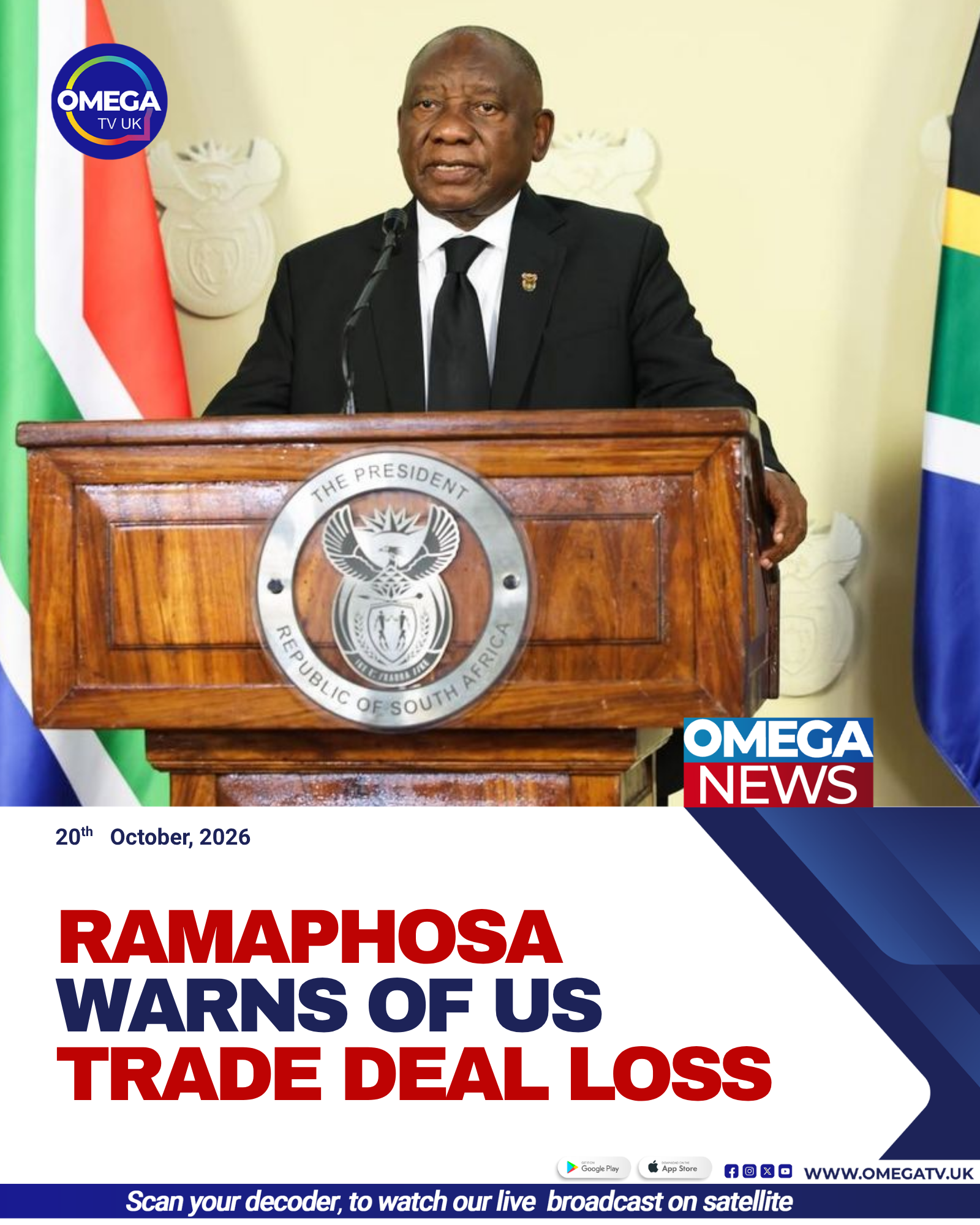
Ramaphosa Warns of AGOA Trade Loss
South African President Cyril Ramaphosa has warned that losing preferential access to the United States market could have devastating economic consequences, particularly for the country’s automotive industry, as diplomatic tensions between Pretoria and Washington continue.

South Africa prepares for possible exclusion
Ramaphosa has urged South Africa to prepare for the possibility of losing its benefits under the African Growth and Opportunity Act, known as AGOA, while seeking alternative export markets to reduce the potential economic damage.
The programme allows eligible African countries to export certain products to the United States without paying import duties. It has supported trade between the US and participating African economies, including South Africa, which is the programme’s largest beneficiary.
Ramaphosa warned that losing access under the arrangement would have serious consequences for the country. However, he also urged South Africans not to panic, emphasising the need to prepare for different outcomes while diplomatic efforts continue.
His comments come as relations between South Africa and the United States face growing strain, placing uncertainty over future trade arrangements at the centre of economic discussions.
AGOA extension awaits Trump’s signature
The US Congress has approved an extension of AGOA until the end of 2028, but the renewal still awaits President Donald Trump’s signature, according to the supplied report.
Although the extension would maintain the programme, South Africa’s eligibility has come under scrutiny in Washington. The country’s position has therefore become a significant concern for businesses and workers who depend on continued access to the American market.
AGOA provides preferential access for eligible African countries across a range of products. For South Africa, the arrangement supports exports that compete in a market where tariffs can influence prices, demand and the profitability of international trade.
Losing those benefits could increase costs for South African exporters and make some products less competitive in the United States. Businesses could then face pressure to absorb additional expenses, adjust production or seek customers in other markets.
The uncertainty has prompted calls for South Africa to prepare alternative arrangements rather than rely entirely on the continuation of its current trade benefits.
Automotive industry faces major risks
South Africa’s automotive sector is among the industries with significant exposure to a possible loss of preferential access.
Vehicles produced in the country currently benefit from duty-free access to the US market under AGOA. Any withdrawal of those benefits could affect the cost of exporting vehicles and the competitiveness of South African manufacturers.
Industry estimates indicate that approximately 86,000 jobs at car manufacturers are directly linked to the agreement. When subcontractors are included, the figure rises to around 125,000 jobs.
These figures highlight the potential consequences for workers and businesses throughout the automotive supply chain. Manufacturers rely on networks of suppliers and service providers, meaning changes in export conditions could affect more than the companies assembling vehicles.
If exporters face higher costs, companies may need to reconsider their production plans, investment decisions or sales strategies. Suppliers could also experience reduced demand if manufacturers scale back operations or redirect production.
However, the precise economic impact would depend on the terms of any exclusion, the response of businesses and whether alternative markets could absorb products previously destined for the United States.
Search for alternative markets
Ramaphosa’s warning underscores the importance of diversifying South Africa’s export destinations while efforts continue to preserve access to the American market.
Finding alternative buyers could help reduce dependence on a single trading partner, although establishing new commercial relationships and securing sufficient demand can take time.
South African businesses may also need to assess whether they can remain competitive if preferential access disappears. For manufacturers operating on tight margins, changes in import duties could influence decisions about where to sell products and how much to produce.
The government faces the challenge of balancing diplomatic engagement with practical preparations for a possible disruption. Maintaining trade benefits would help preserve existing export arrangements, while diversification could offer some protection against future uncertainty.
November deadline adds urgency
The report states that any exclusion taking effect from 1 January would need to be announced by 2 November, creating a narrow window for clarity on South Africa’s position.
The deadline adds urgency for businesses that need to plan production, export contracts and investment decisions. Uncertainty over future market access can complicate those plans even before any policy change takes effect.
For workers in the automotive industry and the wider supply chain, the outcome could have significant implications for employment and economic security.
Ramaphosa has urged the country to remain calm while preparing for the possibility of losing its preferential access. With the future of South Africa’s AGOA eligibility under scrutiny, the coming weeks will be important for exporters, manufacturers and policymakers seeking to limit potential economic disruption.