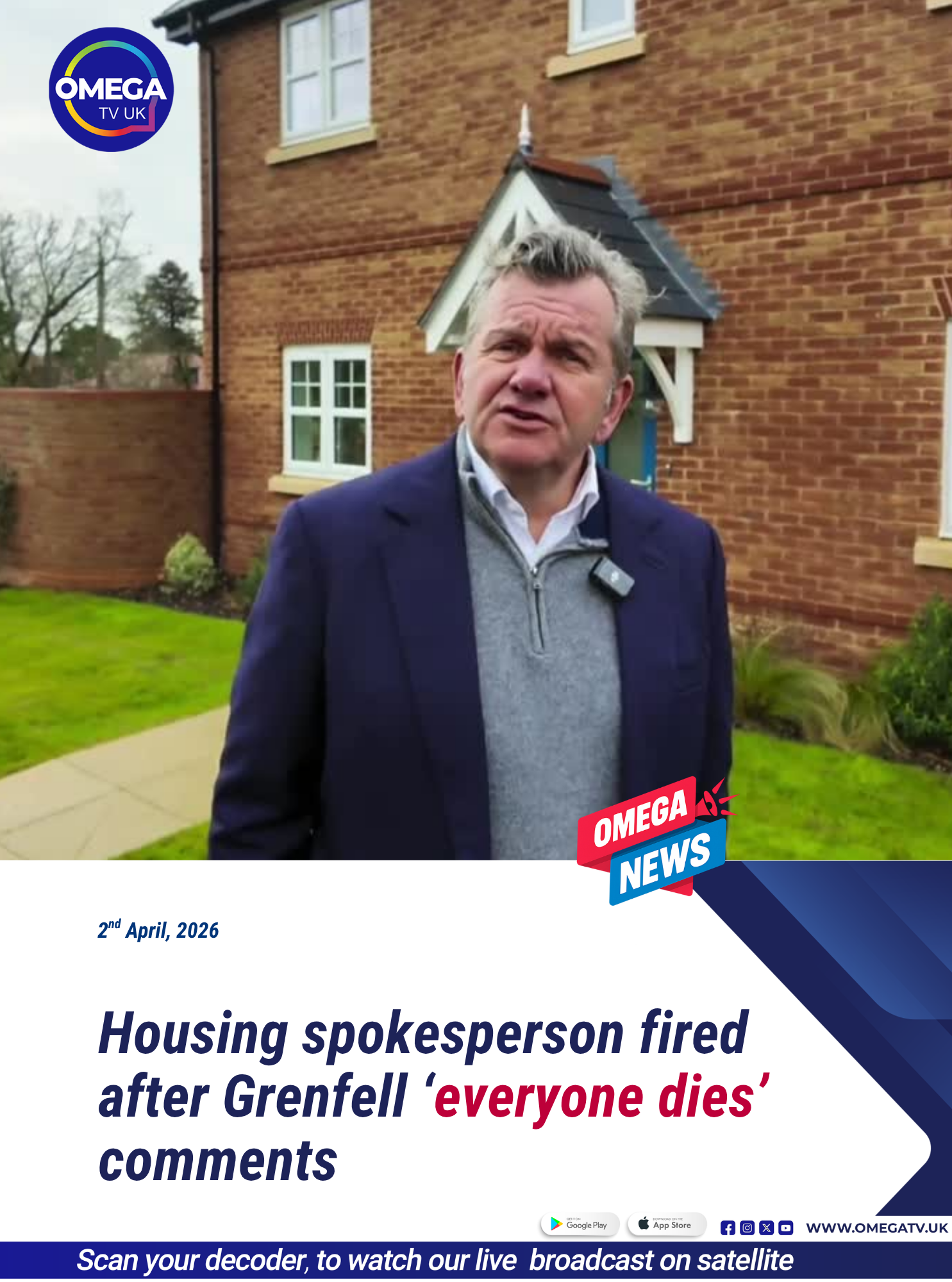
Reform UK has dismissed its housing spokesperson Simon Dudley following widespread backlash over his remarks about the Grenfell Tower fire. The decision came after his comments were condemned by political leaders, bereaved families, and emergency service representatives, sparking a political controversy that overshadowed the party’s policy announcements.
Dudley, a former head of Homes England, had recently joined Reform UK as part of the party’s effort to bring in experienced professionals. However, his comments during an interview with Inside Housing magazine triggered immediate criticism and ultimately led to his removal from the role.
During the interview, Dudley referred to the Grenfell Tower fire as a “tragedy” but added that “everyone dies in the end,” a remark that was widely seen as deeply insensitive. The statement provoked outrage from survivors, families of victims, and public officials, who argued that his comments trivialised the scale and preventability of the disaster.
The controversy intensified when UK Prime Minister Keir Starmer publicly called for Dudley’s dismissal. Starmer described the comments as shameful and urged Reform UK leader Nigel Farage to take immediate action. In a post on X, he said Farage should “do the decent thing” and remove Dudley from his position.
Initially, Reform UK appeared to defend Dudley, but the party later reversed its stance. Farage confirmed at a press conference that Dudley had been removed from his role, describing the remarks as “deeply shocking.” He added that Dudley was no longer serving as a spokesperson for the party.
Farage also sought to distance himself from the appointment, stating that it had been the responsibility of his deputy, Richard Tice. However, critics argued that the party leadership ultimately bears responsibility for the selection and vetting of its representatives.
The timing of the controversy was particularly sensitive, as Dudley’s comments overshadowed a press conference intended to announce new Reform UK policies on pensions. Instead, the focus shifted entirely to the backlash, forcing the party to address the issue rather than its policy agenda.
In a follow-up response, Dudley attempted to clarify his remarks, stating that he had described Grenfell as an “utter tragedy” and supported stronger fire safety regulations introduced after the disaster. He said he was not attempting to minimise the loss of life and apologised if his comments were not clear enough. Despite this, the damage had already been done, and public criticism continued to mount.
The Grenfell Tower fire, which occurred in 2017, remains one of the most devastating tragedies in recent UK history, resulting in the deaths of 72 people. The disaster exposed serious failings in building safety standards and regulatory oversight, leading to significant reforms in fire safety laws. For many, Dudley’s comments appeared to dismiss the underlying causes and accountability associated with the tragedy.
Survivors and families of victims, represented by groups such as Grenfell United, strongly condemned his remarks. They argued that the fire was preventable and that describing it as an inevitable tragedy erased responsibility. They emphasised that residents were failed by systemic issues, including ignored warnings and unsafe building practices.
Emergency services also criticised Dudley’s comments. The Fire Brigades Union described them as “disgusting and shocking,” with its general secretary, Steve Wright, stating that the remarks demonstrated poor judgment and insensitivity.
The incident marks the second time in recent weeks that Reform UK has removed a prominent figure following controversial remarks. The party has faced increasing scrutiny over its handling of public statements and internal discipline, raising questions about its leadership and decision-making processes.
As political debate continues, the controversy highlights the sensitivity surrounding Grenfell and the importance of accountability when discussing such tragedies. For many, the incident is a reminder of the human impact behind policy discussions and the need for careful, respectful language when addressing national disasters.
Ultimately, Dudley’s removal reflects the pressure political parties face when members make statements that are perceived as offensive or inappropriate. It also underscores the enduring legacy of Grenfell, which continues to shape public discourse, policy, and political accountability in the United Kingdom.