Senegal’s Ruling Party Expels President Bassirou Diomaye Faye
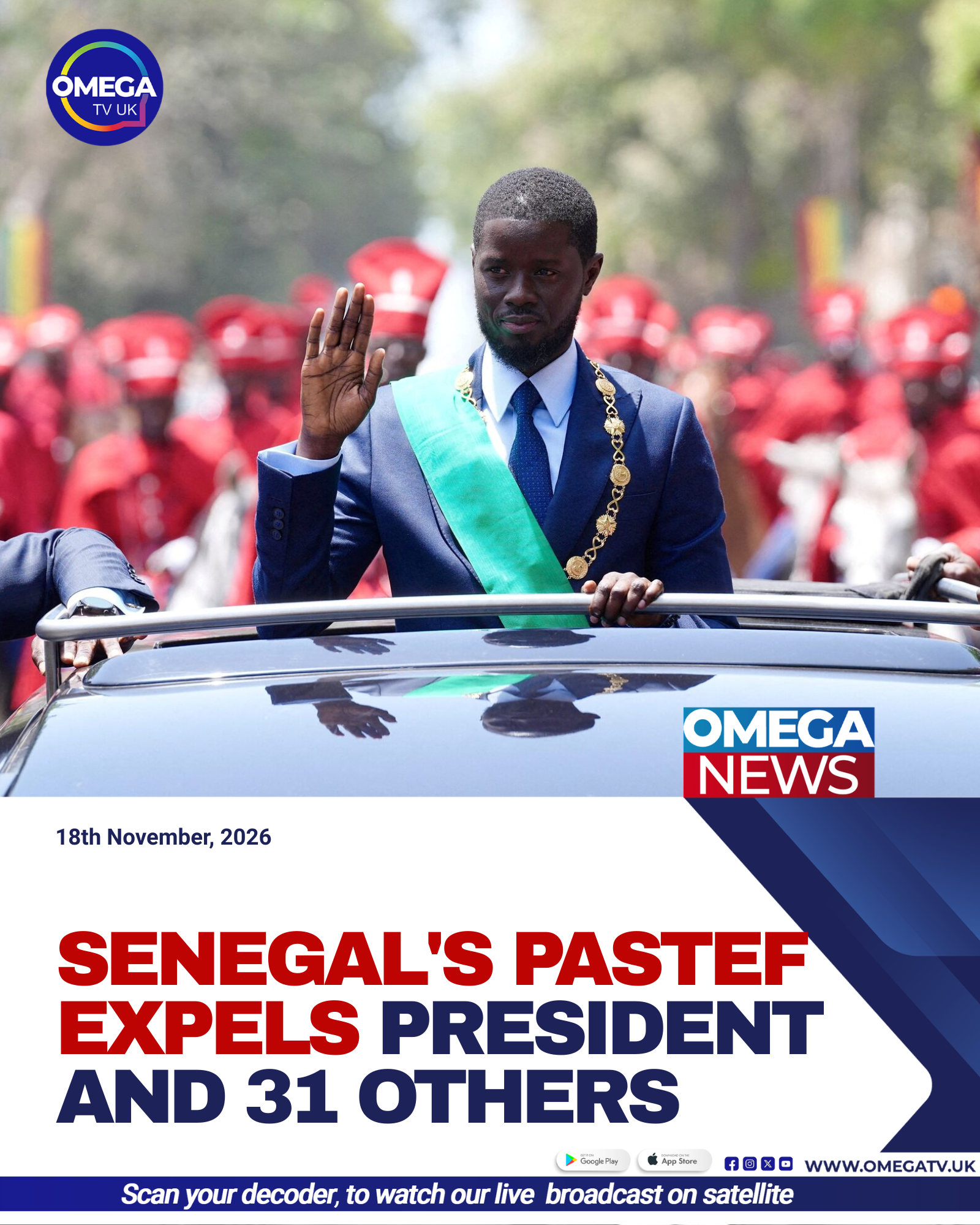
Senegal’s ruling party, Pastef, has expelled President Bassirou Diomaye Faye and 31 other members, escalating an ongoing political dispute between the country’s head of state and Prime Minister-turned-parliamentary leader Ousmane Sonko.

The party formally announced the expulsions on Tuesday, describing those removed from its membership as inactive members.
The decision represents a further breakdown in relations between Faye and Sonko, who were once leading figures in Senegal’s anti-establishment political movement and played key roles in bringing Pastef to power.
Their political relationship was central to the party’s success in the March 2024 presidential election. Sonko had originally hoped to contest the election himself, but after his candidacy was invalidated, he selected Faye as Pastef’s candidate.
Faye went on to win the presidency, marking a major political change in Senegal.
After taking office, the new president appointed Sonko as prime minister, placing his former political ally at the centre of government. However, disagreements over the direction and management of the state gradually weakened their relationship.
In May this year, Faye dismissed Sonko as prime minister, further deepening tensions between the two men. Sonko subsequently became speaker of the National Assembly, where his party continues to hold a strong parliamentary position.
The disagreement has since developed into a prolonged struggle for political influence, with both men pursuing separate political paths.
In July, Faye launched his own political movement, known as Kiiray Republican Patriots, alongside senior government officials and prominent figures associated with his administration.
The formation of the new party was widely seen as an effort by Faye to establish greater political independence from Pastef, which had originally brought him to power.
Tuesday’s expulsions now add another dimension to the dispute, raising questions about the future relationship between the president and the party that supported his election.
The political tensions are also unfolding as Senegal faces growing pressure over its public finances and government spending plans.
Pastef continues to command a majority in the National Assembly, holding 130 of the legislature’s 165 seats. Faye’s newly established political party, however, has no officially recognised seats in parliament.
This imbalance has created a difficult political situation, with the president leading the government while Sonko’s party maintains considerable influence over the legislature.
The disagreement threatens to complicate the approval of important financial decisions and could affect the government’s ability to implement its economic programme.
One major concern is the potential impact on financial assistance expected from the International Monetary Fund. The parliamentary deadlock could delay the release of significant funding at a time when Senegal is dealing with a substantial debt burden.
There are also concerns that the political disagreement could lead to a freeze on new spending proposals included in the country’s 2027 budget.
Such a development would create additional difficulties for a government already facing pressure to manage its finances while meeting national economic commitments.
The dispute therefore extends beyond the personal relationship between Faye and Sonko, with the possibility of wider consequences for Senegal’s political stability and economic recovery.
The two men were once closely associated with the same political movement and shared a campaign that challenged the country’s established political order. Their growing separation has now created competing centres of influence within the political system.
With Pastef retaining a commanding parliamentary majority and Faye pursuing an independent political direction, the latest expulsions highlight the widening divide between the country’s president and the party that helped secure his election.
The coming months could prove important in determining whether the political differences can be resolved or whether the rivalry will continue to affect government decisions and Senegal’s financial outlook.