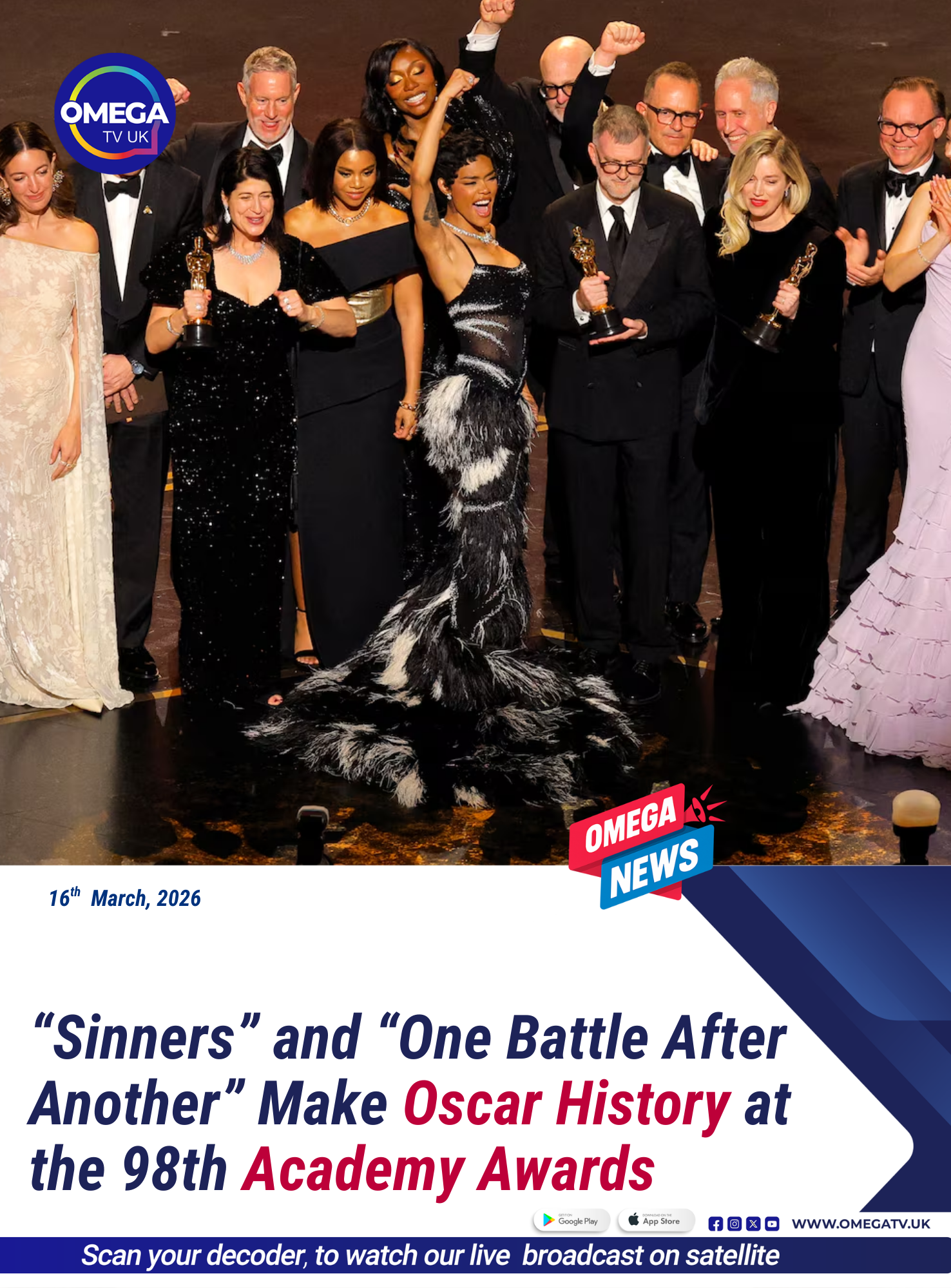
The 98th Academy Awards delivered one of Hollywood’s most memorable nights as two films — Sinners and One Battle After Another — dominated the ceremony and shared the spotlight.
Held at the Dolby Theatre in Los Angeles, the prestigious event saw both productions claim major honors, cementing their place in Oscar history.
The biggest winner of the night was One Battle After Another, directed by Paul Thomas Anderson. The political drama took home six Oscars, including Best Picture, Best Director, Best Adapted Screenplay, Best Supporting Actor, Best Editing and the newly introduced Best Casting award.
For Anderson, the recognition was particularly meaningful after being nominated multiple times throughout his career. During his acceptance speech, he shared that the film was written partly as a message to his children, expressing hope that the next generation would help improve the world.
Actor Sean Penn also made headlines after winning Best Supporting Actor, marking his third acting Oscar and setting a new record.
Meanwhile, Sinners, directed by Ryan Coogler, entered the ceremony with a record-breaking 16 nominations — more than any film in Oscar history.
While it missed out on Best Picture, the film still secured four major awards, including Best Original Screenplay, Best Original Score, Best Cinematography, and Best Actor.
One of the most emotional moments of the night came when Michael B. Jordan won his first Oscar for Best Actor. His performance playing twin characters Smoke and Stack made history as the first time an actor has won an Academy Award for portraying two roles in the same film.
Jordan’s victory was especially remarkable because it came with his very first Oscar nomination. Fellow actor Timothée Chalamet was among those who stood to applaud the historic moment.
Another groundbreaking win came from cinematographer Autumn Durald Arkapaw, who became the first woman ever to win the Oscar for Best Cinematography. Her work on Sinners was widely praised for its powerful visual storytelling.
Composer Ludwig Göransson also added another achievement to his career, winning Best Original Score for the film and marking his third Oscar victory.
Both films were produced by Warner Bros., giving the studio a dominant night with a combined total of ten Academy Awards.
With groundbreaking wins, emotional speeches, and historic milestones, the 98th Academy Awards proved to be a night that Hollywood and film fans around the world will not soon forget.