Julius Malema Sentenced to Five Years Over Gun Case but Wins Right to Appeal in Explosive Court Ruling

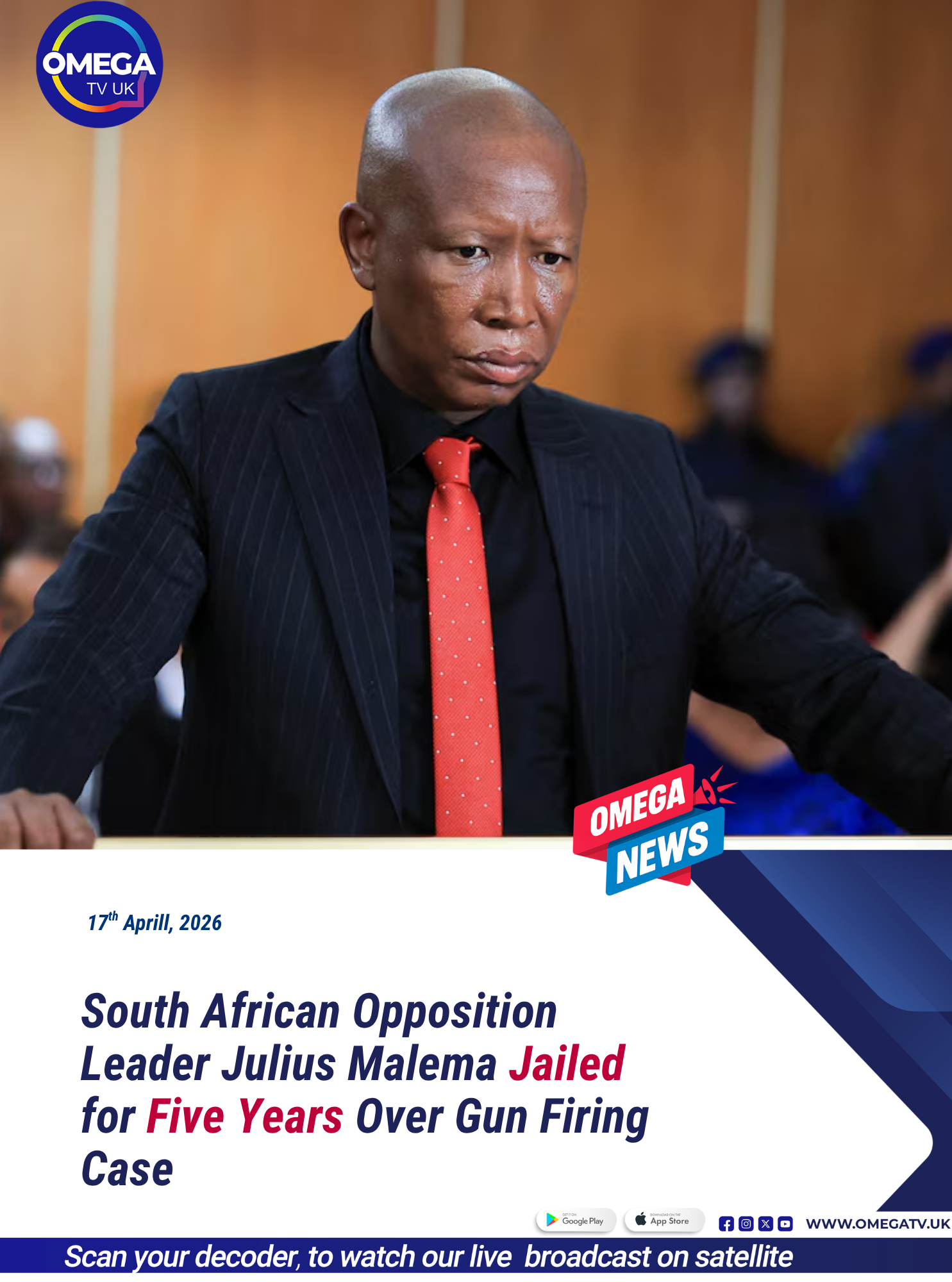
South African opposition leader Julius Malema has been sentenced to five years in prison after being found guilty of illegal possession of a firearm and discharging a weapon in public, in a case that has sparked major political reaction across the country.
However, the Economic Freedom Fighters (EFF) leader will not go to prison immediately, after the court granted him permission to appeal both the sentence and conviction.
The ruling was delivered by Magistrate Twanet Olivier at the KuGompo Magistrate’s Court, where Malema appeared in a dark suit and red tie, showing little emotion as the judgment was read out.
The case stems from a 2018 incident during the EFF’s fifth anniversary celebrations in the Eastern Cape, where a video surfaced showing Malema firing a semi-automatic rifle into the air. Prosecutors charged him with multiple offences, including unlawful possession of a firearm, firing in public, and reckless endangerment.
He was previously convicted of five counts last year, and the court has now imposed a combined effective sentence of five years’ imprisonment. If the conviction is ultimately upheld after appeals, Malema could also face disqualification from serving as a Member of Parliament.
Despite the ruling, legal analysts say the appeals process could take years, meaning Malema is likely to continue his political activities for the foreseeable future.
During the trial, Malema argued that the firearm was discharged as part of celebratory events. However, Magistrate Olivier rejected this explanation, stating that the act was not impulsive but formed part of the event’s planned proceedings.
Outside court, Malema addressed supporters and made strong political statements, claiming the case was part of a broader attempt to silence him. He did not provide evidence for the allegations, but insisted that his political movement would continue its struggle.
Supporters of the EFF gathered in large numbers outside the court, chanting and singing revolutionary songs in solidarity. When news broke that he would be allowed to appeal, the crowd erupted in celebration, with chants meaning “we are leaving with him today.”
Malema, once the head of the African National Congress Youth League, later formed the EFF after his expulsion from the ruling party. Under his leadership, the EFF has grown into one of South Africa’s largest opposition parties, gaining significant support in recent national elections.
His political career has long been marked by controversy, particularly around his calls for radical economic transformation, including land expropriation without compensation. He has also faced criticism for inflammatory rhetoric at political rallies.
Following the sentencing, reactions in South Africa have been sharply divided. Some political figures have expressed sympathy, while others insist the case is about accountability rather than politics.
The case was initiated after a video of the 2018 incident circulated widely, leading to legal action by the Afrikaner lobby group AfriForum. The organisation has maintained that the prosecution is about unlawful conduct, not racial politics.
Malema has previously faced other legal challenges, including a hate speech ruling related to comments made at a rally in 2022. That ruling found that his remarks demonstrated intent to incite harm, although his party disputed the interpretation.
Despite the legal setbacks, Malema remains a highly influential and polarising figure in South African politics. He has vowed to continue appealing the ruling all the way to the Constitutional Court, the country’s highest legal authority.
As the legal process unfolds, the case is expected to remain a major political flashpoint, with implications for both the EFF and South Africa’s broader political landscape.