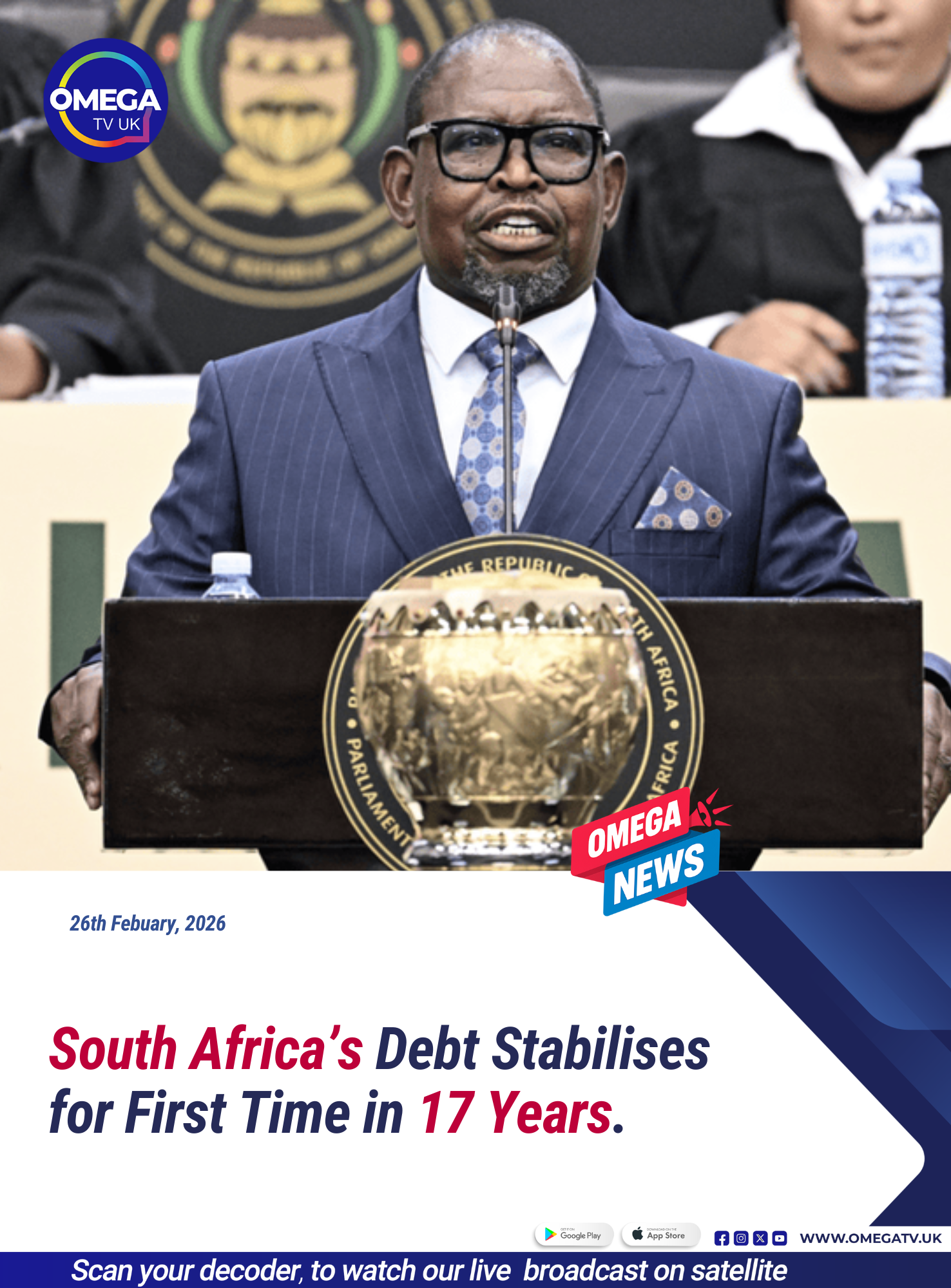
South Africa’s public debt has stabilised for the first time in 17 years, marking a notable turning point in the country’s fiscal management and broader economic recovery strategy.
For nearly two decades, South Africa’s debt-to-GDP ratio steadily climbed due to sluggish economic growth, widening budget deficits, rising public sector wage costs, and repeated financial bailouts for struggling state-owned enterprises. The upward trajectory raised concerns among investors and ratings agencies, placing sustained pressure on the country’s public finances.
Government officials say the latest figures show debt levels have now plateaued, reflecting improved revenue collection, tighter expenditure controls, and more disciplined borrowing practices. Treasury authorities attribute the shift to strengthened tax administration, better compliance measures, and efforts to streamline public spending without undermining essential services.
The stabilisation is being viewed as a critical step toward restoring fiscal credibility. Analysts note that containing debt growth can help reduce borrowing costs, strengthen investor confidence, and create room for targeted investments in infrastructure, social development, and economic expansion.
However, economists caution that stabilisation does not mean the country’s fiscal challenges are over. South Africa continues to face structural constraints, including persistently high unemployment, energy supply disruptions, and slow productivity growth. These issues limit the pace of economic expansion, which is essential for sustainably reducing the debt burden over time.
Energy shortages, in particular, have weighed heavily on economic output in recent years, affecting manufacturing, mining, and small businesses. Addressing these bottlenecks remains central to maintaining fiscal stability and supporting long-term growth.
Fiscal experts also warn that global economic uncertainty, fluctuating commodity prices, and external financial pressures could pose risks to the country’s progress. Maintaining debt stability will require consistent policy discipline, prudent budgeting and reforms aimed at boosting private-sector confidence and investment.
Despite these challenges, the milestone represents a psychological and financial boost for policymakers seeking to demonstrate progress. Stabilising debt sends a positive signal to both domestic and international markets that the government is committed to responsible fiscal management.
Sustaining this trend will depend on balancing expenditure restraint with strategic investments that drive inclusive growth. If economic performance improves and reforms continue, South Africa could gradually move from debt stabilisation toward gradual debt reduction in the coming years.