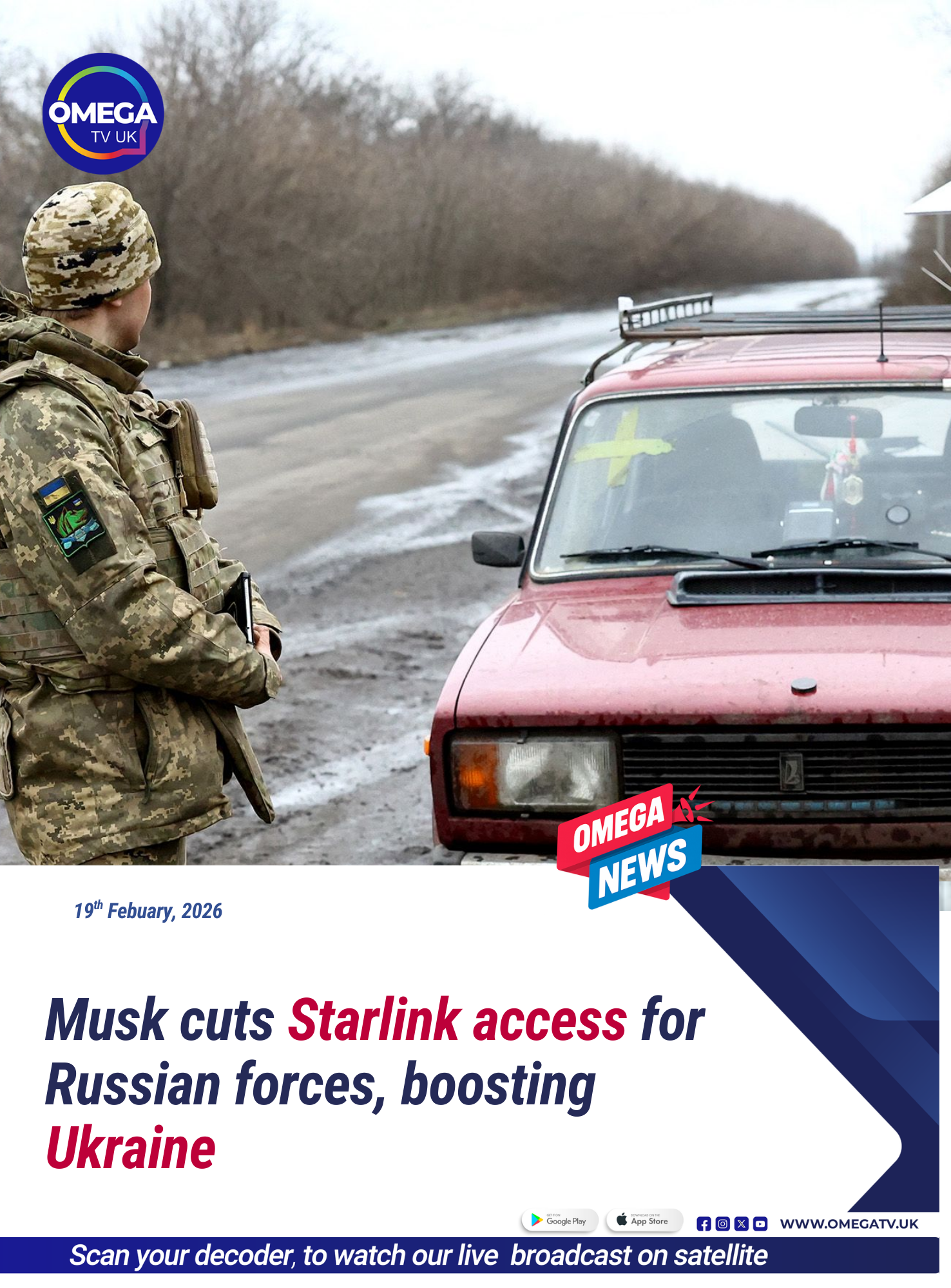
Mounting evidence suggests that Elon Musk’s decision to restrict Russian access to Starlink satellite internet has significantly disrupted Moscow’s battlefield coordination, potentially giving Ukraine a tactical advantage along key sections of the front line.
The move followed a request from Ukraine’s digital transformation minister, Mykhailo Fedorov, urging Musk’s aerospace company, SpaceX, to block Russian forces from using the satellite-based service. Since the beginning of February, Starlink terminals in Ukraine have reportedly operated only under a “white list” approved by Kyiv’s defence authorities.
Ukrainian soldiers say the impact has been immediate in certain areas. A drone operator identified by the callsign Giovanni claimed Russian forces have suffered a major reduction in offensive capability.
“The Russians lost their ability to control the field,” he said, estimating that their offensive capacity may have dropped by as much as half. According to him, there have been fewer assaults and a noticeable decline in coordinated drone activity.
Starlink’s high-speed, jam-resistant internet had played a critical role for both sides during the nearly four-year war. Russian forces were believed to have used the system to improve drone accuracy, attaching relatively inexpensive terminals to unmanned aerial vehicles to enable real-time targeting. Reports had linked the technology to long-range strikes deep inside Ukrainian territory.
However, with the restrictions now in place, Russian units near the front lines are said to be scrambling for alternatives. Ukrainian sources report that Russian forces have reverted in some areas to radio communication and wired systems, which are slower and more vulnerable to interception.
Ukrainian volunteer cyber activists from the group InformNapalm also took advantage of the disruption. According to spokesman Mykhailo Makaruk, the group conducted a phishing campaign that tricked Russian soldiers into revealing details about their Starlink terminals. InformNapalm claims it identified more than 2,400 terminals across occupied regions, from Crimea to parts of Belarus.
Some Russian personnel were allegedly deceived into making payments, believing they were fast-tracking reconnection. Once certain terminal locations near the front were identified, Ukrainian forces reportedly targeted them with artillery and drone strikes. These claims, however, are difficult to independently verify.
Ukraine’s Security Service (SBU) has warned citizens against collaborating with Russian forces in attempts to illegally register Starlink systems, describing such acts as treason punishable by lengthy prison terms.
On the battlefield, Ukrainian troops say communication breakdowns among Russian units have created openings. One soldier noted that without Starlink’s connectivity, it has become easier to anticipate enemy movements. Another described the disruption as crucial for protecting infrastructure, logistics hubs and command posts from coordinated drone strikes.
Military analysts argue that the biggest impact may be on long-range drone operations. Previously, Russian operators were believed to control strikes from distances of up to 250 kilometres behind the front line. Without reliable satellite links, that reach may now be limited.
Ukraine’s military intelligence agency has released alleged intercepted communications suggesting frustration among Russian troops over substitute systems, including equipment linked to Gazprom Space Systems. The authenticity of those intercepts cannot be independently confirmed.
Despite these reported setbacks, not all Ukrainian soldiers believe the shift is decisive. Some say shelling and drone activity remain intense, attributing fluctuations to weather conditions or routine troop rotations rather than solely to Starlink restrictions.
Russian officials have publicly downplayed the significance of losing access to the system, claiming it was used by only a limited number of units.
Even Ukrainian commanders caution that the advantage may be temporary. Giovanni, speaking near the contested eastern city of Pokrovsk, predicted Russian forces would eventually adapt.
Analysts suggest Ukraine may have a limited window perhaps a few months to exploit the disruption. While a repeat of Ukraine’s sweeping territorial gains in 2022 appears unlikely, even modest advances could strengthen Kyiv’s leverage in any future negotiations.
For now, Ukrainian forces are attempting to expand control over contested “grey zone” areas between the two armies, seeking to capitalize on what some describe as a rare moment of Russian vulnerability.