Trump Faces Backlash After Invoking 9/11 in Attack on Abdul El-Sayed
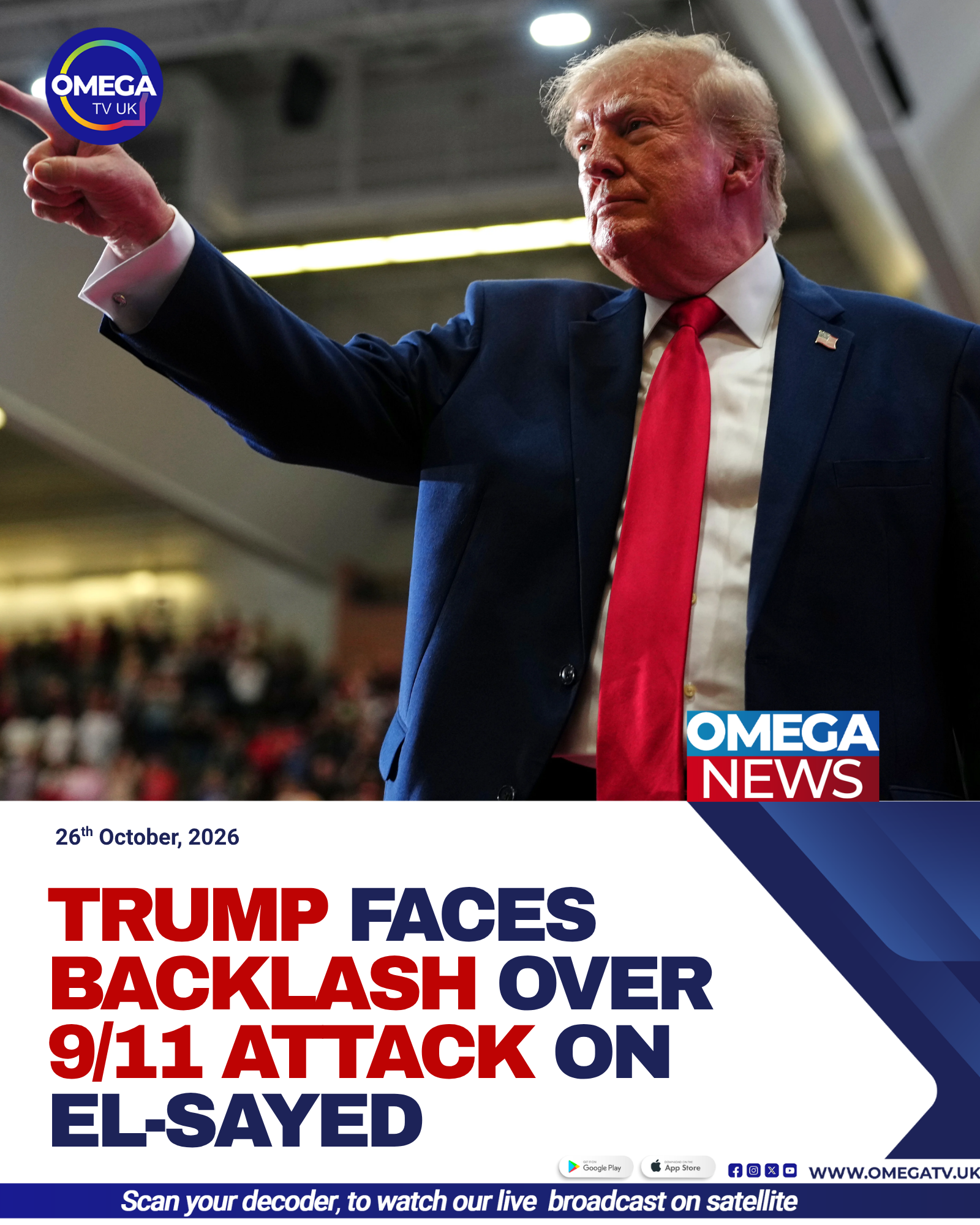
US President Donald Trump is facing criticism after invoking the September 11 attacks during a rally in Michigan, where he labelled Democratic Senate candidate Abdul El-Sayed a “jihadist” and accused him of having links to the Muslim Brotherhood.

Trump made the remarks on Sunday, 25 October, while campaigning for Republican Senate candidate Mike Rogers ahead of the November 3 midterm elections. He also suggested El-Sayed would have to pass through a metal detector before being allowed into the Senate, intensifying criticism of his comments. <Cite refs={[“turn559362news19″,”turn559362search0”]}/>
During the rally, Trump warned that a Democratic victory would allow extremists into the United States. He also introduced David Beamer, the father of Todd Beamer, who was among the passengers who fought back against hijackers aboard United Airlines Flight 93 on September 11, 2001.
Trump invoked Todd Beamer’s actions while urging Michigan voters to prevent El-Sayed from entering the Senate, drawing a direct comparison between the election contest and the terrorist attacks.
The remarks prompted criticism from El-Sayed and other political figures, who accused Trump of using anti-Muslim rhetoric to undermine the Democratic candidate.
El-Sayed responded at a rally of his own, saying he would proudly accept being addressed by his middle name, Mohamed. He argued that references to his name and religion were being used to distract voters from pressing concerns such as the cost of fuel, groceries and healthcare.
Senator Bernie Sanders, who appeared alongside El-Sayed, said the attacks were being used because his opponents had little to say about the issues affecting ordinary Americans.
Claims of Muslim Brotherhood links
Trump and other Republicans have attempted to associate El-Sayed with the Muslim Brotherhood, an Islamist movement founded in Egypt. El-Sayed has repeatedly denied any connection to the organisation.
His opponents have pointed to statements made by family members and writings from more than a decade ago as part of their argument. A 2012 social media post by his half-sister, Eman Abdelhadi, appeared to refer to her family’s historical links to the movement. El-Sayed’s campaign has previously distanced him from other comments made by Abdelhadi.
In a 2011 opinion article, El-Sayed discussed concerns surrounding Egypt’s democratic transition and the possibility that the Muslim Brotherhood could gain political power. He has since explicitly rejected suggestions that he is affiliated with the organisation.
At a recent town hall, El-Sayed was asked whether he would disavow the Muslim Brotherhood. He responded, “Absolutely.”
Republican candidate Mike Rogers has also questioned El-Sayed’s associations, although he said he had not personally called the Democrat a terrorist.
Criticism from former Trump ally
Trump’s remarks also drew condemnation from Bishara Bahbah, founder of Arab Americans for Trump, a group that supported Trump’s outreach to Arab American voters during the 2024 presidential election.
Bahbah described the president’s statements as unacceptable and racist, saying they had crossed a red line.
The controversy is unfolding in Michigan, a closely watched battleground state with a significant Arab American population. Trump won the state in 2024, but the Senate contest is expected to be highly competitive.
El-Sayed, a former public health official born in the United States to Egyptian parents, would become the first Muslim elected to the US Senate if he wins the seat.
The race has increasingly centred on questions of identity, religion and national security, alongside economic concerns and access to healthcare. With Election Day approaching, the dispute over Trump’s remarks has added to an already tense campaign.