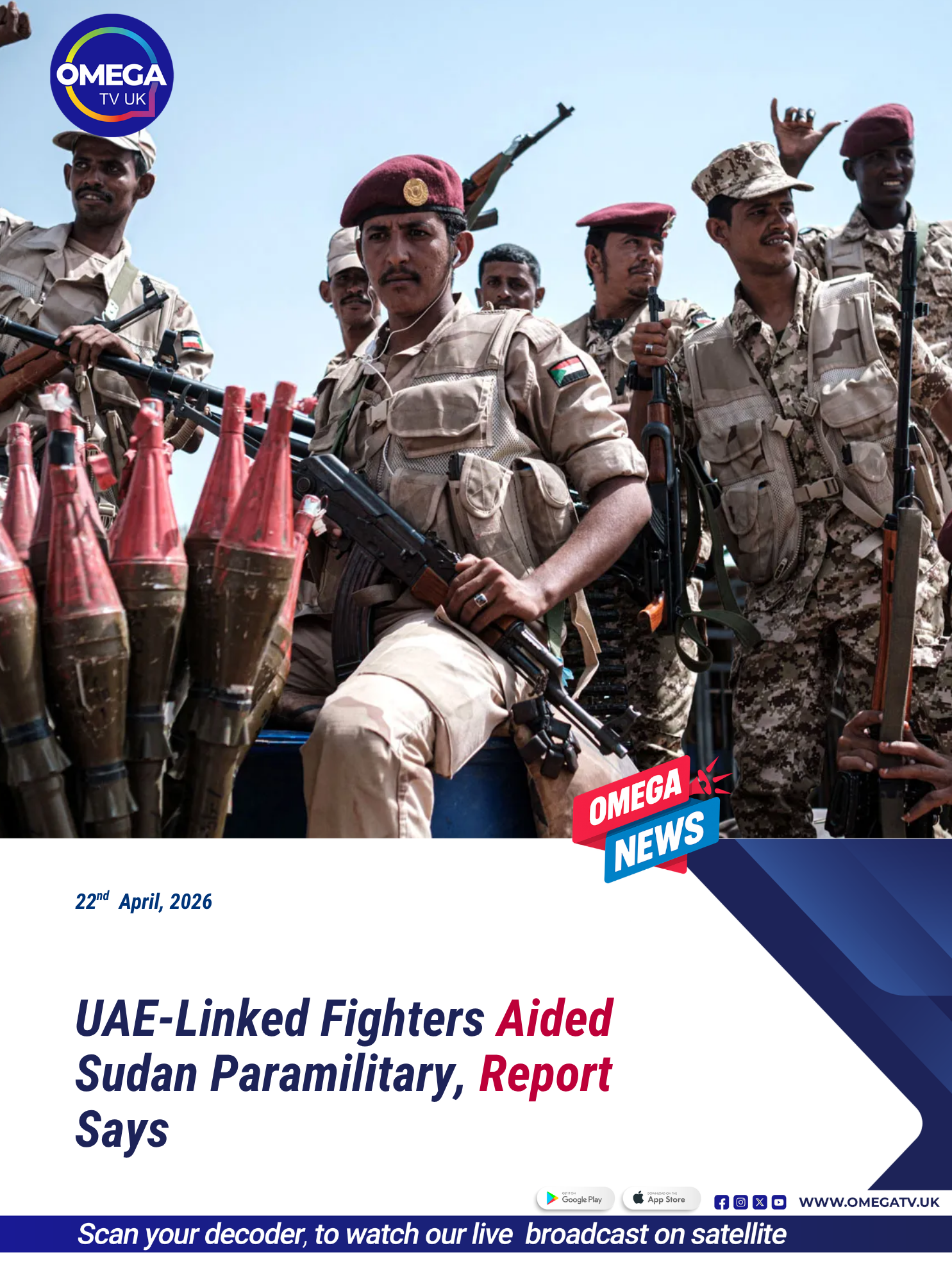
A new investigation has revealed that a network of Colombian mercenaries, allegedly backed by the United Arab Emirates (UAE), played a key role in supporting Sudan’s paramilitary Rapid Support Forces (RSF) during one of the most brutal phases of the country’s ongoing war.

According to a report by the Conflict Insights Group (CIG), the mercenaries were instrumental in helping the RSF capture the strategic western city of el-Fasher last year. The findings are based on extensive digital tracking, including mobile phone data linked to Colombian fighters operating in Sudan.
The UAE has repeatedly denied supporting the RSF, which has been locked in a prolonged and devastating conflict with Sudan’s national army. However, the report claims to provide some of the strongest evidence yet of a direct connection.
CIG director Justin Lynch said the findings confirm what many governments have long suspected — that there are direct operational links between Emirati networks and the RSF’s military activities.
The investigation tracked more than 50 mobile devices believed to belong to Colombian mercenaries between April 2025 and early 2026. These devices were detected in key RSF-controlled areas, including Nyala and South Darfur, where drone operations were reportedly launched.
The data also traced travel routes from Colombia to Abu Dhabi, including a UAE military training facility, before fighters were deployed into Sudan. Some devices later connected to networks with names linked to combat roles, suggesting involvement in drone warfare and artillery coordination.
The fall of el-Fasher followed an 18-month siege and was marked by widespread violence, with international observers describing the events as potential war crimes and crimes against humanity.
The report alleges that the mercenaries, operating under a unit known as the “Desert Wolves,” played a significant role in these operations, serving as drone pilots, instructors, and combat support personnel.
Colombian President Gustavo Petro previously condemned the recruitment of such fighters, calling them “spectres of death” and warning that the practice amounts to a form of human trafficking.
While foreign involvement in Sudan’s war has long been suspected, analysts say this latest evidence highlights how international networks may be fueling and prolonging the conflict.
The UAE has yet to respond to the latest findings but has previously dismissed similar accusations as false and unfounded.