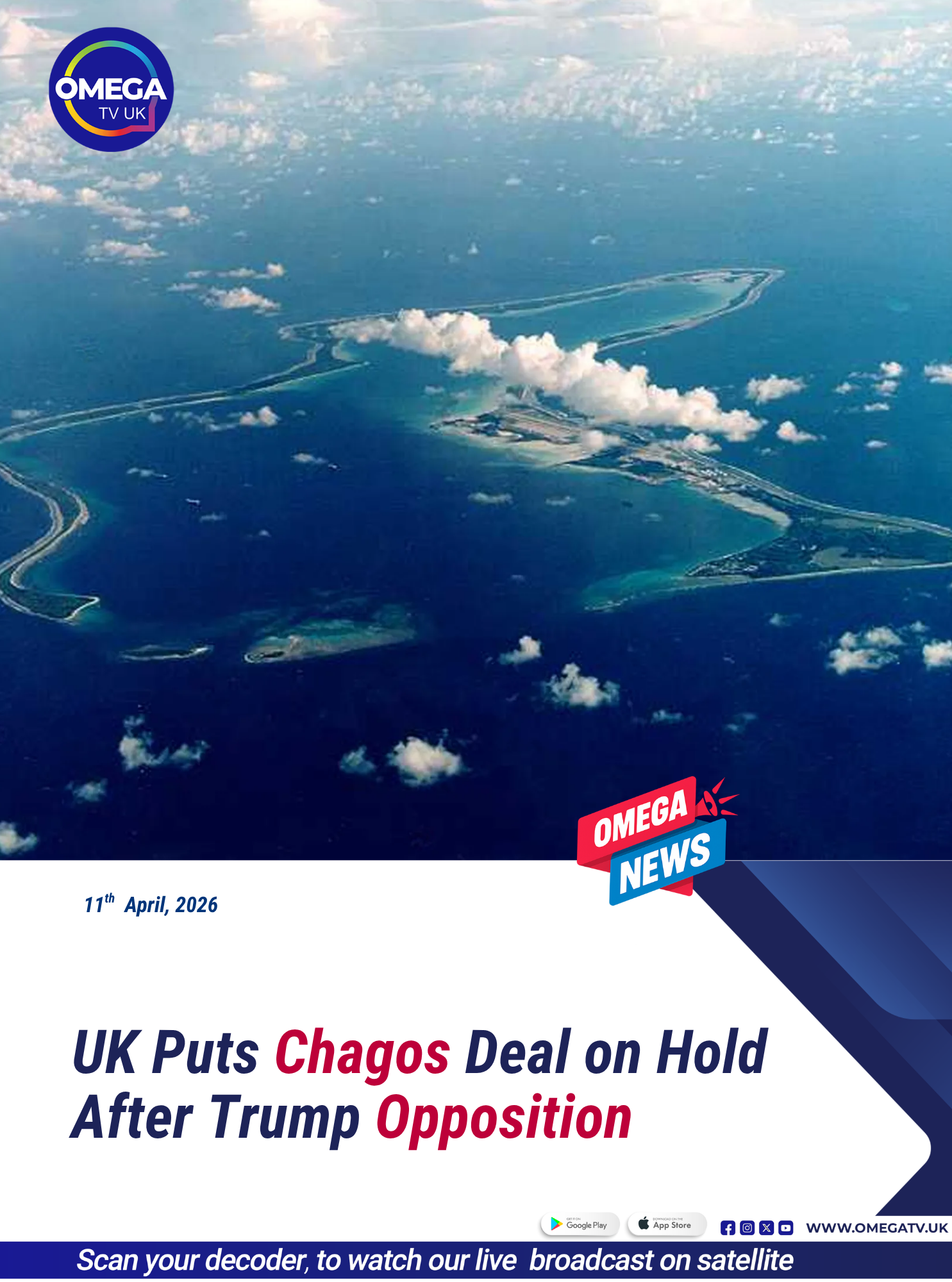
The United Kingdom has moved to pause its controversial Chagos Islands agreement following strong political opposition from former US President Donald Trump, casting fresh uncertainty over one of the most sensitive diplomatic arrangements between London and Washington.
The deal, which concerns the future sovereignty of the British Indian Ocean Territory, including the strategically important military base on Diego Garcia, had been in the final stages of legal approval before being shelved. Officials say the agreement has not been permanently abandoned, but its progress has effectively stalled amid political pressure and a lack of formal US endorsement.
The Chagos Islands have long been a point of international dispute. The UK has controlled the archipelago since the 19th century, but Mauritius has consistently claimed sovereignty over the territory. In recent years, international legal and diplomatic pressure has increased on Britain to transfer control of the islands back to Mauritius.
Under the proposed agreement, the UK would cede sovereignty of the islands to Mauritius while maintaining operational control of the Diego Garcia military base through a long-term lease arrangement. The base is considered one of the most strategically significant military sites in the world, jointly used by the United Kingdom and the United States.
The deal also included substantial financial commitments, with the UK expected to pay an average of £101 million annually to maintain access to the base. Supporters of the agreement argued that it would secure long-term legal clarity over the territory and strengthen international law compliance.
However, the plan has faced growing political resistance, particularly after Donald Trump publicly criticised the arrangement. The former US president described the deal as an “act of total weakness” and urged the UK government to abandon it entirely. His comments marked a significant shift from earlier signals of conditional support by US officials.
The absence of formal US approval has proved critical. UK government sources have acknowledged that a legally required exchange of letters confirming US agreement has not been completed. Without this step, the treaty cannot be fully implemented.
Officials have stressed that the government remains committed to maintaining strong defence cooperation with the United States. A spokesperson said Diego Garcia remains a “key strategic military asset” for both countries, and that safeguarding its operational future remains the government’s top priority.
Despite this, the shelving of the legislation has sparked political backlash across the UK. Opposition parties have accused the government of mismanaging negotiations and allowing external political pressure to derail foreign policy strategy.
Critics argue that the handling of the Chagos deal reflects deeper instability in international relations and highlights the challenges of balancing legal obligations with strategic military interests. Supporters of the agreement, however, maintain that resolving the dispute with Mauritius is essential for long-term diplomatic stability and adherence to international law.
The situation is further complicated by the interests of the Chagossian people, many of whom were displaced from the islands in the 1960s and 1970s. Some groups have welcomed any move that could eventually lead to resettlement opportunities, while others fear the current political uncertainty could delay or permanently derail their hopes of returning.
Legal experts note that the International Court of Justice has previously ruled that the UK should end its administration of the islands “as rapidly as possible,” though the opinion is not legally binding. Nevertheless, it has added significant diplomatic pressure on Britain in recent years.
As the UK government reassesses its position, the future of the Chagos Islands remains uncertain. While officials insist the agreement is not dead, its suspension signals a major setback in one of the most complex territorial negotiations in modern British foreign policy.
For now, the deal remains in limbo—caught between international law, strategic military interests, and the shifting politics of US-UK relations.