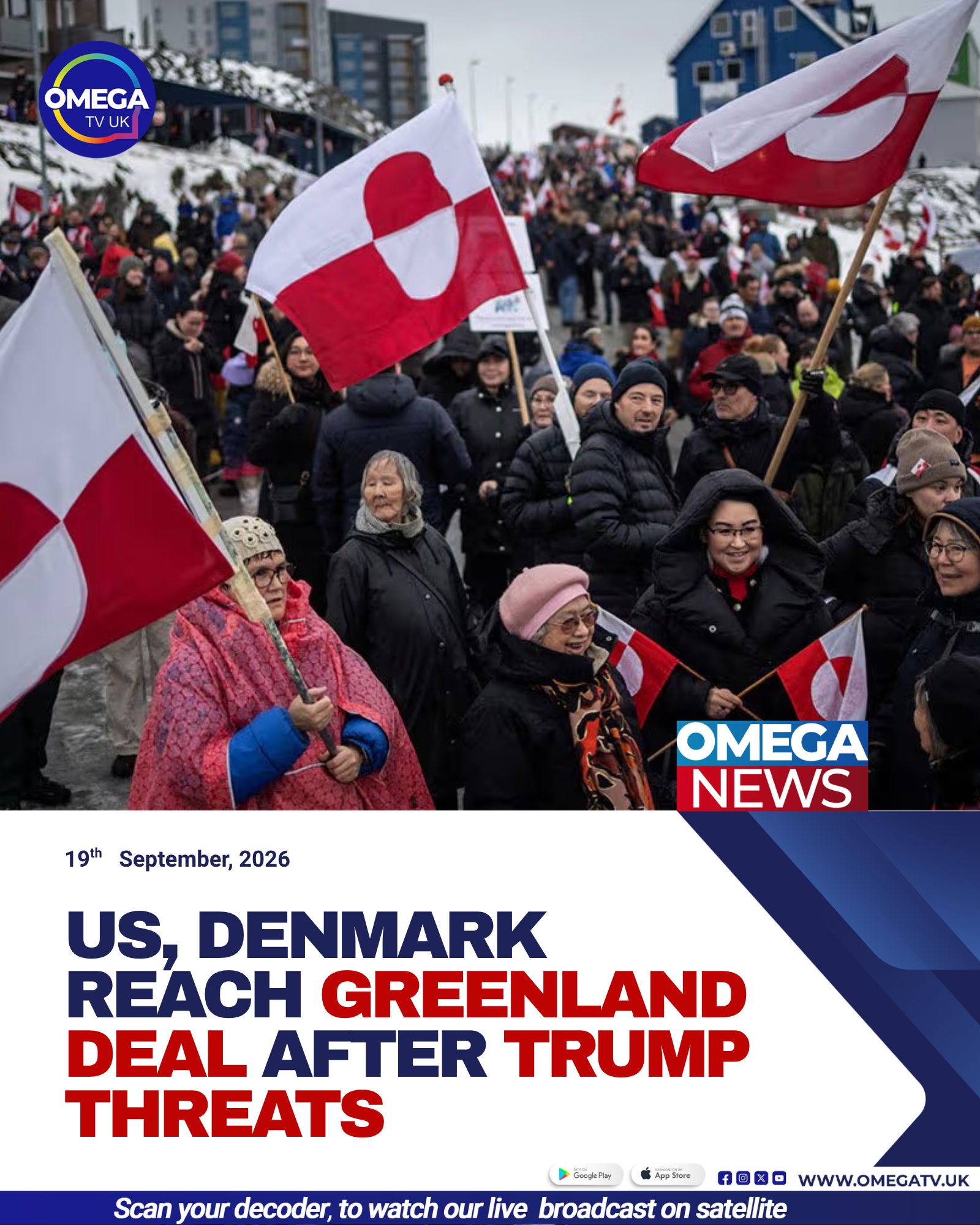
US and Denmark Reach Greenland Security Deal After Trump’s Annexation Threats
The United States, Denmark and Greenland have reached an agreement aimed at strengthening security in the Arctic and North Atlantic, following months of diplomatic tensions over President Donald Trump’s demands for greater US control of Greenland.

Trump announced the agreement on Friday, saying it would give the United States “permanent control over security” and other security-related needs in Greenland. He said the arrangement would allow Washington to take measures it considers necessary to protect Greenland and US national security.
Trump also said the agreement would prevent countries he considers US adversaries from establishing military bases or maintaining a military presence in Greenland, while restricting sensitive investments without US approval.
The announcement follows months of pressure from Trump, who had repeatedly argued that Greenland’s strategic location and mineral resources made it important to US national security. He had previously suggested that Washington could take control of the territory, including through military force.
Denmark’s Prime Minister Mette Frederiksen welcomed the agreement, saying it would strengthen security in the Arctic and North Atlantic while recognising the sovereignty and territorial integrity of the Kingdom of Denmark and the right of Greenland’s people to self-determination.
Frederiksen said the agreement would be signed during the United Nations General Assembly in New York next week and would still have to go through the necessary parliamentary procedures before taking effect.
Greenland’s Prime Minister Jens-Frederik Nielsen also welcomed the agreement, saying it recognised Greenland’s interests and its role in international cooperation.
US gains expanded military rights
Although Trump described the agreement as giving the US permanent control over security, the full text of the deal has not been publicly released.
According to a US official cited by Reuters, the agreement would provide the United States with permanent access, basing and overflight rights in Greenland. It would also allow Washington to construct additional military facilities without requiring approval from Greenland or Denmark, according to the official.
The agreement would also prevent non-NATO countries from establishing military bases in Greenland and restrict investments by countries considered US adversaries in sensitive sectors.
The US already maintains a military installation at Pituffik Space Base in northwestern Greenland, with more than 100 American personnel stationed there. Washington has had military access to the territory under a 1951 defence agreement with Denmark.
The new arrangement is therefore expected to expand existing American military rights rather than transfer ownership of Greenland to the United States.
Trump’s long-standing proposal to purchase or annex Greenland has not resulted in a change to the territory’s status. Reuters reported that the agreement instead focuses on expanding US security access while keeping Greenland under Danish sovereignty.
Greenland’s strategic importance
Greenland is strategically located between North America and Europe and has become increasingly important to Arctic security as military and geopolitical competition grows.
Trump has also linked Greenland to his proposed Golden Dome missile defence system, which he says would protect the United States against potential missile attacks from countries including Russia and China.
The territory is also rich in rare earth elements and other minerals considered important for industries including electric vehicles, mobile phones, renewable energy and advanced technology.
The European Union has separately sought to strengthen its relationship with Greenland. Earlier this month, European Commission President Ursula von der Leyen announced plans for €200 million in EU investment focused on critical minerals, renewable energy and satellite communications.
The Greenland agreement follows months of disagreement between Washington and Copenhagen over the territory’s future. Danish officials had repeatedly maintained that Greenland was not for sale, while Greenlandic leaders have emphasised the territory’s right to determine its own future.
The new agreement is expected to ease some of the immediate diplomatic tensions, although questions remain about how the provisions will be implemented and how they will interact with Greenland’s existing autonomous status.
US Secretary of State Marco Rubio described the agreement as a “historic deal” and said it addressed Washington’s long-term national security concerns in Greenland.
However, because the official text has not yet been publicly released, the precise scope of the new US rights remains unclear.