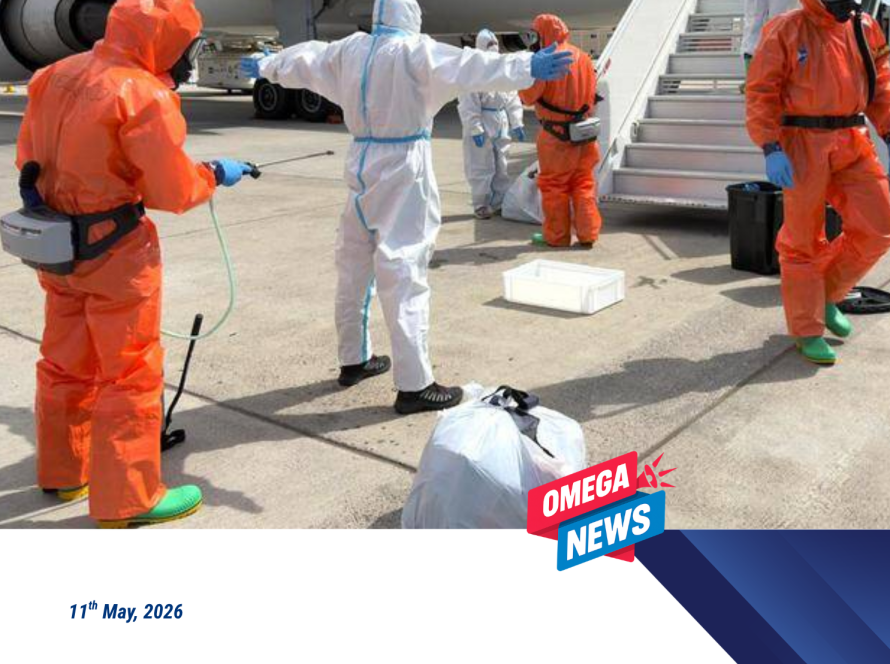
The World Health Organization says there are encouraging signs in the fight against an Ebola outbreak in the Democratic Republic of Congo, but warns that the epidemic remains dangerous as infections continue to rise sharply in parts of the east.

WHO Director-General Tedros Adhanom Ghebreyesus said transmission has started to decline in the hardest-hit areas of Ituri province, while South Kivu has recorded no new cases since May. More than 1,700 people have recovered from the disease.
“We are now starting to see encouraging signs that we’re gaining ground,” Tedros said. He added that after four months of response efforts, the outbreak has remained largely concentrated in northeastern parts of the country.
However, the WHO chief stressed that the situation remains fragile. More than 7,200 confirmed cases and over 3,500 deaths have been reported across seven provinces, according to the latest WHO figures.
North Kivu has emerged as a particular concern, with cases increasing rapidly. WHO said the number of weekly cases there almost doubled over a two-week period, rising from around 100 to more than 200.
The outbreak is being caused by the Bundibugyo virus, a relatively rare Ebola species. WHO data shows the disease has now spread across 62 health zones in seven provinces, with South Ubangi becoming the latest province to report a confirmed case.
Ituri remains the main centre of the outbreak and accounts for the majority of reported infections. Although transmission there is declining, WHO officials warn that the reduction is occurring from a very high level and that hundreds of new cases and deaths continue to be recorded.
WHO Director for Epidemic and Pandemic Management Maria Van Kerkhove urged caution, saying the response could not afford to assume that the outbreak had peaked everywhere.
The response is also being complicated by insecurity, difficult roads, high population movement and attacks on some health workers and facilities. These conditions make it harder for teams to reach remote communities, identify cases and monitor people who may have been exposed.
Health authorities are continuing surveillance, contact tracing, laboratory testing and rapid-response operations. WHO also said trials of treatments and post-exposure prevention are advancing, while vaccine trials are expected to begin in the coming weeks.
More than 3,000 frontline workers have already received Merck’s Ervebo vaccine, although its effectiveness against the Bundibugyo strain responsible for the current outbreak remains uncertain. Researchers are also studying vaccines specifically designed to target the strain.
WHO has called for sustained international support as the response continues. Tedros warned that Ebola is adding to other humanitarian pressures in Congo, including hunger, displacement and limited access to healthcare.