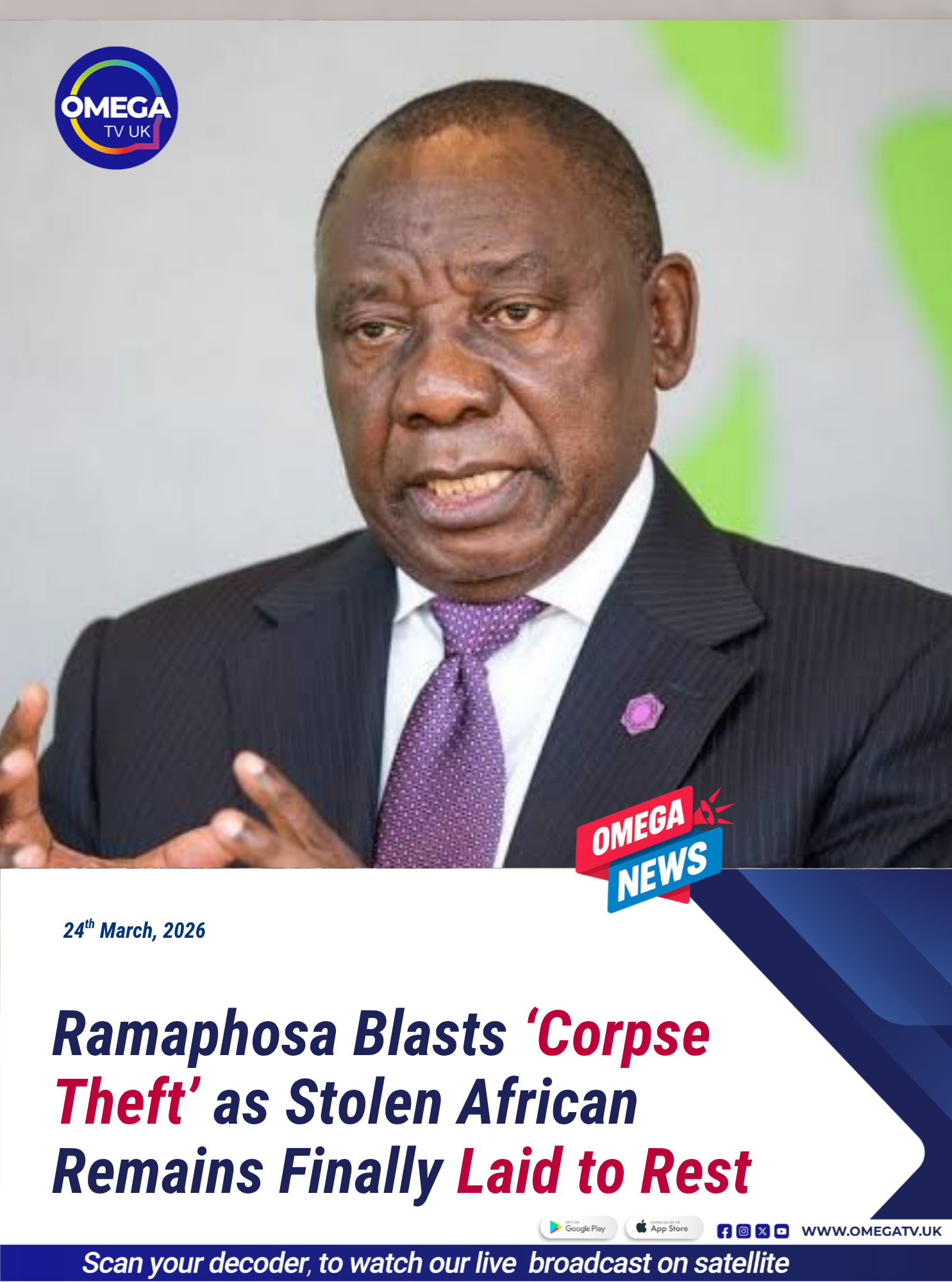
South Africa has reburied the remains of at least 63 ancestors from the Khoi and San communities, marking a significant moment in efforts to restore dignity to victims of colonial-era practices.

The remains, which had been taken to Europe for scientific research between 1868 and 1924, were repatriated from University of Glasgow in Scotland. Some had also been held at the Iziko Museum for decades.
The reburial ceremony took place in Steinkopf, where government officials, traditional leaders and community members gathered to honour the dead.
President Cyril Ramaphosa strongly criticised the historical removal of African remains, describing it as “corpse theft” and a grave injustice.
“They sought to reduce our ancestors into objects, but we must affirm that they were not objects,” Ramaphosa said during the ceremony.
The Khoi and San, widely regarded as the earliest inhabitants of southern Africa, resisted colonial rule and suffered greatly under European expansion. Many of those whose remains were taken were victims of that violence.
The repatriation follows negotiations between South Africa and the University of Glasgow that began in 2022. It forms part of a broader movement across Africa to reclaim human remains and cultural artifacts removed during colonial times.
Ramaphosa also called on European nations to acknowledge past injustices and consider reparations for the harm caused during colonial rule.