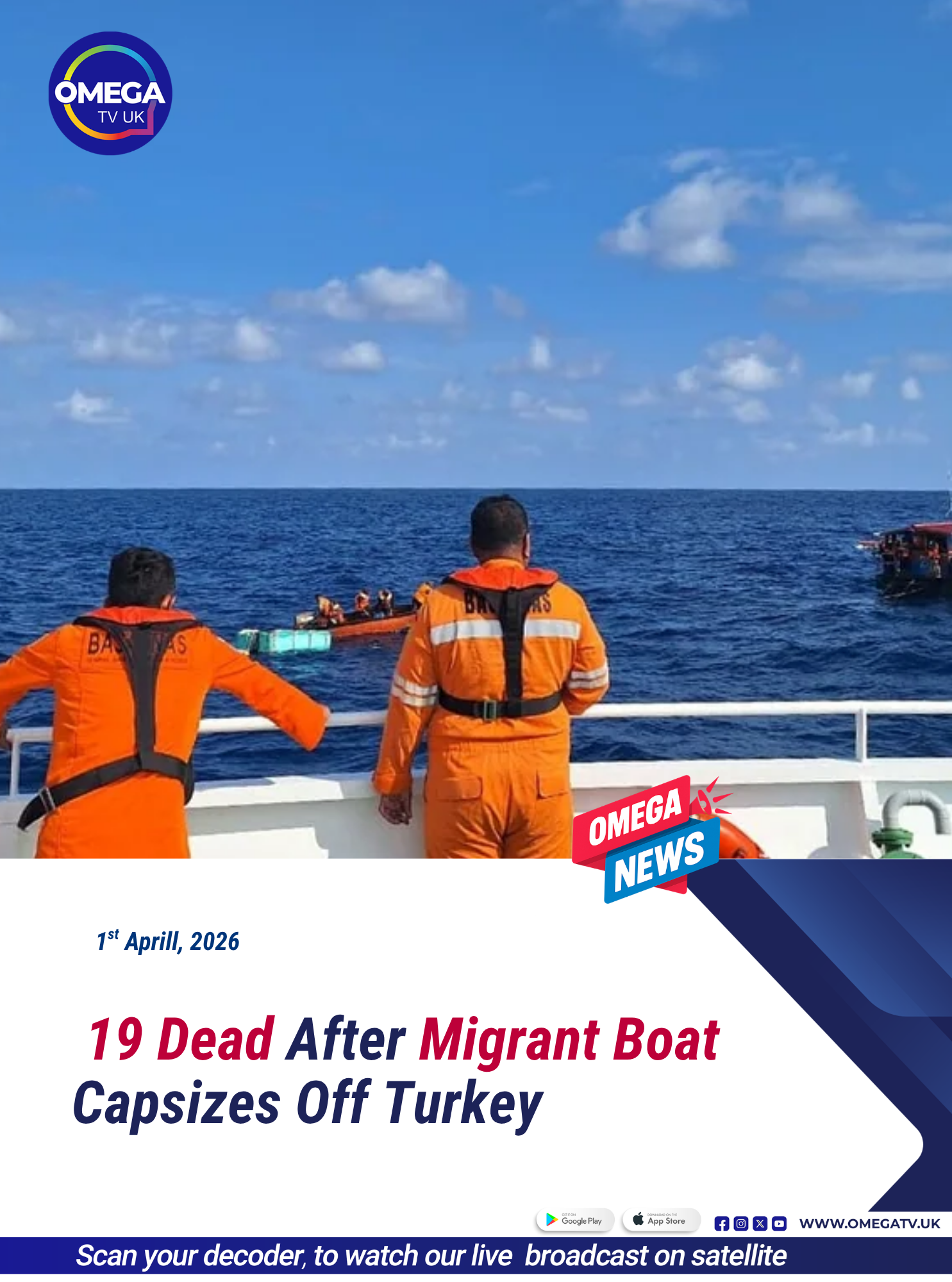
A tragic migrant boat disaster in the Aegean Sea has left at least 19 Afghan migrants dead, including a baby, after their vessel capsized off the coast of southwestern Turkey while attempting to evade authorities.

The incident occurred near Bodrum, a well-known tourist destination, where a fast-moving boat carrying dozens of migrants overturned in rough sea conditions. According to the Turkish Coast Guard Command, the vessel had ignored repeated warnings to stop and instead attempted to flee at high speed, leading to the fatal accident.
Officials said the boat began taking on water as it navigated choppy waves before eventually capsizing. Emergency response teams were quickly dispatched to the scene, launching a rescue operation supported by helicopters and nearby vessels.
Rescuers managed to pull at least 21 survivors from the water, many of whom were found struggling to stay afloat amid the strong currents. The bodies of 18 victims were initially recovered at sea, while another migrant later died in hospital, bringing the confirmed death toll to 19.
Search and rescue operations are ongoing, with authorities still looking for at least one person believed to be missing. Officials have not ruled out the possibility that the number of victims could rise as efforts continue.
Local authorities confirmed that all those on board were Afghan nationals. Idris Akbiyik, governor of the Mugla province where the incident took place, said the victims included vulnerable individuals, among them a baby, highlighting the human cost of dangerous migration journeys.
The disaster once again draws attention to the perilous routes taken by migrants attempting to reach Europe. The waters between Turkey and nearby Greek islands have long been a key crossing point for those fleeing conflict, poverty, or instability in search of a better life.
Just a short distance from Bodrum lies Kos, one of several Greek islands that migrants often try to reach. Others in the vicinity include Kalymnos, Leros, and Symi — all of which have seen arrivals in previous migration waves. The relatively short distance, however, can be deceptive, especially when crossings are attempted in overcrowded or unsafe boats.
This latest incident underscores the risks migrants face when relying on smugglers or attempting to avoid interception by authorities. Speeding through rough waters to escape law enforcement can significantly increase the likelihood of accidents, particularly when vessels are not equipped to handle difficult sea conditions.
Turkey remains a major transit country for migrants heading toward Europe, and its coast guard frequently conducts patrols to prevent illegal crossings. Authorities often warn that such journeys are extremely dangerous, especially during periods of bad weather or when undertaken in poorly maintained boats.
Humanitarian organisations have repeatedly called for safer and more legal pathways for migrants, arguing that tragedies like this could be avoided if people were not forced into risky crossings. The loss of life in the Aegean Sea has become a recurring issue over the years, with numerous incidents highlighting the dangers of irregular migration.
For survivors of this latest disaster, the ordeal is likely to leave lasting physical and emotional scars. Many migrants undertake these journeys after already enduring significant hardship in their home countries, only to face life-threatening conditions at sea.
As the search continues and authorities work to identify the victims, the incident serves as a stark reminder of the human toll behind migration statistics. Behind each number is a story of hope, desperation, and, in too many cases, tragedy.