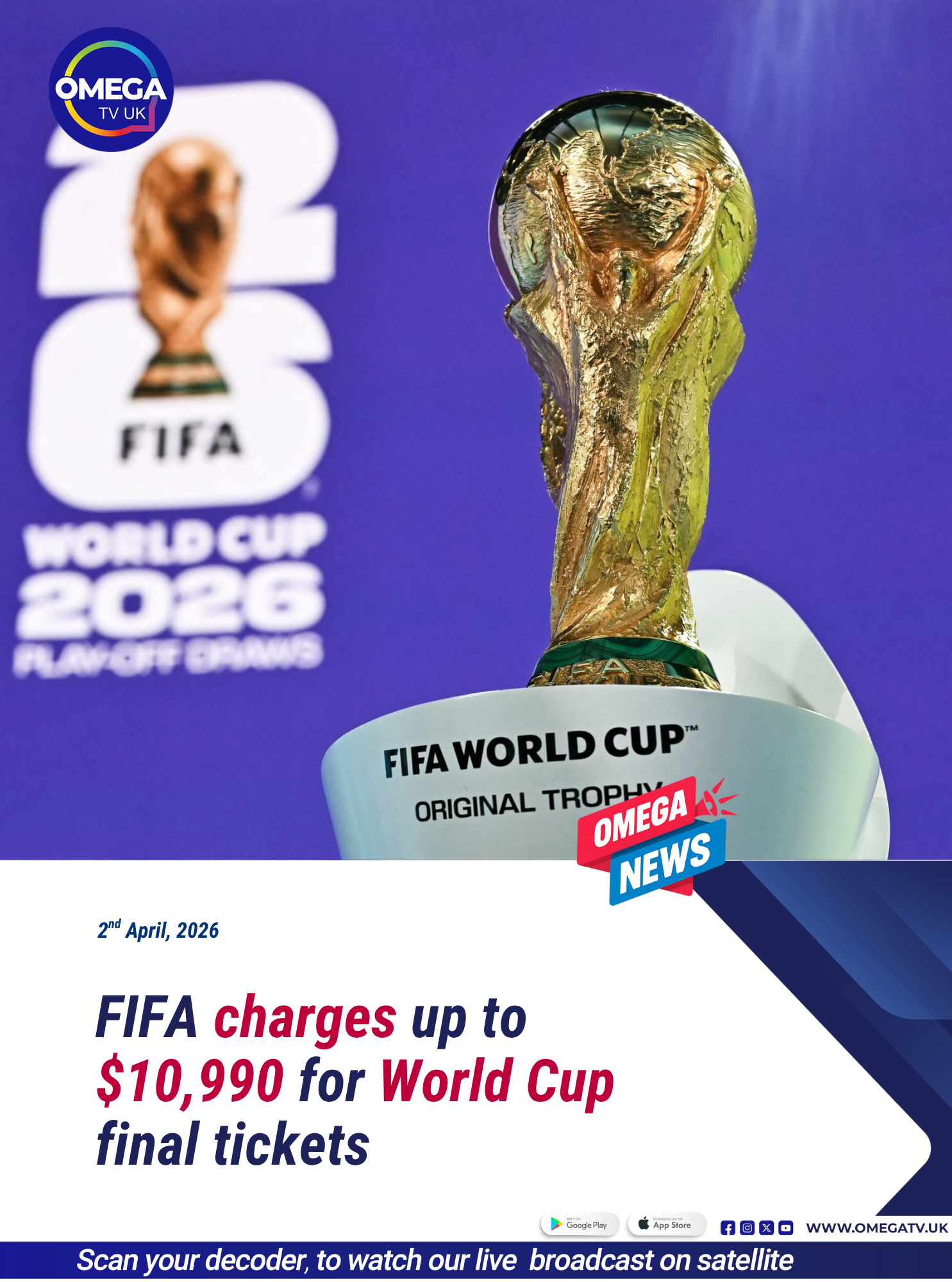
The FIFA has sparked widespread debate after raising the top ticket price for the 2026 World Cup final to as high as $10,990 (£8,333), marking what is believed to be the most expensive general admission to a football match ever recorded.

The increase was revealed during the first open ticket sale for the tournament, co-hosted by the United States, Canada and Mexico. The price stands in stark contrast to earlier projections made in the countries’ World Cup bid book, which had suggested a maximum final ticket price of $1,550 (£1,174).
Since then, ticket prices have steadily increased across multiple sales phases. By December, when tickets were released to official supporters’ clubs, the highest price had already climbed to $8,680 (£6,581). The latest open sale pushed that figure even higher, reflecting a pattern of rising costs as demand increases.
The final is expected to be one of the most sought-after events in global sport, and FIFA has implemented a pricing system that adjusts based on demand. This “dynamic pricing” approach means ticket prices can change between sales phases, with more popular matches commanding significantly higher prices.
For comparison, the most expensive ticket for the 2022 World Cup final in Qatar was around $1,604 (£1,214), highlighting just how sharply prices have risen for the upcoming tournament.
FIFA has not publicly released full details of its ticket pricing structure, making it difficult to determine the exact number of tickets available at each price level. However, analysis of the official ticketing website suggests significant price increases across categories. Category two tickets rose by over 32%, while category three saw increases of more than 38% compared to previous sales.
The organisation has also faced criticism for its lack of transparency, as well as the limited availability of lower-cost tickets. Although a small number of tickets were previously offered at around $60 (£45), the majority of available seats fall into much higher price brackets.
The ticketing process itself has also drawn complaints from fans. During the latest sales phase, users experienced long waiting times and technical issues. Some supporters reported being placed in incorrect queues, while others were forced to restart the process after system errors redirected them to the wrong ticket category.
One reported issue involved fans being directed to a queue for “PMA tickets,” which are reserved for supporters of play-off teams. By the time the error was resolved, many had lost their place in line and missed out on opportunities to purchase tickets for high-demand matches.
Access to tickets, when finally granted, did not guarantee availability for the most popular games. Many of the most anticipated matches, including knockout rounds and fixtures involving major teams, were either unavailable or had extremely limited allocation.
Prices for available group-stage matches ranged from $140 (£106) to nearly $3,000 (£2,261), with an average price of $358 (£271). One of the most expensive group-stage games identified was the opening match between Mexico and South Africa, priced at $2,985 (£2,261), though only a small portion of tickets were available to the public.
FIFA has also offered corporate hospitality packages, which further highlight the high cost of attending the tournament. For example, a luxury package for England versus Panama reportedly costs $124,800 (£94,444), including 24 match tickets, food, and drinks. This breaks down to more than $5,000 (£3,935) per person.
The organisation’s resale platform is also expected to drive prices even higher, as both buyers and sellers will be charged additional fees. This secondary market could make attending matches even more expensive, particularly for high-demand fixtures.
Concerns have also been raised about accessibility. Critics argue that the pricing structure may make it difficult for ordinary fans to attend, limiting access to wealthier supporters or corporate buyers. FIFA has faced ongoing scrutiny over ticket affordability and fairness in previous tournaments, and the latest price increases are likely to intensify that debate.
Despite the criticism, FIFA has indicated that additional tickets may be released closer to the tournament, potentially increasing availability for fans. However, there is no guarantee that these tickets will be more affordable or easier to obtain.
As excitement builds for the 2026 World Cup, the soaring cost of attending the final has become a major talking point, raising broader questions about the balance between commercialisation and accessibility in global football.