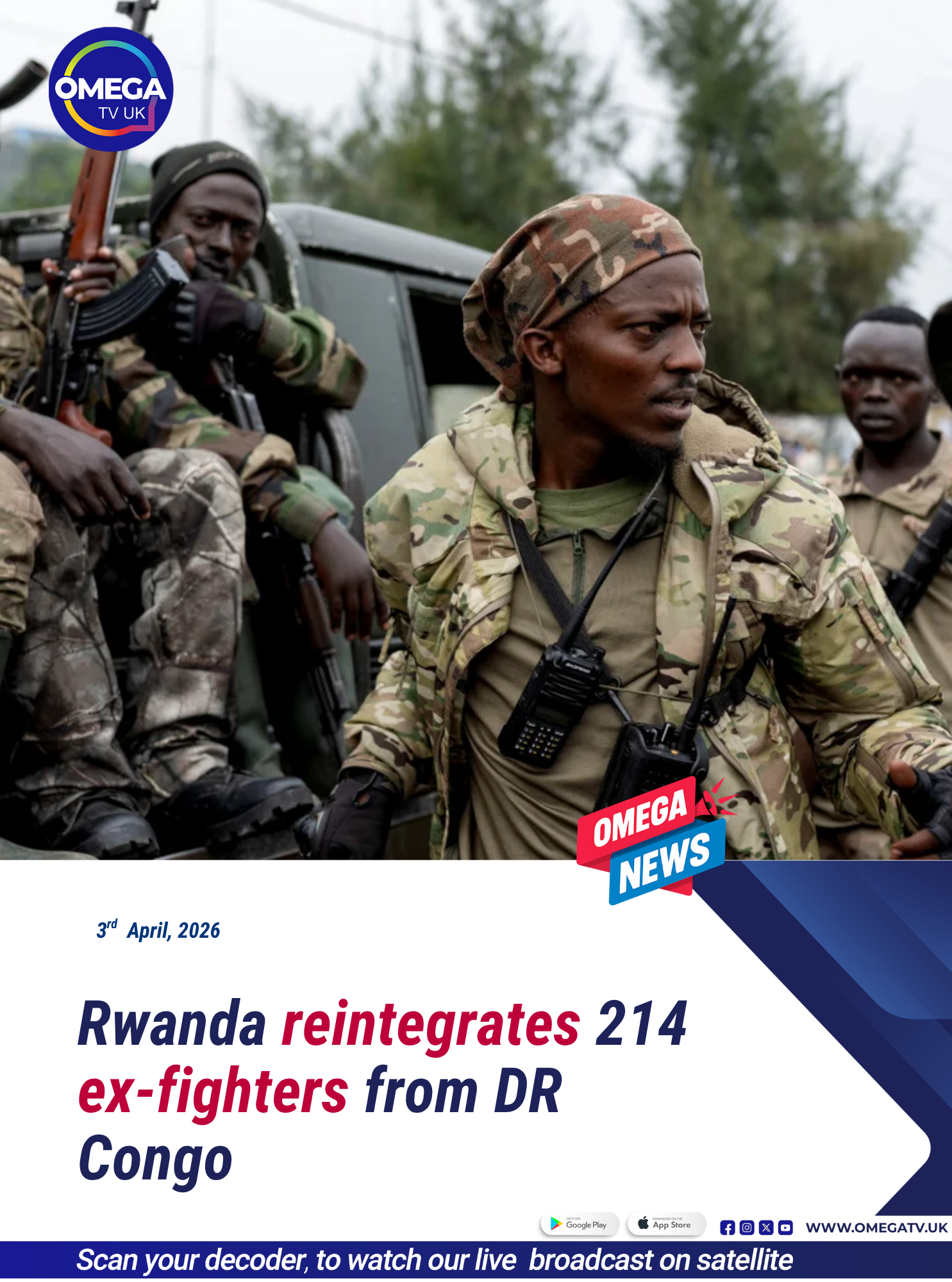
Rwanda has officially reintegrated 214 former members of armed groups who had been operating in eastern Democratic Republic of the Congo, marking another step in the country’s long-running demobilisation and reconciliation efforts.

The group, which includes both ex-combatants and civilians associated with armed movements, completed a rehabilitation programme at the Mutobo Demobilisation Centre in northern Rwanda. Authorities say some of those reintegrated are suspected to have links with the Democratic Forces for the Liberation of Rwanda, a militia that has been active in the volatile eastern DRC region for nearly three decades.
The Mutobo centre plays a central role in Rwanda’s national reintegration strategy. During their stay, participants undergo structured programmes designed to help them transition back into civilian life. These include civic education, psychological support, vocational preparation, and guidance aimed at fostering peaceful coexistence within their communities.
Officials say the programme is not only about disarmament, but also about rebuilding trust and encouraging former fighters to embrace a new identity as civilians. According to the Rwanda Demobilisation and Reintegration Commission, more than 12,000 individuals have benefited from similar initiatives since the programme was launched in 2001.
Despite these efforts, the presence and legacy of the FDLR remains a sensitive and ongoing concern for Kigali. The group has deep historical roots tied to the aftermath of the Rwandan Genocide, and its continued activity in eastern Congo has long been viewed by Rwanda as a threat to regional stability and national security.
Rwandan authorities frequently raise the issue in international forums, including during recent diplomatic engagements in Washington, where security in the Great Lakes region was a key topic of discussion. Kigali has consistently called for stronger regional and international cooperation to address armed groups operating across borders.
Speaking on the reintegration process, the head of the commission, Valérie Nyirahabineza, emphasised that the success of such programmes depends not only on the individuals involved but also on the communities that receive them.
She stressed the importance of shifting perceptions, urging families and local communities to see returnees as individuals willing to change rather than as former threats. According to her, reintegration is a shared responsibility that requires openness, understanding, and a willingness to rebuild social ties.
“It is essential to prepare not only families but entire communities to accept them,” she said, adding that those who have laid down their arms should be given a chance to start over.
The reintegrated individuals are now being returned to their home regions, with more than half expected to settle in Rubavu district, a border area near the Congolese city of Goma. This region has historically been affected by cross-border tensions and armed group activity, making reintegration efforts particularly significant there.
Experts note that while reintegration programmes are a crucial step toward long-term peace, they must be supported by broader efforts to address the root causes of conflict, including poverty, political instability, and competition over natural resources in eastern Congo.
There are also concerns about the long-term monitoring of reintegrated individuals and the availability of economic opportunities to prevent a return to armed activity. Without sustainable livelihoods and community support, some former fighters may struggle to fully transition into civilian life.
Nonetheless, Rwanda’s continued commitment to demobilisation and reintegration is seen as an important component of regional peacebuilding efforts. By encouraging defections from armed groups and offering a path back into society, authorities hope to gradually reduce the influence of militias operating in the region.
As the latest group of 214 individuals begins a new chapter, the focus now shifts to how effectively communities can absorb them and whether these efforts will contribute to lasting stability in a region that has long been shaped by conflict.