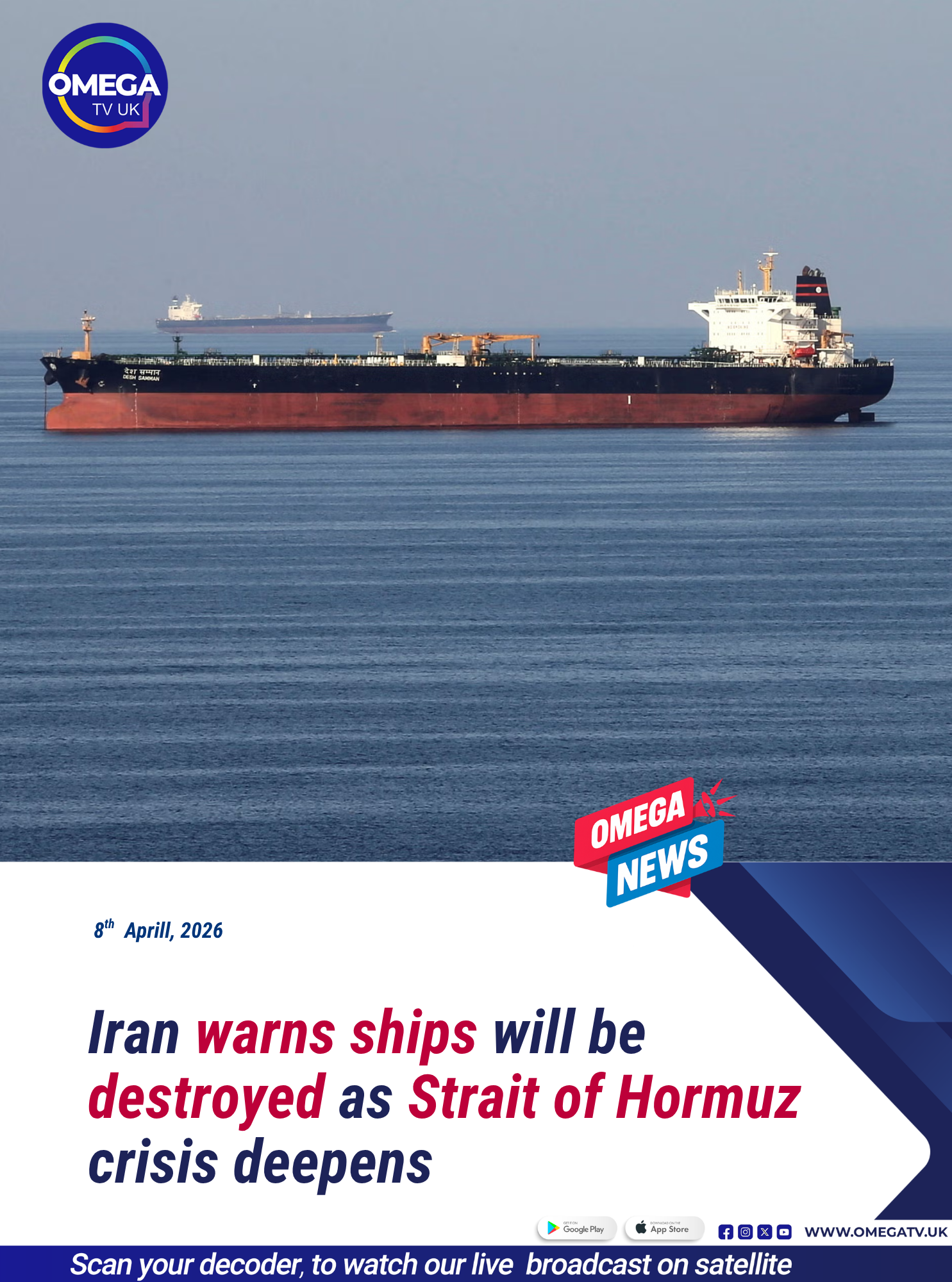
Iran warns ships in Strait of Hormuz will be ‘destroyed’ despite ceasefire deal

Iran has issued a stark warning that any ships passing through the strategically vital Strait of Hormuz without permission will be “targeted and destroyed,” signalling continued tensions despite a recently announced ceasefire with the United States.
Iranian officials said the waterway “remains closed,” even though the country had earlier agreed to allow limited access for two weeks as part of a conditional truce with Washington. The Strait of Hormuz is one of the world’s most important النفط transit routes, carrying a significant portion of global oil supplies.
The warning raises fresh concerns about global energy security and the stability of the fragile ceasefire agreement.
Earlier, Pete Hegseth said the deal offered a “real chance at peace,” expressing cautious optimism about reducing hostilities. However, his remarks were seen as inconsistent, with limited clarity on how the ceasefire would be enforced or monitored.
Donald Trump also commented on the situation, stating that the US would work closely with Iran moving forward. He suggested cooperation could extend to sensitive areas such as nuclear material, adding that uranium enrichment would not continue under the agreement.
Despite these statements, the situation on the ground remains volatile. Both sides have claimed victory, with Iran indicating it would leverage its “success in the field” during upcoming negotiations.
Meanwhile, Israel has intensified its military operations, announcing what it described as its largest strike since launching a ground campaign in Lebanon. Israeli officials have maintained that the ceasefire does not apply to their operations there.
Reports of continued violence have emerged from multiple locations, including the United Arab Emirates, Kuwait, and an oil refinery in southern Iran. These incidents suggest that the ceasefire is already under strain.
Pakistan, which has been mediating talks between the US and Iran, has expressed concern over the developments. Its leadership warned that any violations of the ceasefire risk undermining the broader peace process and could derail ongoing negotiations.
The Strait of Hormuz remains at the centre of the crisis. Any disruption to shipping through the narrow waterway has immediate global consequences, particularly for oil prices and supply chains.
While the ceasefire initially raised hopes of de-escalation, Iran’s latest warning highlights the fragile nature of the agreement. With conflicting positions, ongoing strikes, and uncertainty over enforcement, the prospect of lasting peace remains unclear.