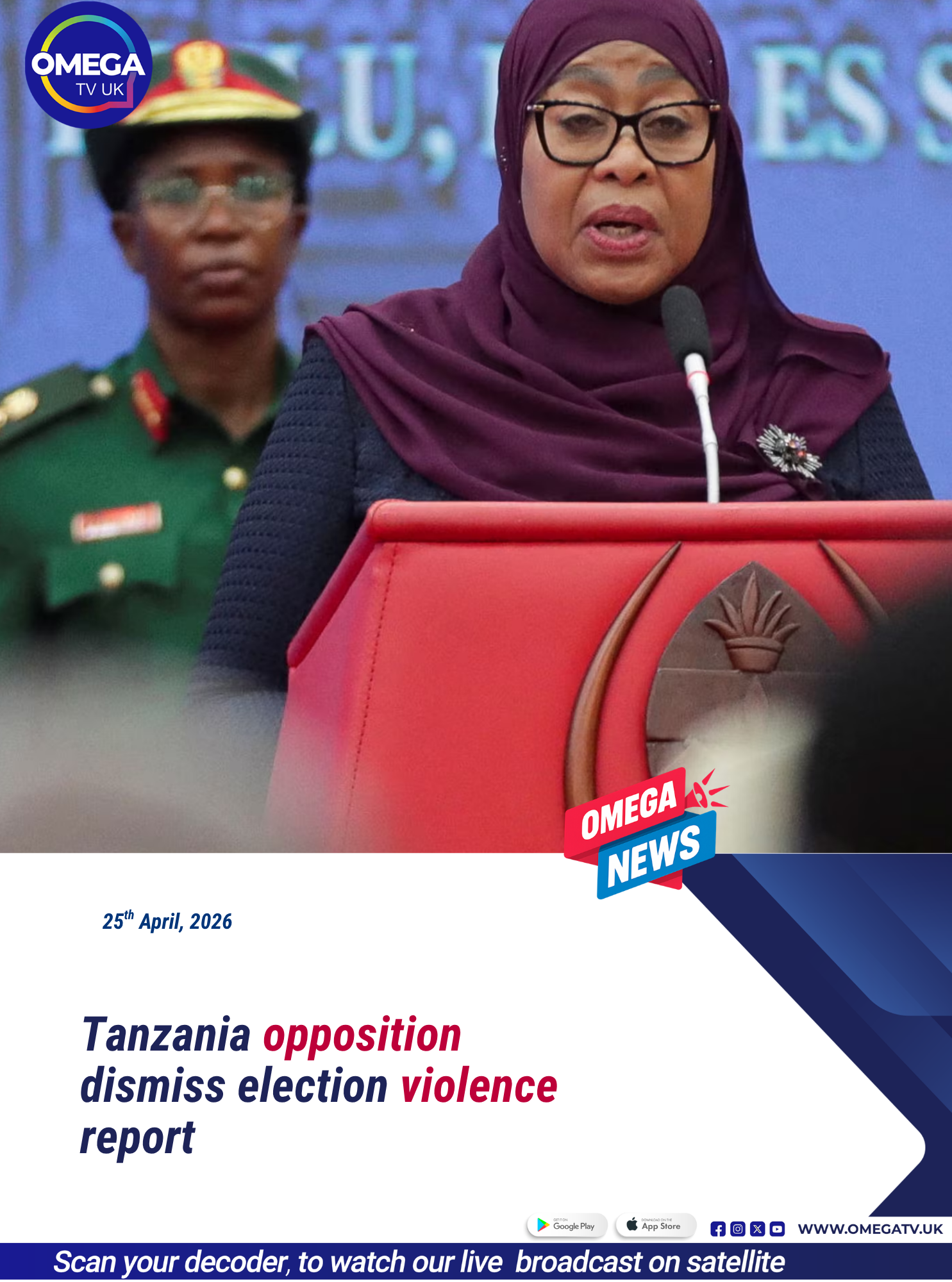
Tanzania Opposition Rejects Election Violence Report, Calls It a ‘Cover-Up’
Tanzania’s opposition parties have rejected findings from a government-appointed commission that investigated violence during last October’s elections, calling the report a “cover-up” of state actions.

The commission, led by Mohamed Chande Othman, reported that at least 518 people died during the unrest. The figure sharply contrasts with estimates from opposition groups and religious organisations, which claim the death toll runs into the thousands.
The elections, which saw President Samia Suluhu Hassan secure victory with 98% of the vote, were marred by controversy after key opposition candidates were barred from participating.
Protests that followed were met with a heavy security response, drawing criticism both locally and internationally.
President Hassan defended the commission’s findings, stating that the violence had been “planned, coordinated, financed, and executed” by individuals intent on destabilising the country. She also suggested that external actors may have played a role in fuelling unrest.
However, opposition leaders have strongly disputed the report’s conclusions. Officials from the Chadema and ACT-Wazalendo parties argued that crucial information was omitted and that the findings lack transparency.
They insist that the commission failed to deliver justice for victims and their families, many of whom had hoped for accountability following the deadly crackdown.
The report is the first official acknowledgment of the scale of the violence, also stating that more than 2,300 people were injured, including members of the police force.
Despite this, the commission did not assign responsibility for the deaths and rejected claims of mass graves and other allegations, saying they could not be substantiated.
The situation was further complicated by restrictions on media coverage during the elections, including barring foreign journalists and imposing an internet blackout, making independent verification difficult.
The African Union previously criticised the election process, stating it did not meet established democratic standards.
The dispute over the report highlights ongoing tensions in Tanzania’s political landscape, as calls for accountability and transparency continue to grow.