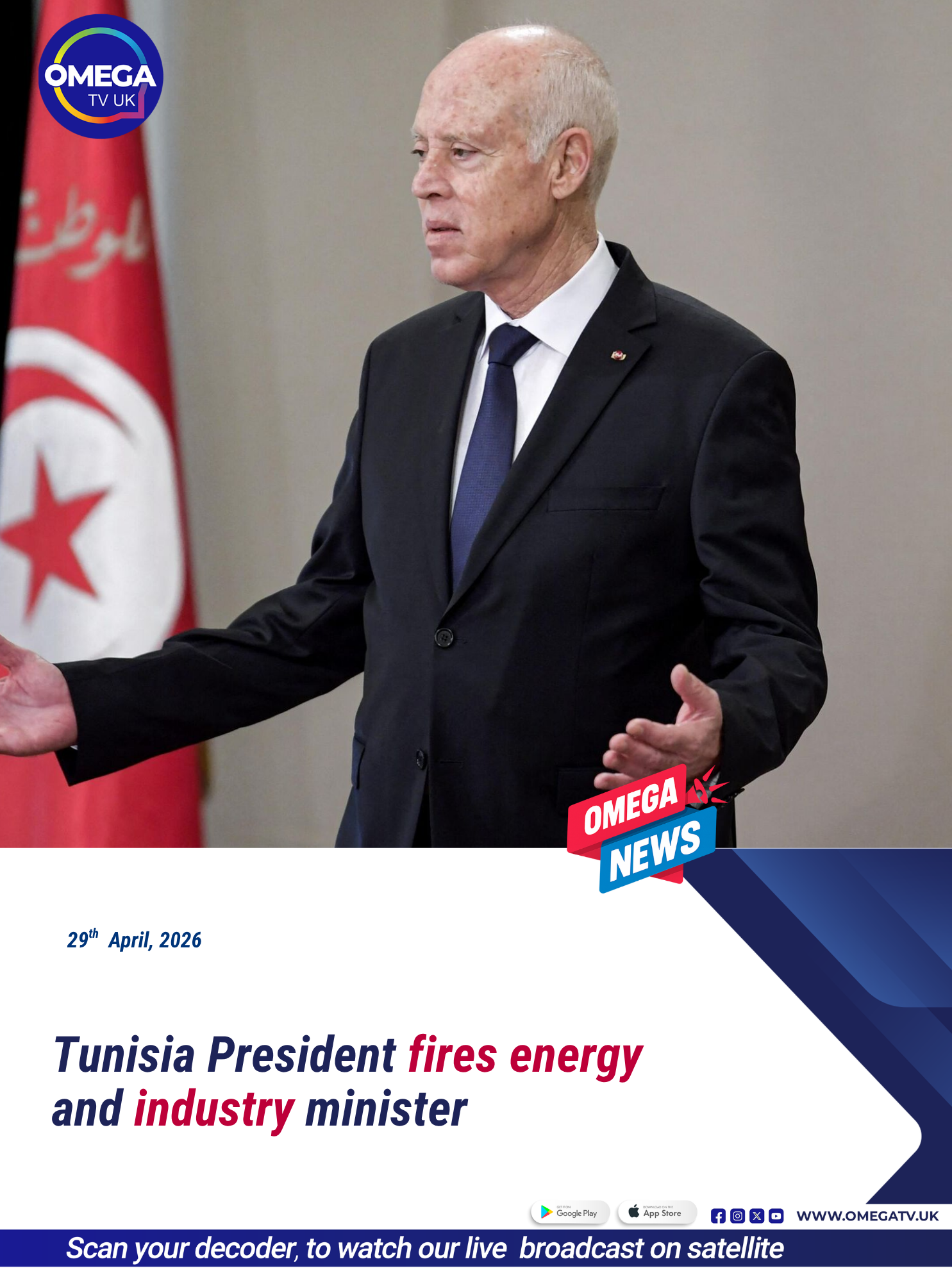
Tunisia president dismisses energy and industry minister amid backlash over renewable energy draft laws

Tunisia’s President Kais Saied has dismissed Energy and Industry Minister Fatma Thabet Chiboub in a surprise move that comes at a time of growing political tension over proposed reforms to the country’s renewable energy sector.
The dismissal was announced on Tuesday in a brief statement from the presidency, which did not provide any explanation for the decision. However, the timing has drawn immediate attention, coming just ahead of a parliamentary review of controversial draft legislation governing renewable energy contracts with foreign companies.
The proposed reforms have sparked widespread debate among lawmakers, trade unions, and civil society groups, many of whom argue that the plans could significantly increase foreign control over Tunisia’s energy sector.
Under the draft laws, foreign companies would be allowed to install and operate solar energy projects in Tunisia under long-term concessions lasting up to 20 years, with the possibility of renewal for an additional decade. The legislation also includes a provision granting tax exemptions for the first five years of operation.
In return, the electricity generated by these projects would be sold directly to Tunisia’s state-owned electricity and gas utility, known as STEG.
The government has defended the proposals, arguing that they are essential to strengthening Tunisia’s energy independence, stabilising supply, and reducing the country’s heavy reliance on imported fuel and gas.
Officials say Tunisia currently imports the majority of its energy needs, placing a significant strain on public finances due to costly subsidies on electricity, gas, and fuel products.
According to the state secretary for energy transition, Wael Chouchane, renewable energy currently accounts for around 9% of Tunisia’s electricity grid as of April. The government has set an ambitious target of increasing that share to 35% by 2030.
To support this transition, Tunisia has recently announced investment projects valued at nearly $600 million aimed at developing large-scale solar installations with a combined capacity of around 600 megawatts. This represents roughly a quarter of the country’s annual electricity consumption.
The planned solar projects are expected to be concentrated in Tunisia’s central and southern regions, areas that are often economically marginalised but have high levels of solar exposure, making them ideal for renewable energy development.
However, the draft laws have triggered strong opposition from trade unions and some members of parliament, who argue that the agreements could undermine national sovereignty and give excessive control to foreign companies.
The influential UGTT trade union federation issued a statement condemning the proposals, warning that they could “perpetuate dependence and weaken national sovereignty.” The union has called for what it describes as “fair and equitable partnerships” between foreign investors and STEG, rather than long-term concessions that it believes could limit national control over strategic infrastructure.
Political opposition has also intensified within parliament. MP Bilel El Mechri, one of the most vocal critics of the legislation, has accused the government of promoting what he called “energy colonisation.” He welcomed the dismissal of the energy minister, going further to call for her prosecution over what he described as “compromising national sovereignty.”
The controversy highlights deeper divisions within Tunisia over how to balance urgent economic needs with concerns about foreign influence in key sectors. The country’s energy sector has long been under pressure, with rising demand, limited domestic production, and a growing fiscal burden linked to subsidies.
President Saied’s decision to remove the minister without explanation adds further uncertainty to the legislative process, which is expected to be debated in parliament in the coming days.
In the meantime, Housing Minister Salah Eddine Zouari has been appointed to temporarily oversee the Energy and Industry portfolio, according to the presidency.
The dismissal also reflects the broader centralisation of executive power under President Saied, whose administration has increasingly taken decisive action on political and economic matters, often bypassing traditional institutional processes.
As Tunisia moves forward with its energy transition plans, the outcome of the parliamentary debate will likely determine not only the future of renewable energy investment in the country, but also the extent of foreign involvement in one of its most strategic sectors.
For now, the sudden ministerial change has added new political weight to an already contentious reform package, raising questions about governance, sovereignty, and the direction of Tunisia’s energy future.