Trump says King Charles “agrees” Iran must not get nuclear weapon during White House banquet speech

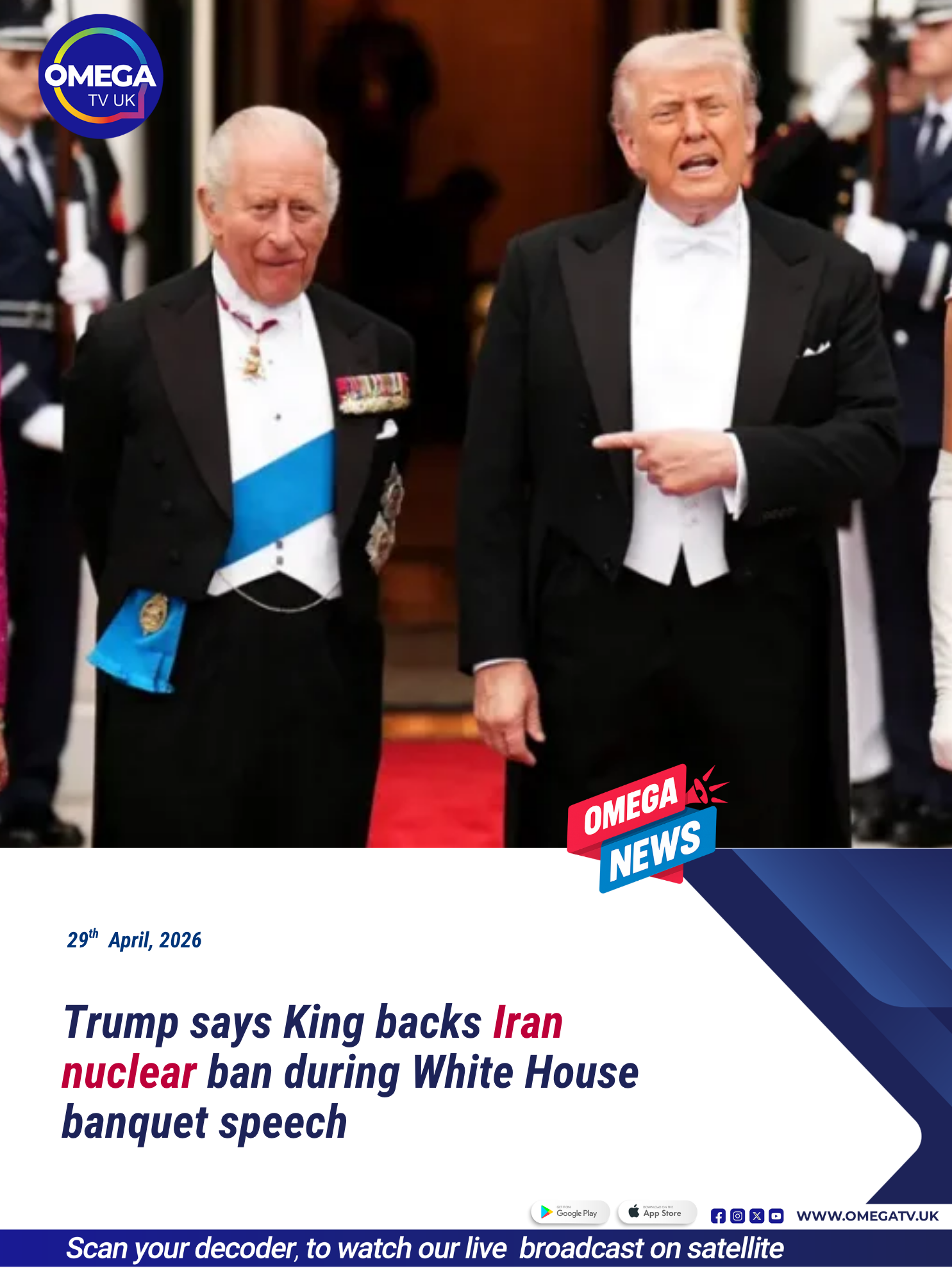
Donald Trump has claimed that King Charles agrees with him that Iran should not be allowed to develop a nuclear weapon, making the remarks during a high-profile White House banquet speech that brought together US and UK leaders in Washington.
Speaking at the event, Trump told guests that the British monarch was aligned with his stance on Iran’s nuclear ambitions, saying: “Charles agrees with me even more than I do.”
The comments quickly drew attention on both sides of the Atlantic, particularly given the long-standing diplomatic conventions that typically prevent public disclosure of a monarch’s private political views.
Buckingham Palace later responded cautiously, stating that the King is “naturally mindful” of the UK government’s established position on nuclear non-proliferation, including its opposition to Iran obtaining nuclear weapons capability.
While the palace did not directly address Trump’s claim, the statement appeared to reaffirm the constitutional position that the monarch does not engage in or endorse specific foreign policy statements independently of the UK government.
In the United Kingdom, it is a well-established convention that private conversations involving the King remain confidential. However, Trump’s remarks once again placed that tradition under scrutiny, as the former US president is known for disregarding diplomatic norms in public settings.
The White House banquet formed part of a broader state visit involving King Charles, which has been framed as both a celebration of the UK–US relationship and an effort to reinforce transatlantic ties at a time of global political tension.
During the evening, King Charles also spoke briefly, emphasising the importance of NATO and continued cooperation between allied nations. However, the tone of the event was largely informal, with moments of humour shared between the two leaders.
In one light-hearted remark, the King joked about historical ties between the UK and the United States, saying: “If it wasn’t for us, you’d be speaking French,” prompting laughter from guests in attendance.
The banquet menu also attracted attention, with dishes reportedly including herb ravioli and locally sourced White House honey, reflecting a blend of British-American culinary influences.
Despite the relaxed atmosphere inside the venue, the visit comes at a time of complex diplomatic relations between the UK and the United States, particularly around foreign policy alignment, global security concerns, and international trade discussions.
The King’s broader speech to Congress earlier in the visit reinforced themes of unity and global cooperation. In his address, he emphasised the importance of maintaining strong international alliances, warning against rising isolationism in global politics.
He expressed hope that the UK–US partnership would continue to resist “calls to become ever more inward-looking,” highlighting the enduring strength of the historic relationship between the two countries.
That speech was widely interpreted as a reminder of shared responsibilities on issues such as security, climate change, and global stability, particularly in the context of ongoing tensions involving Iran and other geopolitical flashpoints.
Analysts say Trump’s interpretation of the King’s position on Iran is likely to raise diplomatic eyebrows, especially given the sensitivity surrounding the monarchy’s political neutrality.
While US presidents and UK monarchs have historically maintained close ceremonial and diplomatic relations, public attribution of specific policy opinions to the monarch is highly unusual.
The visit has therefore been seen by observers as both symbolic and strategic — reinforcing unity between two key allies while also highlighting the contrasting styles of political communication between elected leaders and constitutional monarchs.
As discussions continue behind closed doors, attention now shifts to whether the public messaging around the visit will influence wider diplomatic conversations on Iran’s nuclear programme and broader Middle East security concerns.
For now, the White House banquet has delivered both warmth and controversy a reminder of the delicate balance between diplomacy, tradition, and political theatre on the global stage.