Senegal president warns against personality politics amid tensions with PM Sonko
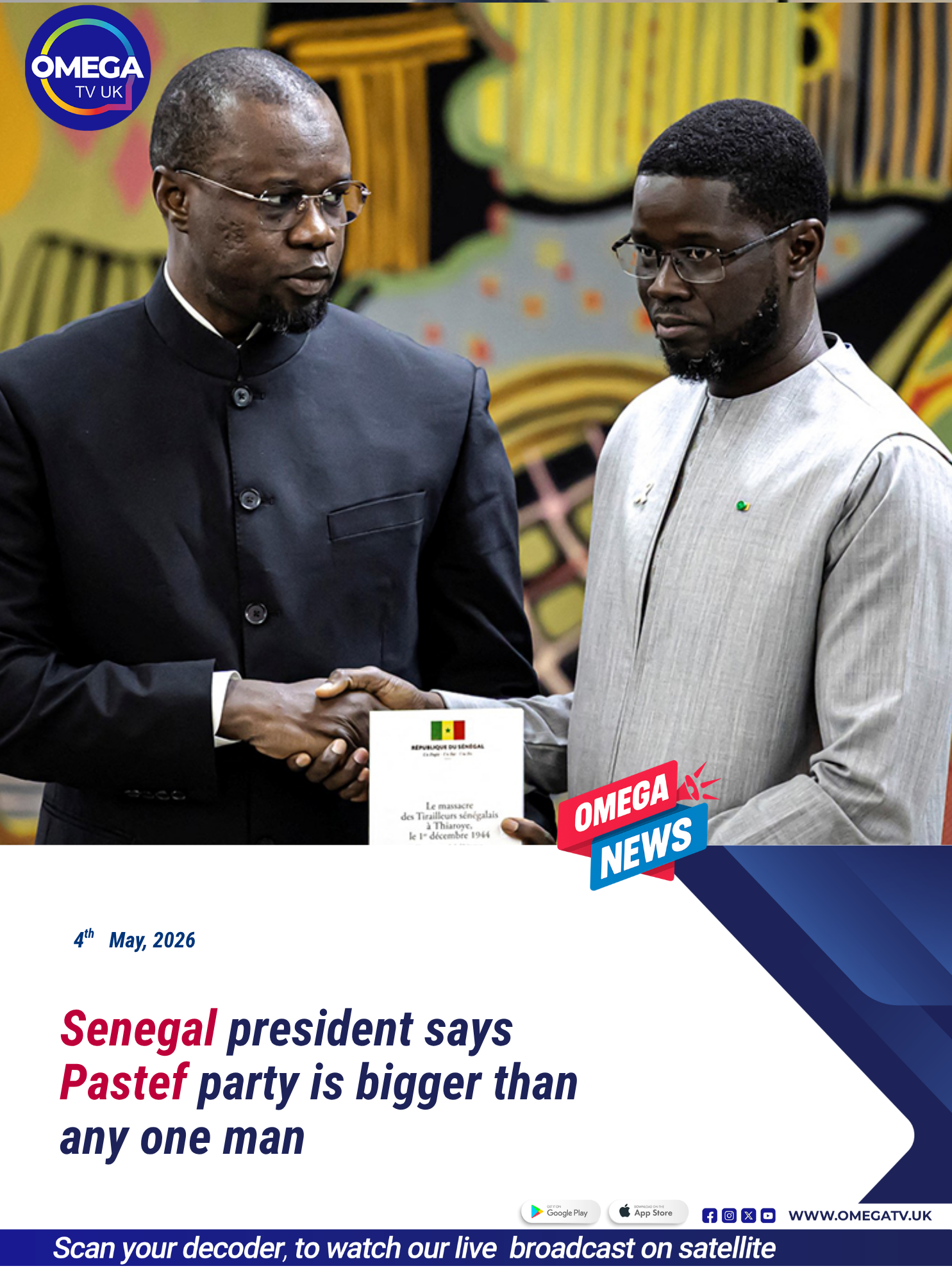
Tensions within Senegal’s ruling leadership became more visible on Saturday after President Bassirou Diomaye Faye publicly warned against what he described as the excessive personalisation of the governing Pastef party.

In a televised interview, Faye appeared to send a pointed message to Prime Minister Ousmane Sonko, stating that the party is bigger than any individual leader.
The president cautioned that the movement could face internal damage if members continue to focus too heavily on personalities rather than the party’s broader political mission.
He warned of “excessive personalisation” and said Pastef risks weakening itself if party members fail to change direction.
“The sacrifices, which resulted in deaths, injuries and imprisonments, were not made for the sake of any one man but for the very essence of the project,” Faye said.
He added that the political movement was created to transform Senegal’s governance system and should not revolve around a single figure.
“We have always sought to distinguish the people and the project, which should be depersonalised from the leader who embodies it,” he said.
Pastef rose to prominence on a platform focused on anti-corruption reforms, government accountability, and promises of significant political change in Senegal.
The party gained widespread support, particularly among young voters frustrated by unemployment, economic hardship, and dissatisfaction with the previous administration.
Prime Minister Ousmane Sonko became especially popular among Senegal’s youth through his pan-African messaging and strong anti-French rhetoric.
His political influence expanded significantly ahead of the 2024 presidential election.
However, Sonko was barred from contesting the election, leading him to back Bassirou Diomaye Faye as Pastef’s presidential candidate.
Faye went on to win the presidency in the first round of voting before later appointing Sonko as prime minister.
Pastef’s rise to power followed months of unrest under former president Macky Sall.
At the time, deadly protests broke out as demonstrators opposed the possibility of Sall seeking a third term in office.
Many supporters viewed Pastef as the political vehicle for systemic change after years of frustration with the country’s leadership.
Despite their electoral victory, divisions have reportedly started emerging between Faye and Sonko.
Observers have pointed to growing public disagreements on issues including coalition leadership, governance direction, and debt restructuring negotiations.
Some of those disputes reportedly unsettled investors and contributed to volatility in Senegal’s international bond market.
Political analysts have increasingly speculated about future rivalry between the two leaders as both remain central figures in Senegal’s political landscape.
Recent parliamentary amendments to electoral eligibility rules have further fueled speculation.
The changes are widely seen as potentially clearing the path for Sonko to run for president in the 2029 election.
While Sonko is viewed by many supporters as the movement’s most influential figure, Faye used the interview to reinforce his constitutional authority as head of state.
The president made it clear that Sonko’s continued role in government depends on presidential confidence.
“If Sonko remains prime minister, it is because he retains my confidence. When that is no longer the case, there will be a new prime minister,” Faye said.
His remarks are likely to intensify discussion over the future relationship between Senegal’s two most powerful political figures.
For now, both leaders remain at the centre of Senegal’s reform agenda, though signs of internal friction are becoming increasingly difficult to ignore.