Iran warns US ‘we are just getting started’ after fresh Strait of Hormuz attacks
Tensions between Iran and the United States have escalated sharply after fresh attacks in the Strait of Hormuz, with Tehran warning Washington that its military response is only beginning.

Iranian parliament speaker Mohammad Ghalibaf issued a strong warning to the US on Tuesday, declaring that Iran is “just getting started” following military confrontations in the strategically critical waterway.
Ghalibaf, who previously served as Iran’s top negotiator during talks with the US last month, said the current situation is no longer sustainable for Washington.
“We know well that the continuation of the status quo is intolerable for America,” he said, in comments widely interpreted as a signal that Tehran is prepared for a prolonged confrontation.
The latest developments come after the launch of Donald Trump’s newly announced military initiative, dubbed Project Freedom, which officially began on Monday.
The operation aims to use US military escorts to guide stranded cargo vessels out of the Strait of Hormuz after commercial shipping in the region was severely disrupted.
The narrow waterway, located between Iran and Oman, is one of the world’s most important oil transit routes, with roughly a fifth of global petroleum passing through it daily.
However, Iran has insisted that it maintains operational control over the strait and has warned foreign powers against interfering in what it considers a regional security matter.
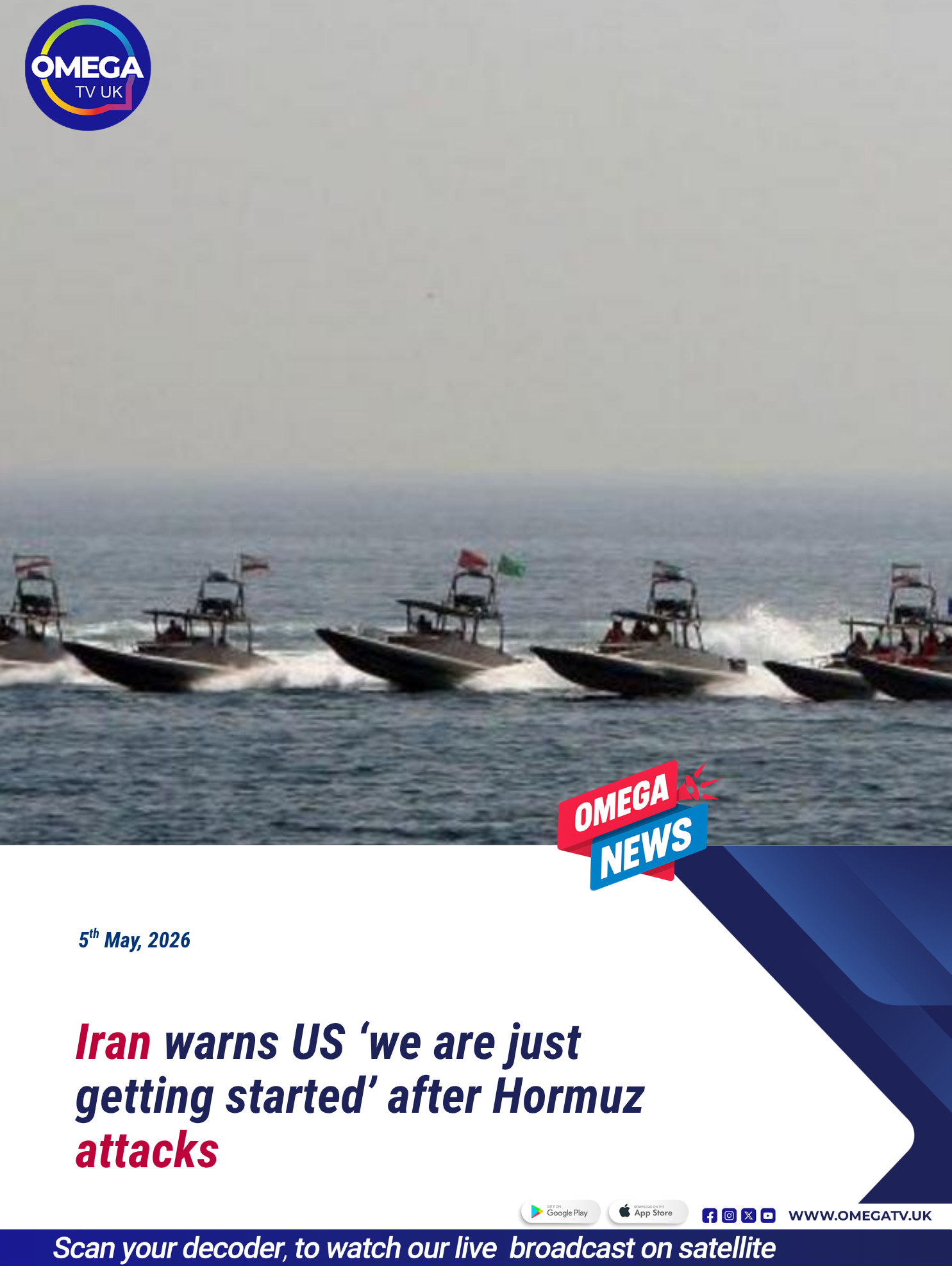
According to US officials, Iranian forces launched missiles and drones at both military and commercial vessels in the area on Monday, significantly escalating fears of a wider regional conflict.
Washington claims the attacks targeted multiple ships attempting to navigate the congested route.
US President Donald Trump later stated that American forces had successfully intercepted the threat and “shot down” seven Iranian fast boats during the confrontation.
The claim was swiftly denied by Tehran, which dismissed Trump’s remarks as misinformation and accused the US of deliberately inflaming tensions.
Iranian state media insisted no such losses had occurred and instead framed the military activity as a defensive response to foreign provocation.
Meanwhile, the situation in the Strait of Hormuz continues to disrupt global shipping.
Approximately 2,000 vessels are currently estimated to be stranded or delayed due to security concerns in the region.
The US has confirmed that two ships managed to leave the area on Tuesday under the protection of Project Freedom.
Shipping giant Maersk also confirmed that one of its vessels was among those safely guided out of the strait.
The disruption has already rattled global energy markets.
Oil prices surged again following the attacks, with Brent crude climbing as traders reacted to fears of prolonged instability in one of the world’s most economically sensitive waterways.
Analysts warn that any full closure of the Strait of Hormuz could trigger major consequences for global supply chains, energy costs and inflation.
The renewed military escalation also places the fragile US-Iran ceasefire under significant strain.
Recent diplomatic efforts had raised cautious hopes of de-escalation after months of heightened hostility, but the latest incidents suggest those gains may now be unraveling.
Security experts say the confrontation reflects a dangerous power struggle between Washington and Tehran over control, deterrence and influence in the Gulf region.
While neither side has formally declared an end to the ceasefire, rhetoric from both governments has become increasingly aggressive.
With military assets concentrated in the Gulf and commercial shipping under pressure, international observers fear the region could move closer to open conflict if further attacks occur.
For now, the world watches closely as one of the globe’s most important waterways becomes the centre of an increasingly volatile geopolitical standoff.