Trump and Putin visits highlight China’s growing global influence
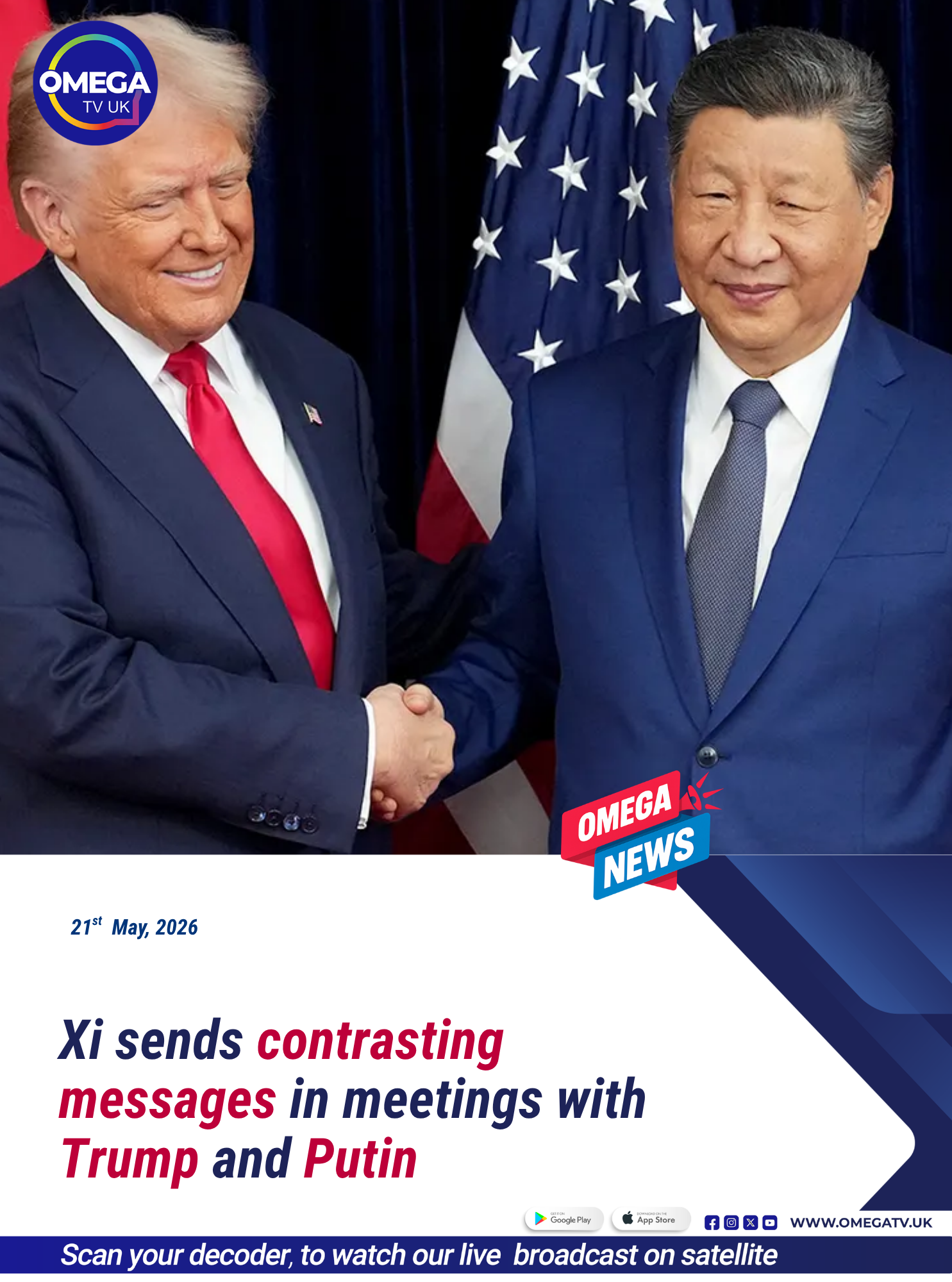
Chinese President Xi Jinping hosted back-to-back high-profile summits with US President Donald Trump and Russian President Vladimir Putin in Beijing, with the meetings sending very different diplomatic messages despite their similar optics.

Both leaders received grand state welcomes in China’s capital, including military honour guards, cheering children waving flowers and elaborate ceremonies at Tiananmen Square. But beneath the carefully staged scenes, the two visits reflected sharply contrasting relationships between China and the two global powers.
Trump’s visit focused largely on stabilising tense US-China relations amid disputes over trade, Taiwan and global security issues. Putin’s trip, meanwhile, reinforced Beijing’s increasingly close strategic alliance with Moscow as both countries push for a more multipolar world order.
“There are more affinity between Putin and Xi, and more courtesy between Xi and Trump,” said Claus Soong, an analyst with the Mercator Institute for China Studies (MERICS) in Berlin.
During Putin’s visit, China and Russia signed more than 40 cooperation agreements covering trade, technology, media collaboration and broader geopolitical coordination.
The two leaders also issued a joint declaration describing China and Russia as “important centers of power in a multipolar world,” signalling their shared opposition to Western dominance in global affairs.
By contrast, Trump and Xi did not sign any joint declaration during the US president’s visit, nor did they publicly witness the signing of agreements while together in Beijing.
Only after Trump departed China did Washington announce that Beijing had agreed to purchase billions of dollars in US agricultural products and buy 200 Boeing aircraft as part of broader economic understandings between the two countries.
Analysts say the difference between the two visits reflects China’s stronger political alignment with Russia, while its relationship with the United States remains shaped by competition and mutual suspicion despite ongoing economic ties.
Putin’s Russia has become increasingly dependent on China since the start of the Ukraine war and the imposition of Western sanctions, making Beijing Moscow’s biggest trading partner and a crucial economic lifeline.
The meetings also come at a time when China is hosting an unusually large number of world leaders as Beijing works to position itself at the centre of global diplomacy.
Over the past six months, leaders from Europe, Africa and Asia have travelled to Beijing amid growing uncertainty over global leadership and geopolitical tensions.
Observers say China is increasingly benefiting from what many view as a transition away from a US-dominated world order toward a more fragmented and multipolar system.
Trump’s unpredictable foreign policy style has also accelerated that shift, according to analysts.
“I think this meeting elevates President Xi,” Soong noted, adding that China is presenting itself as a stable global power capable of engaging with rival nations simultaneously.
The carefully managed visits also served an important domestic purpose for Xi, reinforcing his image at home as a world leader capable of commanding influence on the international stage.
For China, the optics of hosting both Washington and Moscow within days highlighted Beijing’s growing diplomatic reach and economic importance.
However, the visits also exposed the delicate balancing act Xi faces.
While China continues to strengthen ties with Russia, it is also attempting to maintain stable economic relations with the United States and Europe at a time of slowing economic growth and heightened global tensions.
The contrasting outcomes of the Trump and Putin summits underline how Beijing is navigating two very different relationships one based on strategic partnership and shared geopolitical interests, and another defined by competition, caution and economic interdependence.