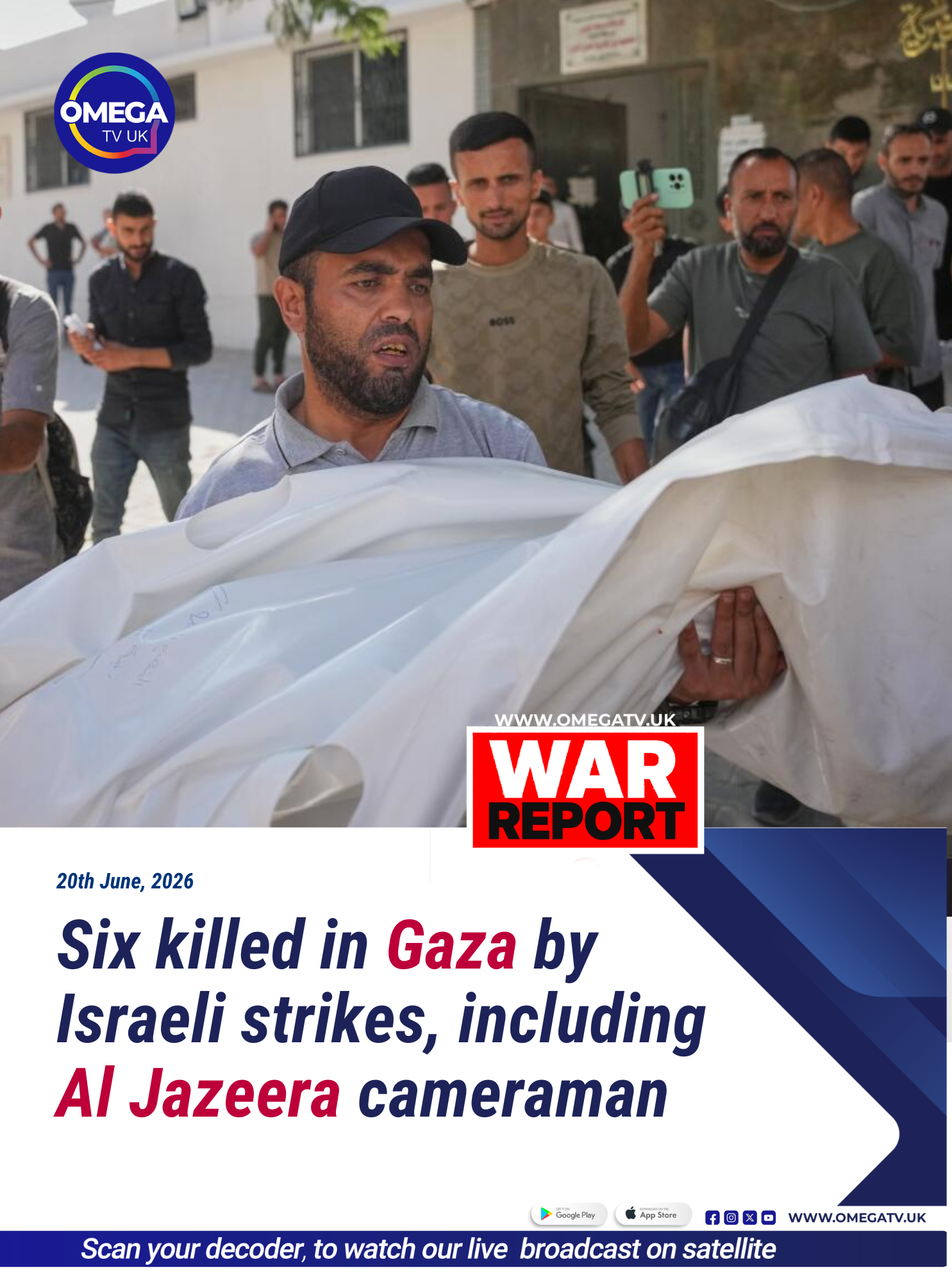
Israeli strikes across the Gaza Strip have killed at least six people, including a journalist working for Al Jazeera, according to health officials, rescue workers, and local reports. The incidents took place in separate locations and come amid ongoing tensions despite a fragile ceasefire arrangement that has repeatedly been tested by renewed violence.

In central Gaza, a strike hit a residential home in the Bureij refugee camp, killing three people, including cameraman Ahmed Wishah. Al Jazeera condemned his killing, describing it as a deliberate attack on journalism and a violation of international law. The network said his death reflects a broader pattern of targeting media workers reporting from the conflict zone.
The Israel Defense Forces rejected the allegation, stating that Wishah was linked to Hamas’ military wing and had participated in planning sniper attacks against Israeli forces. The military did not release supporting evidence publicly. It also said the two other individuals killed in the same strike were members of Hamas.
Gaza’s health authorities, run by Hamas and widely cited by international organizations, reported that more than 1,000 people have been killed since the latest ceasefire began last October. Officials continue to document casualties as airstrikes and military operations persist across the territory.
The killing of Wishah has drawn additional attention because his brother, also an Al Jazeera journalist, was killed earlier in April in another Israeli strike. The IDF previously accused his brother of involvement in weapons production activities linked to Hamas, though similar claims have not been independently verified.
In a separate incident in northern Gaza City, four members of a single family were killed when a home in the Sabra neighbourhood was struck overnight. Medical officials confirmed that the victims included two women and a child. Relatives insisted the family had no ties to armed groups and were ordinary civilians living in the area.
Family members described the attack as devastating and questioned how civilians could remain safe under the current ceasefire conditions. Witnesses said the strike occurred in the early hours of the morning, leaving widespread destruction and trapping survivors under rubble.
Elsewhere in Gaza, additional strikes were reported in both northern and southern regions. Rescue teams continued searching through damaged buildings, though limited equipment and ongoing insecurity have slowed recovery efforts.
Both Israel and Hamas have accused each other of violating the ceasefire agreement reached after months of negotiations. The deal was intended to reduce hostilities, allow increased humanitarian access, and establish a framework for governance and security arrangements in Gaza.
Humanitarian agencies report that while aid deliveries have improved slightly, conditions remain severe. Many families still lack adequate shelter, clean water, and medical supplies, and sanitation systems continue to deteriorate. The United Nations has warned that the humanitarian situation remains extremely fragile despite limited progress.
The wider conflict began after the October 7, 2023 attacks on Israel by Hamas-led fighters, which killed around 1,200 people and resulted in hostages being taken into Gaza. Since then, Gaza’s health authorities estimate that more than 73,000 people have been killed in Israeli military operations, with large-scale destruction across the enclave.
The situation remains volatile, with ongoing airstrikes, competing claims over military activity, and worsening humanitarian conditions for civilians trapped in the conflict zone.