Kenya Trains Health Workers for Ebola Response in DR Congo as Outbreak Claims Hundreds of Lives
MSF prepares medical teams for one of Africa’s most challenging health emergencies
Health workers in Kenya are undergoing specialised training to prepare for deployment to the Democratic Republic of Congo (DRC), where a rapidly growing Ebola outbreak has claimed hundreds of lives.

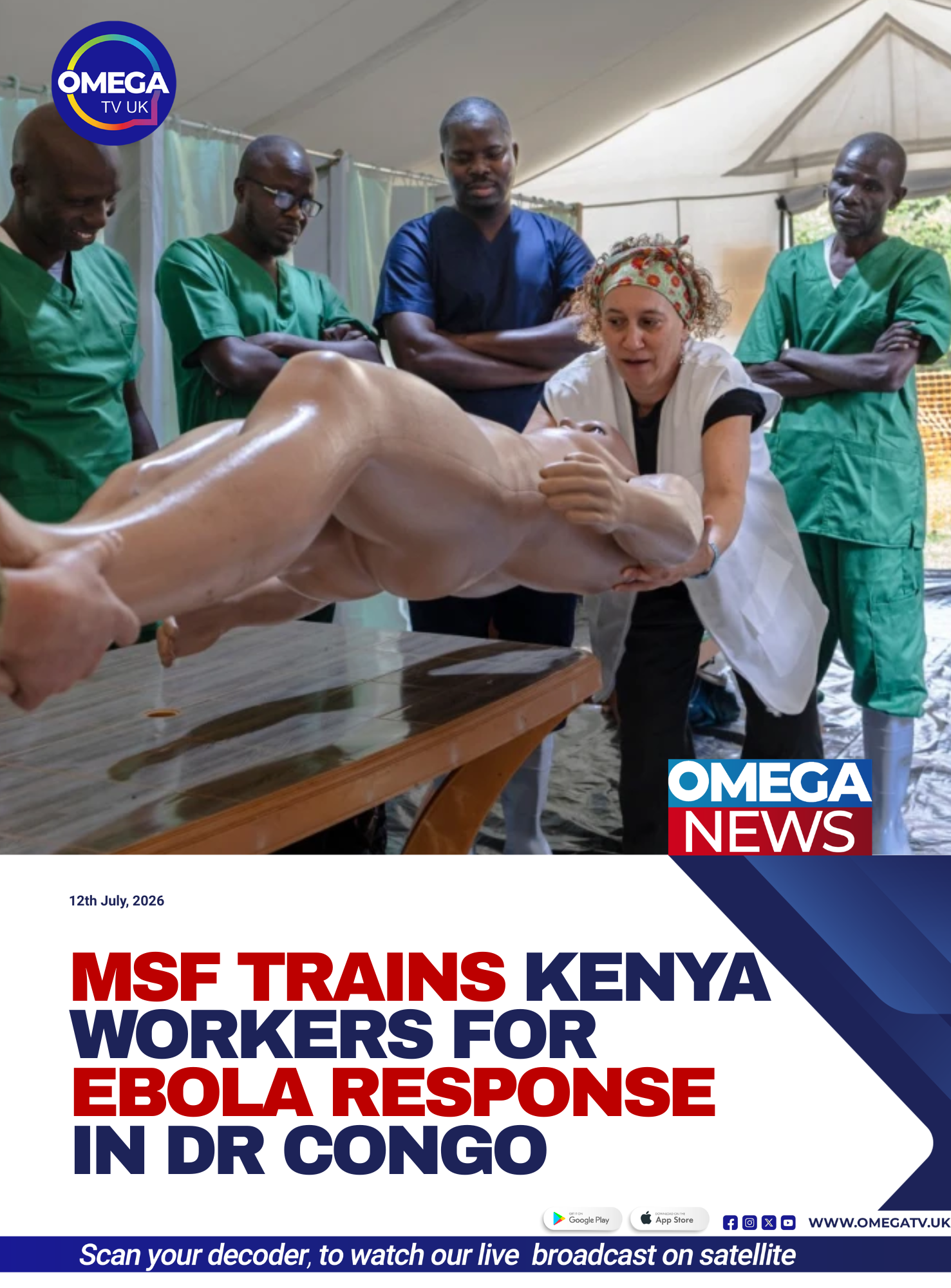
Doctors Without Borders, also known by its French name MSF, has established a training facility on the outskirts of Nairobi to help doctors, nurses and medical staff prepare for the difficult conditions they may face while responding to the outbreak.
Ebola outbreak creates major challenges in DRC
The Ebola outbreak in the Democratic Republic of Congo is described by African health officials as the fastest-growing outbreak of its kind in the country.
Since it was declared in mid-May, the outbreak has killed at least 600 people, with thousands of confirmed cases recorded.
The crisis is unfolding in a region affected by poverty, insecurity and the presence of armed groups, making it harder for health teams to reach communities and provide care.
Misinformation about Ebola has also created additional challenges, with some residents avoiding treatment, refusing safety measures and even attacking health workers.
Training centre prepares frontline responders
MSF’s simulation centre in Nairobi provides a realistic environment where health workers can practise responding to Ebola cases.
The facility includes hospital beds, medical mannequins, a mock laboratory and protective equipment used during Ebola treatment.
The training prepares medical teams for the realities of working in high-risk environments, including wearing personal protective equipment (PPE), managing patients safely and preventing further transmission.
Health workers learn beyond medical care
The programme focuses not only on treating patients but also on building trust with affected communities.
Trainees learn how to communicate with people who may fear health workers wearing protective clothing, conduct safe burials and support survivors facing stigma after recovery.
Diana Corben, an MSF doctor, said gaining community acceptance is one of the most important parts of fighting Ebola.
She explained that communities need understanding, empathy and clear communication to feel comfortable with treatment centres and health workers.
Preparing for the reality of Ebola response
For many trainees, the experience provides a better understanding of the emotional and physical demands of working during an outbreak.
Cisse Papa Ndiaga, an MSF community health worker from Senegal preparing for deployment to DRC, said the training helped reduce his fears about the mission ahead.
He explained that while medical knowledge is important, working in full protective equipment creates a completely different experience.
Regional cooperation against disease spread
The Nairobi training centre began operations in mid-June and is expected to continue until August or longer.
The programme trains around 100 people each month, including MSF workers, Kenyan Ministry of Health officials and staff from other humanitarian organisations.
As Ebola continues to threaten communities in the DRC, health officials say preparing skilled medical teams is essential to controlling the outbreak and protecting frontline workers.