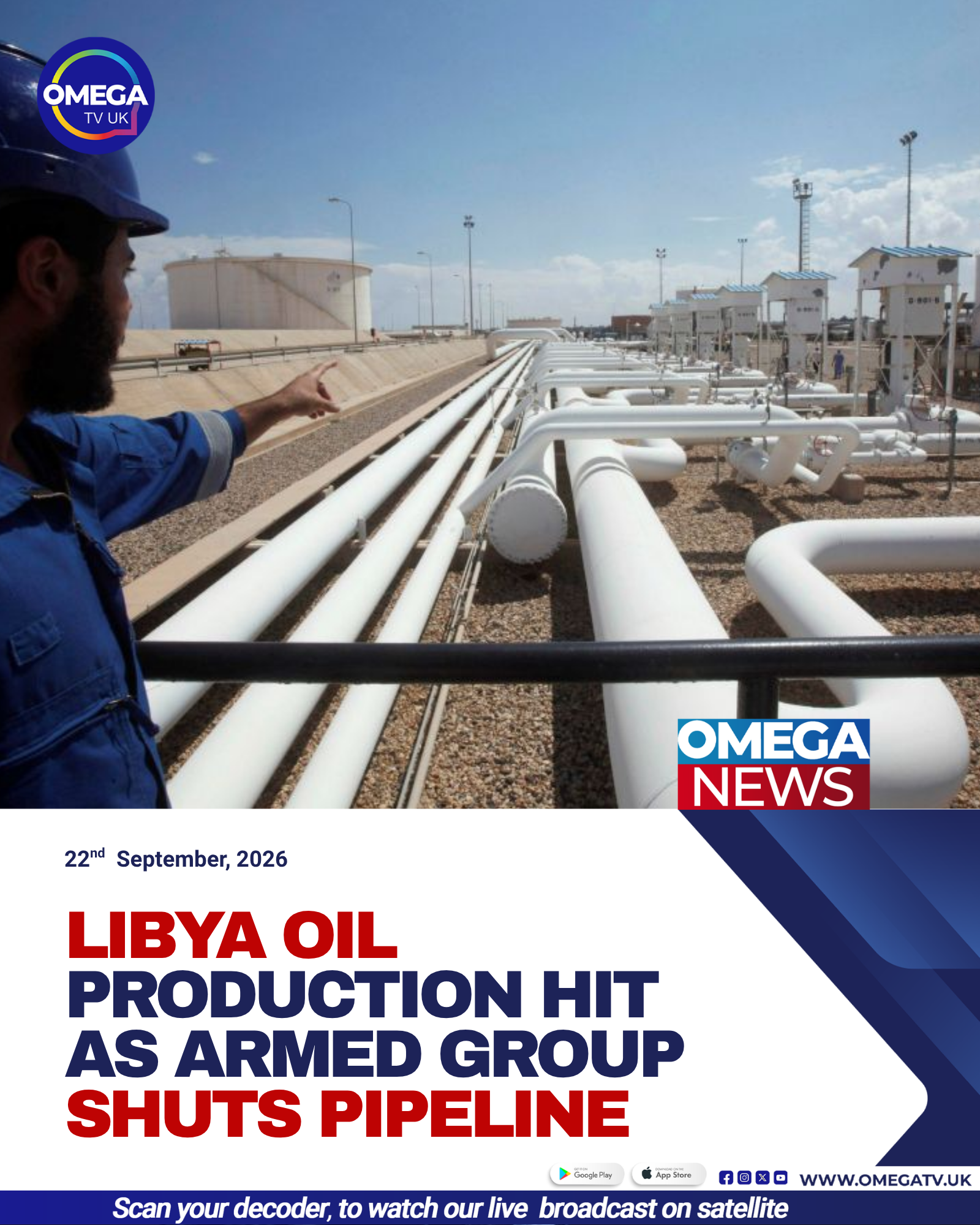
Armed Group Shuts Libya Oil Pipeline, Cutting Sharara Production
Pipeline Valve Closed
An armed group has shut a valve on a crude oil pipeline connecting Libya’s major Sharara oil field to the coastal city of Zawiya, sharply reducing production, according to Libya’s National Oil Corporation. The NOC said the group closed Valve No. 7 on Monday, disrupting the flow of crude from the field.

Sharara Output Hit
The Sharara field is Libya’s largest oil field and has a production capacity of about 350,000 barrels per day, accounting for roughly a third of the country’s total oil output. The NOC said pressure built up in the pipeline following the closure, forcing production at the field to fall significantly.
Group Behind Closure Not Identified
The NOC has not identified the armed group responsible for shutting the valve. Its technical teams have also been unable to access the area around Valves 6 and 7, while the corporation said appeals to the Petroleum Facilities Guard in southwestern Libya had so far produced no results.
Force Majeure Warning
The NOC warned that if the shutdown continues, it could be forced to declare force majeure. Such a declaration can allow a company to suspend contractual obligations when extraordinary circumstances prevent normal operations. The corporation said a prolonged disruption could eventually halt production, transportation and exports from Sharara.
Zawiya Refinery at Risk
The disruption could also affect the Zawiya refinery, located about 45 kilometres west of Tripoli. The NOC warned that continued problems with the crude pipeline could force the refinery to shut down, potentially increasing Libya’s reliance on imported fuel.
Impact on State Revenue
Libya’s oil sector provides most of the country’s export earnings and state revenue, making disruptions to production particularly significant. The NOC said prolonged interruptions would reduce government revenues at a time when international oil prices have been elevated.
Oil Infrastructure Frequently Targeted
Libya has repeatedly experienced blockades and disruptions at oil fields, pipelines and export facilities since the fall of Muammar Gaddafi in 2011. Armed groups, security forces and protesters have previously used control of energy infrastructure to pursue political and economic demands.
Libya Remains Politically Divided
The latest disruption comes as Libya remains divided between the internationally recognised administration based in Tripoli, led by Prime Minister Abdulhamid Dbeibah, and a rival administration in the east backed by military commander Khalifa Haftar. The political division has contributed to continued instability around the country’s energy sector.
Sharara Has History of Disruptions
Sharara has experienced repeated interruptions since the 2011 uprising. The field was shut for two years between 2014 and 2016 following a pipeline blockade by armed groups and has faced further stoppages in subsequent years.
NOC Calls for Immediate Reopening
The National Oil Corporation has called for the pipeline to be reopened immediately and urged authorities to protect Libya’s oil infrastructure from further disruptions. It warned that continued closure could threaten production, exports and the operation of the Zawiya refinery.
Energy Sector Under Pressure
The latest incident highlights the continued vulnerability of Libya’s oil industry to political and security disruptions. With Sharara serving as a major source of crude, the duration of the shutdown will determine the scale of its impact on national production, exports and government revenues.