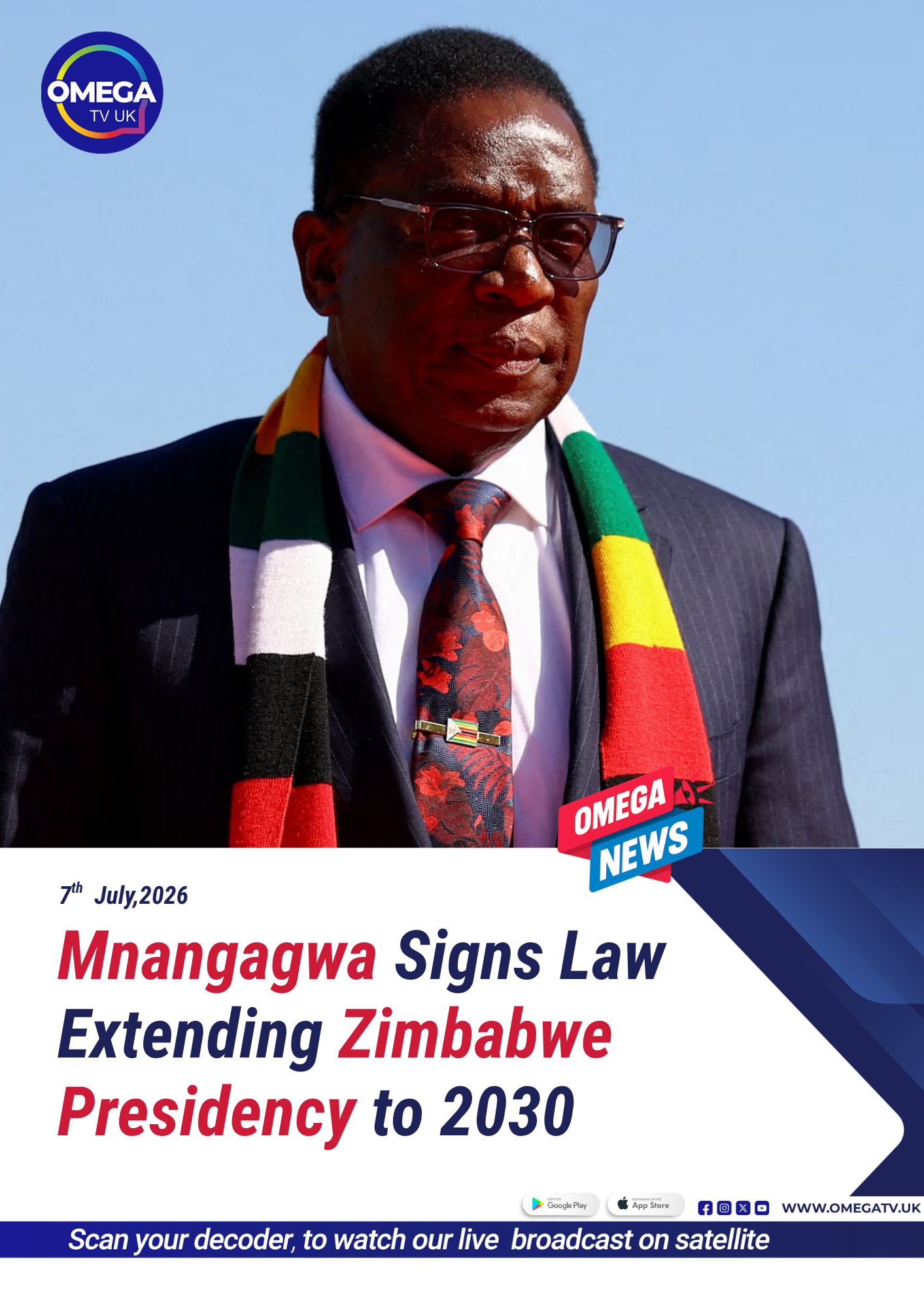
Zimbabwe’s Mnangagwa Signs Law Extending Presidency to 2030
Zimbabwean President Emmerson Mnangagwa has signed into law controversial constitutional amendments that extend his time in office by two years, allowing him to remain president until 2030.

The legislation, which was approved by both houses of Parliament last month, was formally enacted after receiving presidential assent on Tuesday.
Government spokesperson Nick Mangwana confirmed the development on social media, announcing that the bill had been “signed, sealed and delivered.”
The constitutional changes were backed by the ruling Zimbabwe African National Union-Patriotic Front (ZANU-PF) and received Cabinet approval before being passed by Parliament.
One of the most significant aspects of the legislation is the extension of Mnangagwa’s tenure beyond the end of his second and previously final term in office.
The new law also introduces a major change to Zimbabwe’s electoral system by creating a provision that allows future presidents to be elected by Parliament instead of through a direct vote by citizens.
The move is expected to spark intense debate over the future of democracy and governance in Zimbabwe, with critics likely to question the implications of removing direct presidential elections.
Speculation that Mnangagwa intended to remain in office beyond his constitutional term first emerged around two years ago.
During several ZANU-PF rallies, party supporters repeatedly called for the president to be given additional time to complete his political and economic programmes.
Senior party officials later endorsed plans to amend the Constitution, arguing that continuity in leadership was necessary to advance the country’s development agenda.
The proposal eventually received Cabinet approval in February before being passed by lawmakers last month.
The constitutional changes are widely expected to face strong opposition from political parties, civil society organisations and democracy activists.
Critics have long accused the government of centralising power and weakening democratic institutions, raising concerns that the latest amendments could further reduce political accountability.
Supporters of the reforms, however, argue that the changes will provide political stability and allow the government to continue implementing its long-term economic and governance programmes.
Mnangagwa, who came to power in 2017 following the resignation of long-time leader Robert Mugabe, has repeatedly pledged to transform Zimbabwe’s economy and attract foreign investment.
His administration has also faced criticism over issues including governance, economic challenges and the state of democratic freedoms in the country.
The latest constitutional amendments are among the most significant political reforms introduced during his presidency and are likely to shape Zimbabwe’s political landscape for years to come.
With the law now officially in effect, attention is expected to turn toward possible legal and political challenges from opposition groups and how the reforms will impact the country’s future electoral process.