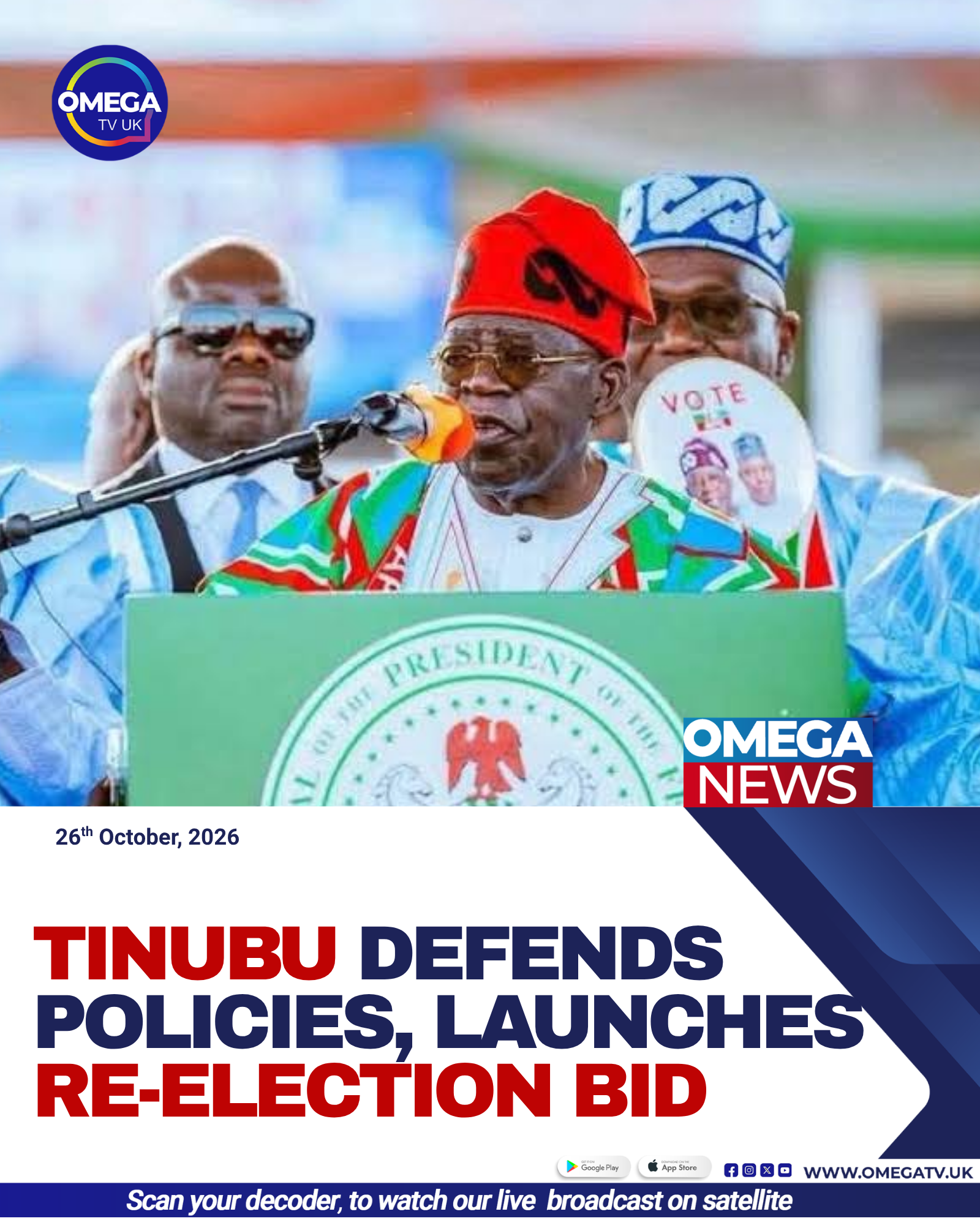
Tinubu Defends Economic Policies as He Launches Re-Election Campaign
Thousands of supporters gathered in Kaduna, northern Nigeria, on Saturday as President Bola Tinubu officially launched his campaign for a second term in office, defending his economic policies amid growing concerns over the cost of living and insecurity.

Addressing the crowd at a stadium, Tinubu promised Nigerians “a better tomorrow” and dismissed criticism of his administration’s economic reforms. The rally marked the beginning of his push to secure another term in the presidential election scheduled for 16 January.
Members of his All Progressives Congress (APC) party argued that the government’s economic policies were beginning to deliver results, pointing to completed and ongoing development projects across the country.
Minister of Works David Umahi defended the administration, citing infrastructure development and what he described as Tinubu’s commitment to fairness and national progress.
“The evidence is here,” Umahi said, referring to projects completed across Nigeria and those still under construction.
Tinubu, 74, took office in 2023 and introduced major economic reforms, including removing fuel subsidies and devaluing the naira. The measures were intended to improve public finances and address longstanding economic challenges.
While the reforms have helped strengthen government finances and improve investor sentiment, they have also contributed to severe financial pressure on households, with rising living costs affecting millions of Nigerians.
The removal of fuel subsidies led to a sharp increase in transport and other everyday expenses, while the naira’s depreciation increased the cost of imported goods. Many citizens have continued to struggle with the rising prices of food and essential services.
Despite the criticism, Tinubu defended his administration’s approach and blamed opposition parties for the hunger and poverty facing Nigerians.
“Who created it? They did,” he told supporters at the rally. “They created the hunger, they created the poverty. We are trying to eradicate it.”
The president’s economic record is expected to be a central issue in the election campaign, with voters likely to assess whether the reforms have improved their living conditions and whether the government has done enough to ease the financial burden on households.
Security is another major challenge facing the administration. Nigeria continues to experience attacks by armed bandits and kidnappers, particularly in parts of the north, where communities have faced killings, abductions and displacement.
In the latest incident cited in the report, gunmen killed at least 20 people during an attack on a village in north-eastern Nigeria on Friday. The violence has renewed concerns about the government’s ability to protect communities and bring insecurity under control.
The combination of economic hardship and persistent security threats is likely to shape public debate ahead of the January election.
Tinubu faces competition from opposition figures, including former Vice President Atiku Abubakar and former Anambra State governor Peter Obi. Both candidates finished ahead of other challengers in the 2023 presidential election, placing second and third respectively.
Their campaigns are expected to challenge Tinubu’s record on economic management, security and public welfare as voters consider whether to return him to office.
Saturday’s rally provided Tinubu with an opportunity to present his administration’s achievements and reassure supporters that the difficult reforms would eventually produce better results.
However, the election campaign begins against a backdrop of public frustration over living costs and continued violence in parts of the country. The extent to which Tinubu can convince voters that his policies are delivering meaningful improvements may prove crucial to his bid for a second term.