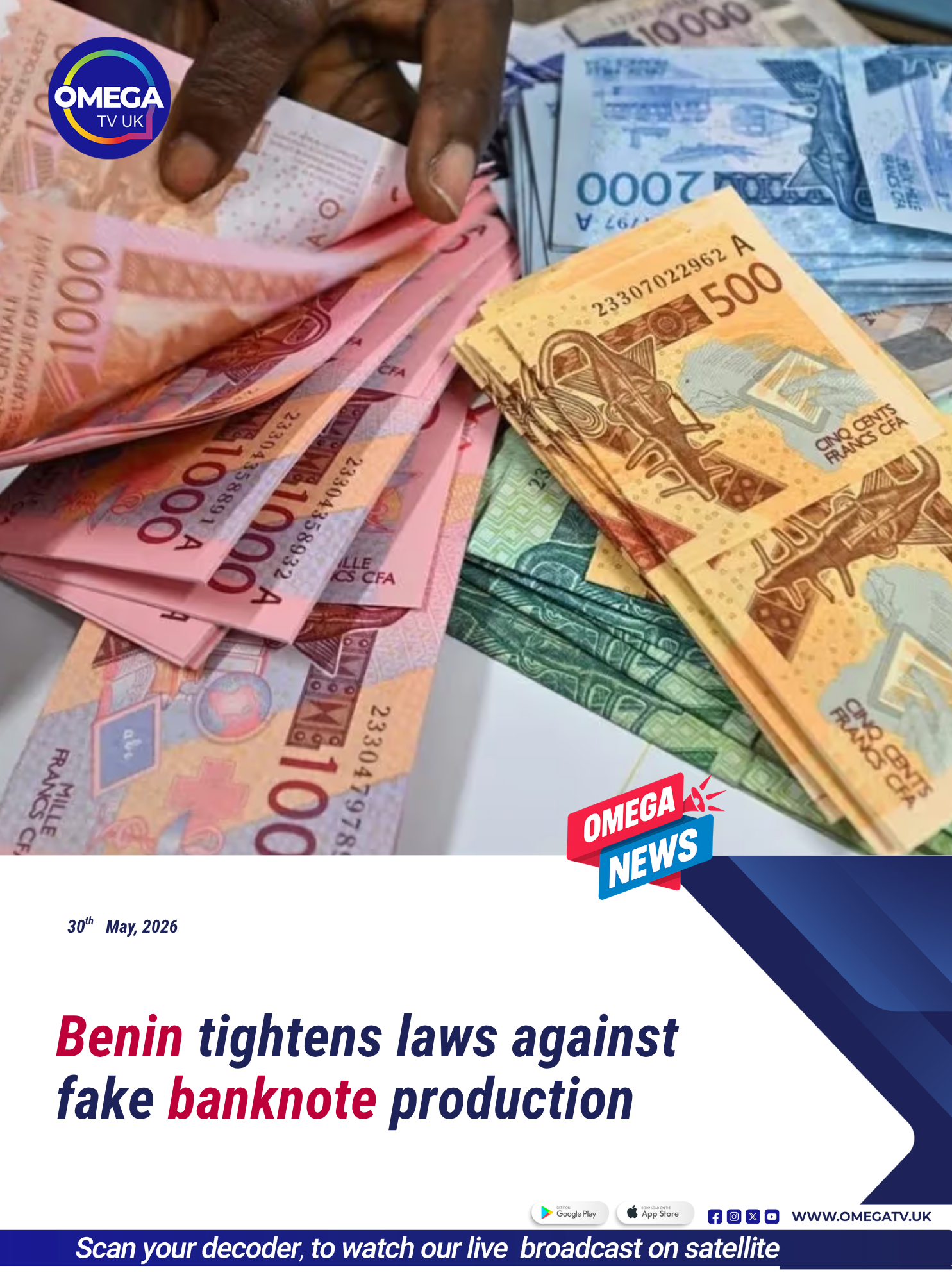
Benin has strengthened its legal framework against counterfeit currency after lawmakers unanimously approved a new reform aimed at tackling the production and circulation of fake banknotes while protecting the use of legal tender across the country.

The legislation introduces tougher penalties for individuals involved in counterfeiting activities and targets traders or members of the public who refuse to accept valid banknotes and coins issued by the Central Bank of West African States.
Authorities say the reform is designed to improve confidence in the financial system, ensure smoother daily transactions and align Benin’s laws with regional monetary regulations.
Under the new law, people found guilty of counterfeiting or falsifying banknotes and coins could face prison sentences ranging from 10 to 20 years. Offenders may also be fined up to ten times the value of the counterfeit currency seized, with a minimum penalty of 20 million CFA francs (about $35,550).
The legislation also increases penalties for anyone involved in transporting, possessing, importing or knowingly distributing counterfeit currency. Those convicted could face prison terms of between five and seven years.
In addition to targeting counterfeiters, the law addresses the refusal of legal tender. Traders and individuals who reject valid notes and coins, including slightly damaged currency that remains officially recognised, could face fines and possible prison sentences.
Authorities have expressed concern that the refusal to accept certain banknotes has contributed to delays in commercial transactions and created inconvenience for consumers. The government believes stricter enforcement will help ensure that all valid currency remains accepted throughout the economy.
Speaking before parliament, the chairman of the Finance Committee said the legislation was introduced to modernise existing sanctions and respond to evolving forms of financial crime. He added that the reforms bring Benin’s legal framework into line with standards established by the West African Economic and Monetary Union and regional central banking guidelines.
The CFA franc remains the common currency used by several West African countries within the monetary union. Officials hope the tougher measures will strengthen trust in the currency, reduce the circulation of counterfeit notes and improve the efficiency of financial transactions across Benin.
The adoption of the law reflects growing efforts by governments across the region to combat financial crime, protect consumers and safeguard confidence in the banking and monetary system.