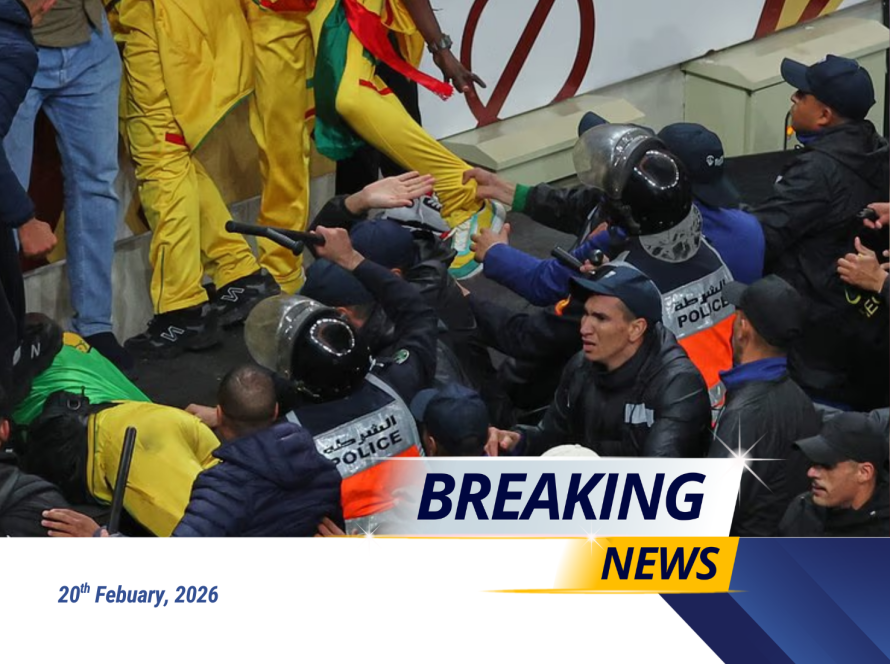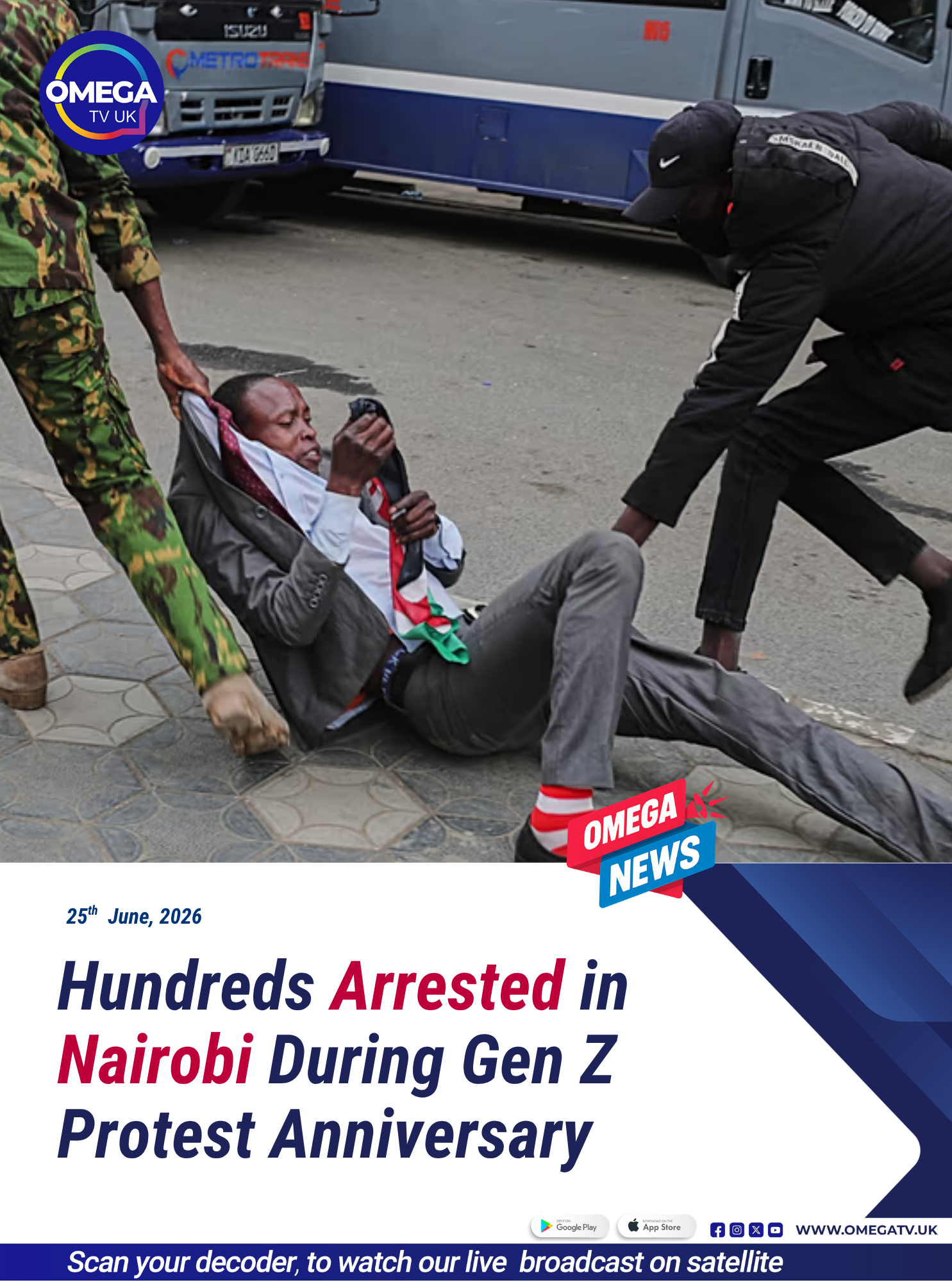
Hundreds of people have been arrested in Kenya’s capital Nairobi as police moved to disperse demonstrations marking the second anniversary of the deadly 2024 Gen Z anti-government protests.

Authorities confirmed that at least 355 people were detained across Nairobi and other towns after families of victims and activists marched toward Parliament demanding justice and compensation for those killed during the unrest.
The anniversary protests centred on demands for accountability over the 2024 demonstrations, when at least 60 people were killed after police opened fire outside Parliament during nationwide unrest triggered by proposed tax increases. That year’s protests saw thousands of young Kenyans storm the parliamentary precinct in opposition to a controversial finance bill.
On Thursday, security forces deployed heavily across Nairobi, setting up roadblocks on major highways and restricting access to the city centre. Parliament was placed under tight security, with barricades erected around the building and several businesses shutting down amid fears of escalation.
Interior Minister Kipchumba Murkomen described those arrested as “criminals,” saying the security operation was necessary to protect businesses and prevent chaos. However, journalists and witnesses reported that many of those detained appeared to be ordinary protesters, including grieving families and supporters of the victims.
Police also used tear gas to disperse crowds outside the central police station when demonstrators attempted to submit a petition calling for transparency in the government’s compensation programme.
Opposition leaders joined the marches, supporting calls for accountability and greater openness in the handling of the $15 million compensation fund promised by the government to victims’ families.
President William Ruto had previously stated that the protests would be allowed, but warned against attempts to “shut down the country,” saying security forces would ensure the protection of workers, schools and public order.
The 2024 protests remain one of the most violent episodes in recent Kenyan political history. During the unrest on June 25, 2024, police opened fire outside Parliament, killing dozens after demonstrators overran parts of the legislative complex while opposing tax hikes linked to rising living costs.
This year’s commemorations were led by families of victims alongside prominent opposition figures, including former Vice President Kalonzo Musyoka, former Justice Minister Martha Karua, and former Chief Justice David Maraga, who marched to Parliament and laid wreaths near barbed-wire barricades.
Many families say they are still waiting for justice and fair compensation. Edith Wanjiku, whose 19-year-old son Ibrahim Kamau was killed during the 2024 protests, said her family has yet to receive any payment despite submitting the required documentation.
Another parent, Gillian Munyao, whose son Rex Masai was also killed, said compensation alone is not enough and called for criminal accountability, insisting that those responsible for the deaths must be prosecuted.
Officials overseeing the compensation process, led by panel chair Makau Mutua, say the verification and payment process is ongoing and that all legitimate claims will eventually be honoured.
So far, only a small number of families have reportedly received compensation, raising tensions over delays and the criteria being used to determine eligibility.
Three police officers have already been charged in connection with deaths during the 2024 crackdown, but activists say broader accountability is still needed.
As Kenya marks two years since the deadly protests, tensions remain high, with unresolved grievances continuing to fuel public anger and renewed calls for justice.