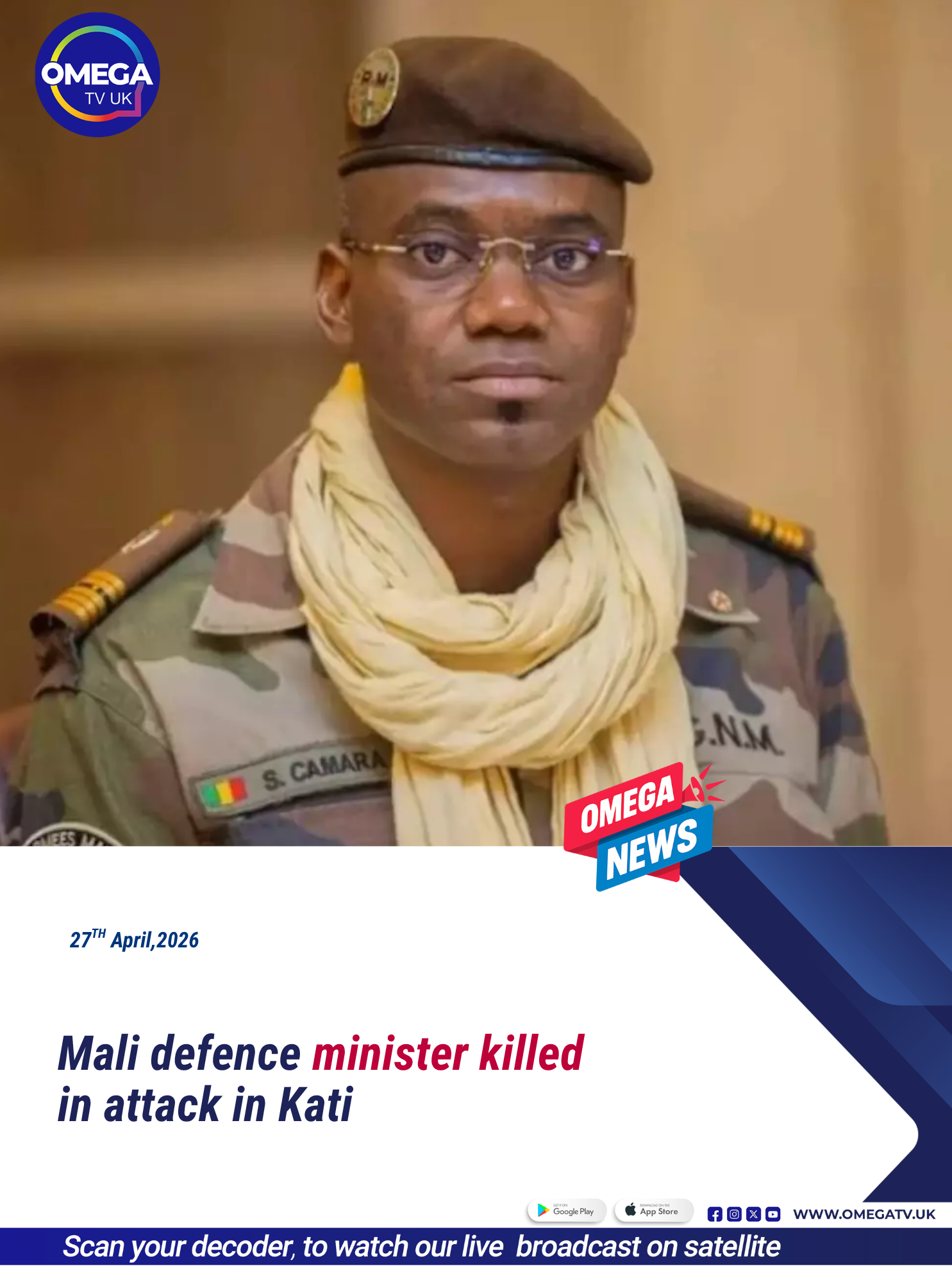
Malian authorities have confirmed the death of Defence Minister Gen. Sadio Camara following a wave of coordinated attacks carried out by jihadist fighters and separatist rebels across the country.

The attacks, described as among the most significant in recent years, targeted multiple locations including the capital, Bamako, and key northern regions. According to the government, Camara was wounded during an exchange of fire at his residence, which had been struck by a suicide car bomber and armed assailants. He later died from his injuries in hospital.
Officials say at least 16 people were injured in the assaults, though a full death toll has not yet been released. Both civilians and military personnel were among those wounded.
The violence marks a notable escalation, with the al-Qaeda-linked group Jama’at Nusrat al-Islam wal-Muslimin (JNIM) reportedly coordinating with the Tuareg-led Azawad Liberation Front (FLA) for the first time. The joint operation targeted military bases and strategic towns, including Kidal, which separatist forces now claim to control.
Malian military leadership confirmed that troops have withdrawn from Kidal and repositioned to nearby areas. The city had previously been recaptured by government forces and Russian-backed units in 2023, making its loss a symbolic setback for the ruling junta.
Following the attacks, authorities imposed a three-day overnight curfew in Bamako as security forces continue operations and assess the situation.
Regional leaders, including the Economic Community of West African States (ECOWAS), have condemned the attacks and called for a coordinated response to rising instability across the Sahel.
Mali has faced years of conflict involving Islamist insurgencies linked to al-Qaeda and Islamic State, alongside long-standing separatist movements in the north. Despite shifting alliances and increased military support from Russia, the security situation continues to deteriorate.