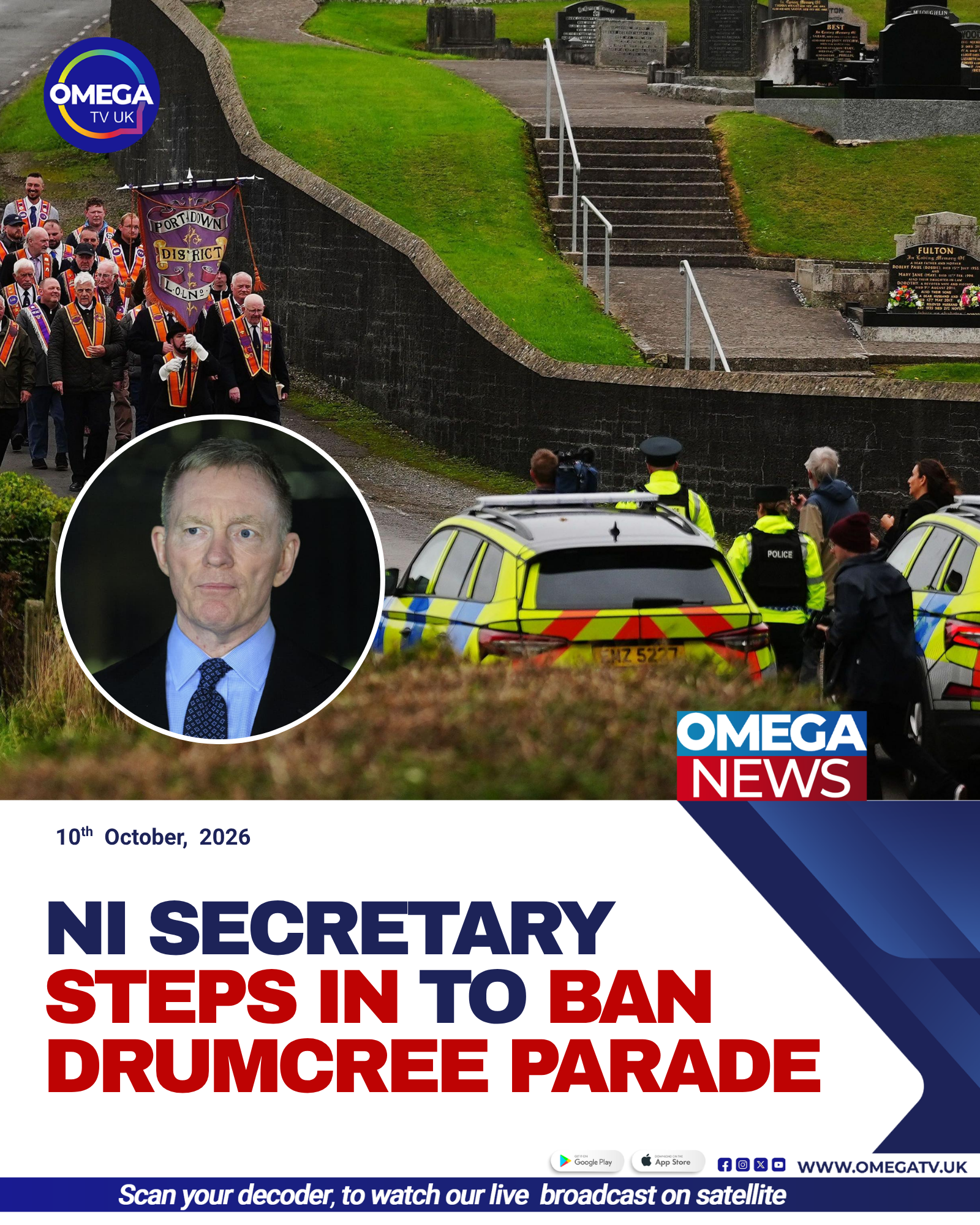
UK Secretary Bans Controversial Drumcree Parade
Northern Ireland Secretary Sir Chris Bryant has banned the contentious Orange Order parade at Drumcree after police warned that allowing the procession to proceed could trigger serious violence and threaten public safety.

Police warn of serious security risks
The decision follows nearly two weeks of tensions between Orangemen and nationalist residents along Garvaghy Road in Portadown. The dispute intensified after the Parades Commission initially permitted the march to take place on 27 September under restrictions. Chief Constable Jon Boutcher advised Bryant that facilitating the procession would require a major public order operation, carrying an unacceptable risk of serious injury, disorder and wider unrest across Northern Ireland.
Government overturns parade decision
Bryant announced the ban on Friday after reviewing the police assessment and consulting the Parades Commission. He said the circumstances surrounding the original decision had changed considerably, meaning the procession could no longer proceed as previously authorised. Under Northern Ireland legislation, the secretary of state can intervene in a parade determination, particularly when police assessments raise concerns about public safety. Boutcher said all lawful and proportionate options for facilitating the march had been exhausted. He warned that forcing it through could have severe long-term consequences for confidence in policing, the Northern Ireland Executive and the peace process.
Nationalist residents welcome the ban
The decision was met with relief and jubilant scenes among residents gathered near Garvaghy Road. Breandán Mac Cionnaith of the Garvaghy Road Residents Coalition welcomed the outcome but said it was accompanied by sadness over the sacrifices made during the long-running dispute. Sinn Féin President Mary Lou McDonald also welcomed the announcement, saying the decision had lifted a sense of threat from the community. The Social Democratic and Labour Party similarly supported the intervention, arguing that the parade should not have been authorised.
Unionist leaders condemn the decision
The ban has prompted strong criticism from unionist representatives and Orange Order supporters. The Portadown District accused the chief constable of abandoning his policing responsibilities and claimed the secretary of state had given in to republican pressure. It also acknowledged anger within its community while urging people to remain calm. Democratic Unionist Party leader Gavin Robinson argued that republican mobilisation and threats of potential violence had prevented police from safely facilitating the march. Traditional Unionist Voice leader Jim Allister described the decision as a surrender to mob rule. Ulster Unionist Party leader Jon Burrows said a legal right had been defeated by an unlawful blockade, while loyalist activist Jamie Bryson said emergency legal proceedings were being prepared to challenge the decision. Alliance deputy leader Eóin Tennyson said the intervention could create an opportunity to move the dispute away from the streets and towards a political process. Irish Prime Minister Micheál Martin said the announcement would bring significant relief to Garvaghy Road residents.
What is the Drumcree dispute?
The confrontation centres on the Orange Order’s attempts to march from Drumcree Church along Garvaghy Road, an area populated largely by nationalists who oppose the procession. The dispute became one of Northern Ireland’s most serious parading controversies during the 1990s, when confrontations between Orangemen, residents and police were accompanied by riots, roadblocks and killings. A particularly tense stand-off occurred in July 1995 after police prevented the march from proceeding. Similar confrontations followed over the next three years, prompting the establishment of the Parades Commission in 1998 to regulate contentious marches and reduce tensions.
Protests trigger costly policing operation
After the latest decision initially allowed the parade to proceed with restrictions, residents challenged the ruling through legal channels. On 27 September, up to 1,000 people, including First Minister Michelle O’Neill, blocked Garvaghy Road and prevented the Orangemen from completing the route. Residents maintained a continued presence in the area, while Orange Order members repeatedly approached police lines before being turned back. The chief constable warned that forcing the procession through could have catastrophic consequences. The policing operation had cost approximately £3 million by the previous Thursday. Police have also launched an investigation into alleged offences connected to the protests and begun inviting people suspected of involvement to interviews. The Court of Appeal is considering a challenge brought by residents against the Parades Commission’s earlier ruling. The latest ban has halted the procession for now, although legal challenges and political disagreements could continue.