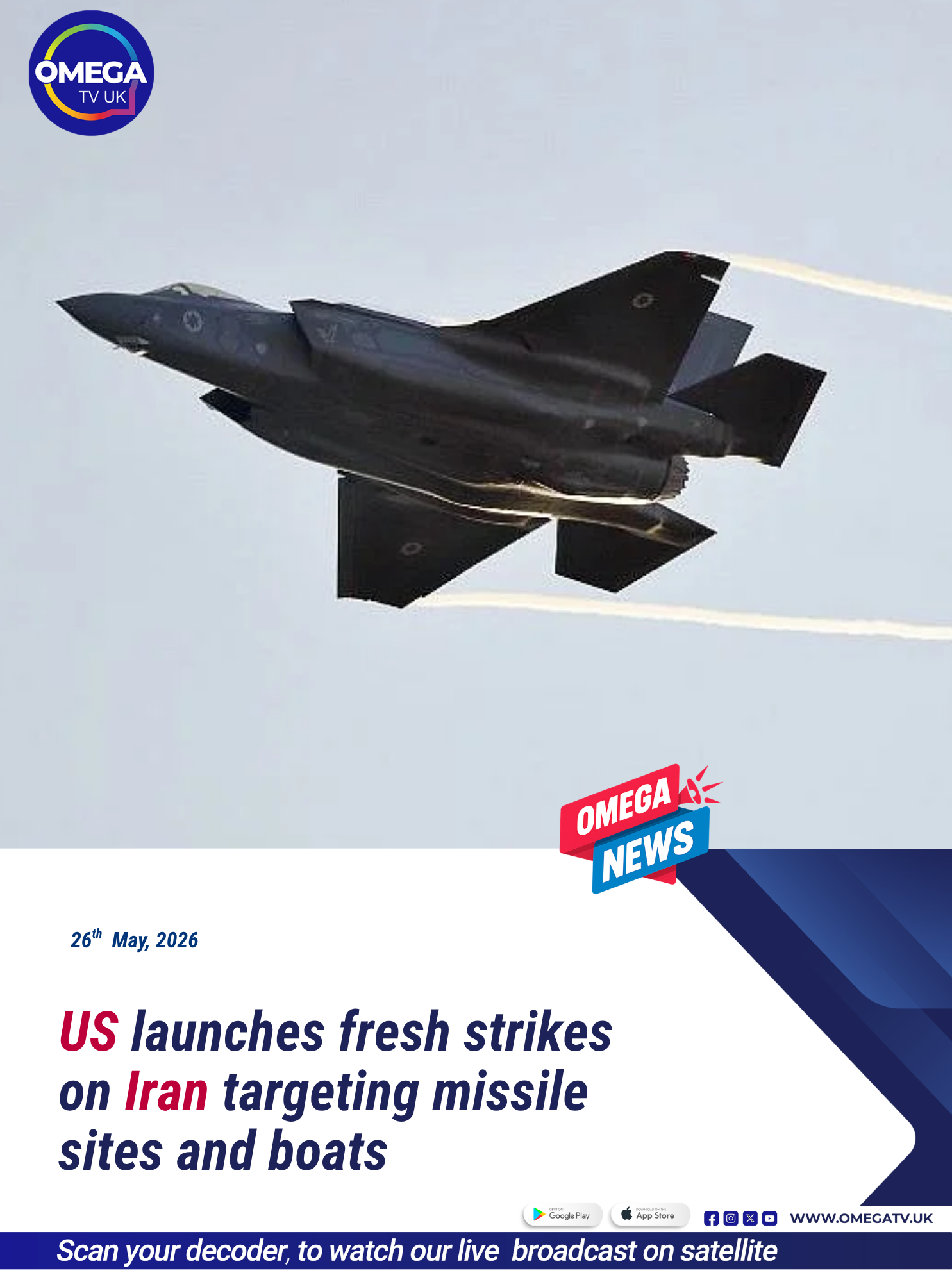
The United States has launched a new wave of strikes targeting Iranian missile sites and naval boats in southern Iran, escalating tensions despite ongoing ceasefire negotiations between Washington and Tehran.

According to US Central Command, the attacks focused on missile installations and boats allegedly attempting to deploy naval mines near the Strait of Hormuz. American officials described the operation as a “self-defense” measure aimed at protecting US forces and maintaining security in the strategic Gulf waterway.
Central Command spokesperson Captain Tim Hawkins said the military would continue to defend American troops while exercising restraint during the current ceasefire period.
The strikes reportedly hit areas near Bandar Abbas, a major Iranian port city and naval base located along the Strait of Hormuz — a critical shipping route through which nearly 20% of the world’s oil and liquefied natural gas passes.
Iranian state media confirmed explosions were heard in Bandar Abbas, though Tehran has not yet officially responded to the latest US attacks.
The escalation comes as negotiations continue over a possible agreement involving a 60-day ceasefire extension, reopening of the Strait of Hormuz and further talks surrounding Iran’s nuclear programme.
US Secretary of State Marco Rubio said discussions were still ongoing and a deal remained possible, despite the military action. Speaking during a visit to India, Rubio said there was “a lot of talking back and forth” over the wording of a potential agreement.
President Donald Trump has signaled mixed messaging in recent days — first suggesting a deal was close before later instructing negotiators “not to rush” into any agreement.
Iranian foreign ministry spokesperson Esmail Baqai acknowledged progress in negotiations but insisted no final deal was imminent.
The conflict between the US, Israel and Iran intensified after coordinated strikes on Iran began on February 28, triggering retaliatory attacks across the Middle East and major disruptions to global energy markets.
Oil prices initially surged after Iran effectively restricted movement through the Strait of Hormuz, though markets have since shown signs of stabilizing amid hopes for a diplomatic breakthrough.
Reports also suggest negotiations remain complicated by disputes over sanctions relief, the release of frozen Iranian assets and demands surrounding Iran’s enriched uranium stockpile.
US intelligence sources claim Iran’s Supreme Leader Mojtaba Khamenei remains in hiding following earlier Israeli strikes, further complicating diplomatic communication efforts.
While both sides continue observing a fragile ceasefire, the latest strikes underscore how volatile the situation remains across the region.