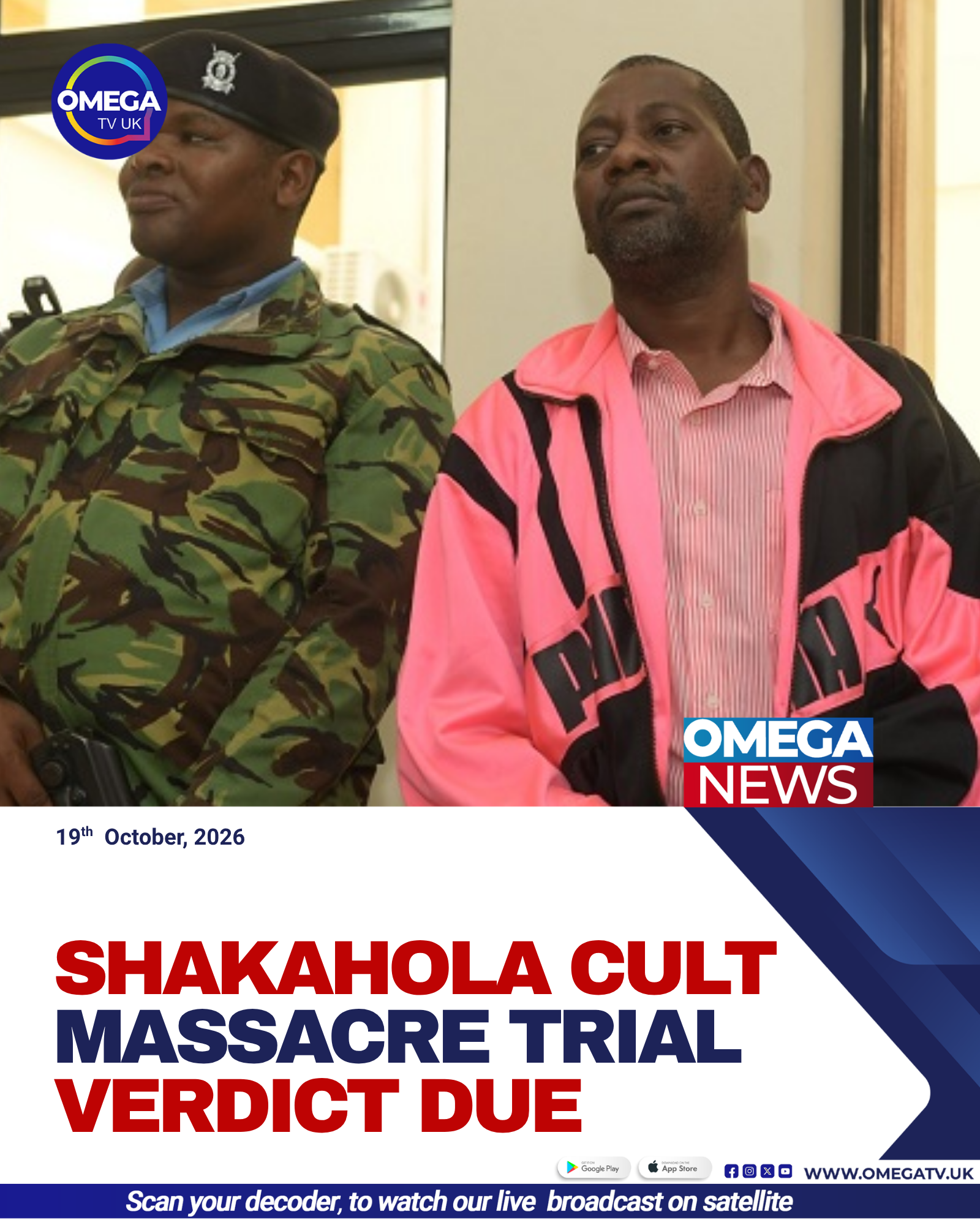
Shakahola Cult Trial Verdict Due
A Kenyan court is expected to deliver its verdict Monday in the trial of self-proclaimed preacher Paul Mackenzie and his associates, who are accused of murdering 191 people, most of them children, in one of the country’s deadliest mass-casualty cases.

Hundreds of bodies found in Shakahola Forest
The case stems from the discovery in 2023 of hundreds of bodies buried in shallow graves in Shakahola Forest, near the coastal town of Malindi. The discovery exposed the scale of a tragedy that shocked Kenya and raised serious questions about the activities of religious groups operating in the country.
More than 400 bodies have since been recovered from the surrounding area. Some victims remain unidentified, leaving families searching for answers about relatives who disappeared before the discoveries.
Prosecutors accuse preacher of encouraging starvation
Prosecutors allege that Mackenzie encouraged his followers to starve themselves to death in the belief that doing so would allow them to meet Jesus. According to the prosecution, children were allegedly targeted first as the group followed the preacher’s teachings.
The allegations have placed Mackenzie at the centre of one of Kenya’s most closely watched criminal cases. Investigators have sought to establish the circumstances surrounding the deaths and the alleged roles played by Mackenzie and his associates.
The prosecution’s case focuses on events that took place between 2021 and 2023, a period during which followers were allegedly encouraged to undertake extreme fasting practices.
Defendants deny the charges
Mackenzie and his associates have pleaded not guilty to the murder charges. Their defence teams dispute the prosecution’s case and argue that the evidence presented in court does not sufficiently establish their clients’ criminal responsibility.
Mackenzie’s lawyers have argued that the case relies heavily on circumstantial evidence and forensic findings they consider inconclusive. The court must assess the evidence presented by both sides before determining whether the accused are guilty.
The expected verdict will mark a significant stage in proceedings that have attracted widespread attention because of the number of victims and the allegations surrounding the preacher’s influence over his followers.
More than 120 witnesses testify
During the trial, the court heard testimony from more than 120 witnesses about events linked to the alleged starvation practices between 2021 and 2023.
Their accounts formed part of the evidence considered by the prosecution as it sought to establish what happened in Shakahola Forest and the alleged involvement of Mackenzie and his associates.
The case has also highlighted the difficulties involved in investigating mass deaths, particularly when victims are buried in remote areas and some remain unidentified.
Tragedy sparks calls for religious oversight
The Shakahola deaths triggered public outrage across Kenya and renewed calls for tighter oversight of religious organisations. The case prompted broader debate about how authorities can protect vulnerable people while addressing allegations of harmful practices carried out in the name of religion.
The scale of the discoveries has intensified scrutiny of religious leaders who exercise significant influence over their followers, particularly where extreme teachings may put lives at risk.
However, the criminal responsibility of the defendants remains a matter for the court to determine based on the evidence and applicable law.
Separate charges remain against Mackenzie
Mackenzie also faces separate charges of manslaughter and terrorism, which he denies. Those proceedings are distinct from the murder trial, and the allegations should not be treated as established facts unless proven in court.
The verdict is being closely watched by victims’ families seeking justice nearly three years after the discovery of the bodies. For relatives, the ruling could represent an important step towards accountability and a clearer understanding of the events that led to the deaths.