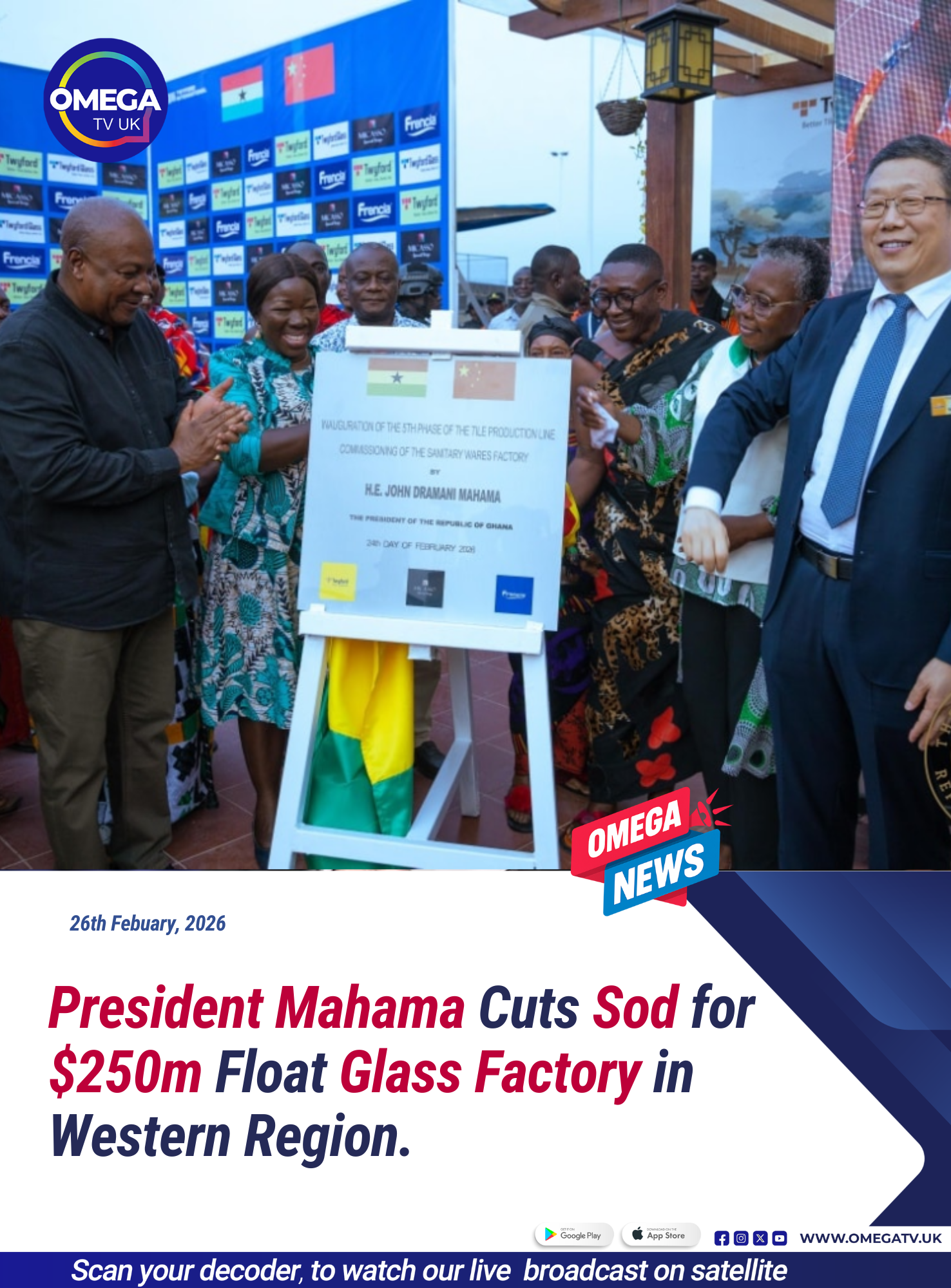
President John Dramani Mahama has cut the sod for the construction of a $250 million float glass manufacturing facility in Shama, in Ghana’s Western Region, marking one of the largest industrial projects of its kind in Africa.

Speaking at the groundbreaking ceremony, President Mahama said the project demonstrates the growing strength of Ghana’s industrial sector. He emphasized that strategic investments in local manufacturing are helping reduce dependence on imports, create jobs, and strengthen domestic revenue mobilization.
The new plant is expected to produce high-quality float glass for use in construction, automotive, and industrial applications. Officials highlight that the facility will position Ghana as a leading supplier of glass in the region, while supporting broader efforts to industrialize the economy and boost export potential.
Government representatives noted that local production of essential materials like glass can stabilize prices, conserve foreign exchange, and improve the country’s trade balance. By manufacturing domestically, Ghana aims to retain more value within the economy and reduce vulnerability to global supply chain disruptions.
The construction of the Shama plant is also projected to create significant employment opportunities, both during the building phase and later during operations. Local communities in the Western Region are expected to benefit from new jobs, skill development programs, and infrastructure improvements linked to the facility.
President Mahama said the project reflects the administration’s commitment to long-term economic growth through industrialization. He also stressed the importance of public-private partnerships in achieving these goals, encouraging local and foreign investors to participate in Ghana’s expanding industrial landscape.
Economic analysts say that large-scale manufacturing projects like the Shama float glass facility are essential for diversifying Ghana’s economy, which has traditionally relied heavily on raw materials and imports. By investing in high-value industries, the country can strengthen its industrial base and create more sustainable economic growth.
The plant’s development aligns with Ghana’s broader economic strategy, which prioritizes industrialization, job creation, and improved fiscal performance. Observers note that projects of this scale not only contribute to the national economy but also enhance the country’s reputation as a regional hub for manufacturing.
The $250 million float glass facility in Shama represents a milestone for Ghana’s industrial ambitions and signals a shift toward self-sufficiency, export-led growth, and value addition in key sectors of the economy.