Thousands march in Kinshasa backing US sanctions against Joseph Kabila
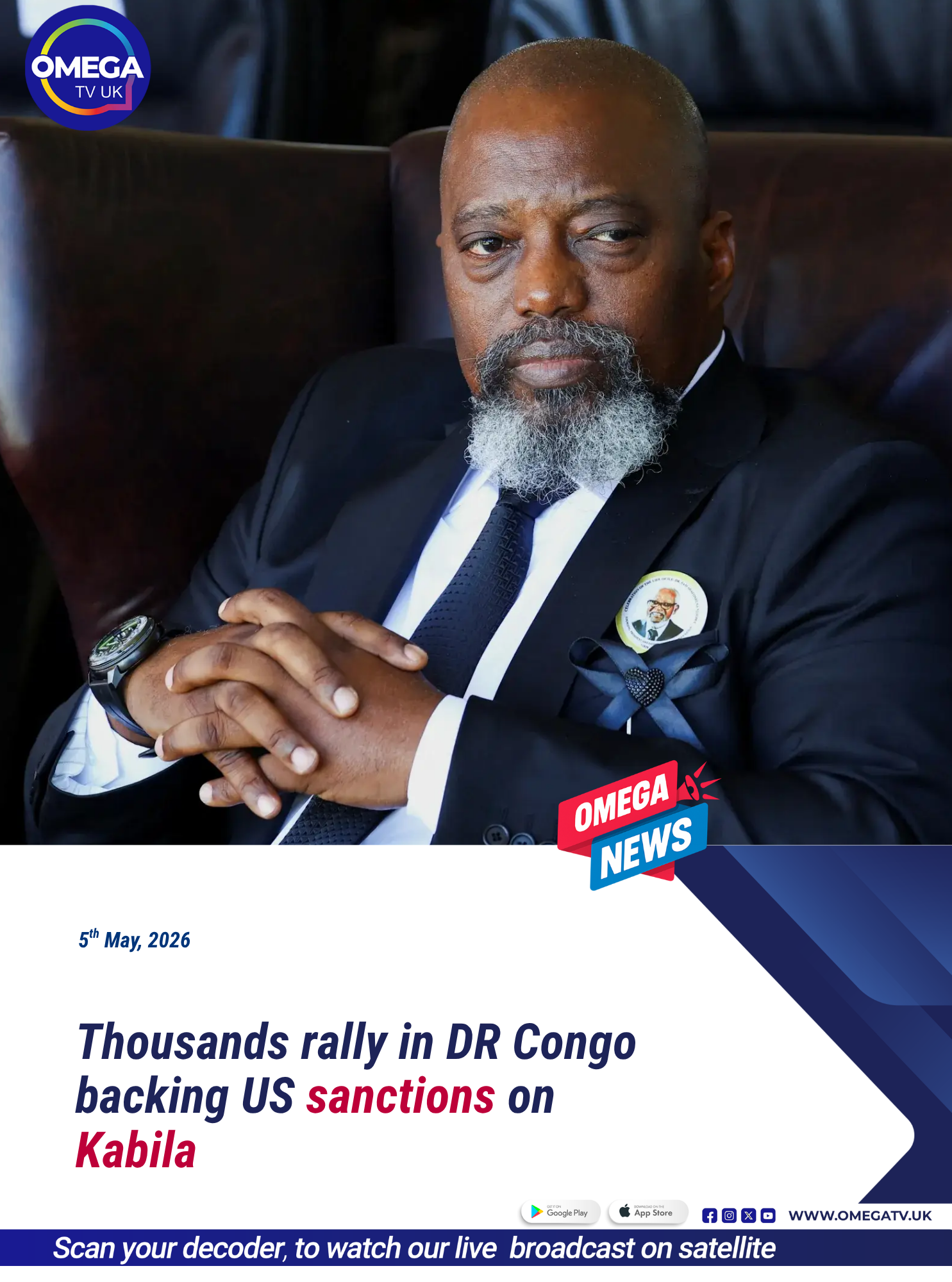
Thousands of pro-government demonstrators marched through Kinshasa on Monday in support of fresh United States sanctions imposed on former DR Congo president Joseph Kabila.

The rally comes days after Washington announced sanctions against Kabila, accusing him of backing the Rwanda-supported M23 rebel group and its political-military affiliate, the Congo River Alliance (AFC), both central players in the ongoing conflict in eastern Democratic Republic of Congo.
According to the US Treasury Department, Kabila allegedly provided financial and technological support to the rebel alliance with the intention of destabilising President Félix Tshisekedi’s government.
The accusations have intensified political tensions in the country, where the conflict in the mineral-rich east has already triggered a worsening humanitarian crisis.
Thousands of civilians have reportedly been killed, while hundreds of thousands more have been displaced as violence continues across the region.
At Monday’s demonstration, protesters praised the US sanctions and called for stronger action against the former president.
One marcher, identified as Julien and affiliated with a party in the ruling coalition, openly supported Washington’s move.
“Kabila has committed many massacres, and he won’t let Fatshi get on with his work in peace,” he said, using President Tshisekedi’s popular nickname.
He added: “Now arrest Kabila so that he leaves us in peace. We want nothing more to do with him.”
Another protester, Ouragan Mwanza, an activist from the ruling UDPS party, described the sanctions as an important step toward justice.
He accused Kabila and his allies of destroying national institutions for personal gain.
“They have destroyed this country, reduced it to ruins, and dismantled state-owned companies for the benefit of their own family-run businesses,” Mwanza said.
Kabila’s legal troubles have continued to mount.
Last year, a Congolese military court sentenced the former leader to death in absentia on charges of treason, accusing him of complicity with the M23/AFC alliance.
The government in Kinshasa has since welcomed the latest US sanctions, calling them a positive move in the broader fight against impunity.
In a statement released on Friday, officials said the measures represent “an important step” in holding powerful figures accountable for destabilising the country.
Kabila, however, has strongly rejected the allegations.
The former president described the sanctions as “profoundly unjustified, politically motivated, and based on unsubstantiated accusations.”
Despite ongoing diplomatic efforts, fighting in eastern Congo remains unresolved.
A framework peace agreement was signed between the Congolese government and M23 late last year, but the deal has struggled to produce meaningful stability.
The agreement was heavily promoted by US President Donald Trump, who framed it as a major diplomatic achievement.
Part of the deal reportedly included provisions granting US industries privileged access to eastern Congo’s vast mineral resources, including cobalt, copper and coltan.
Critics have questioned whether the agreement prioritised economic interests over long-term peace.
Meanwhile, the M23 rebels continue to maintain control over significant areas in eastern Congo.
The group made major territorial gains in recent years, including the capture of the strategic city of Goma in January 2025.
The expansion of rebel influence has deepened insecurity and worsened displacement across the region.
The US has also sanctioned neighbouring Rwanda over allegations of support for M23, although Kigali has repeatedly denied direct involvement.
As tensions continue between Kinshasa, Kigali and armed groups in the east, many Congolese citizens remain hopeful that international pressure could help shift the balance.
For now, Monday’s march in Kinshasa highlights growing public support for tougher action against political figures accused of fuelling one of Africa’s most devastating ongoing conflicts.