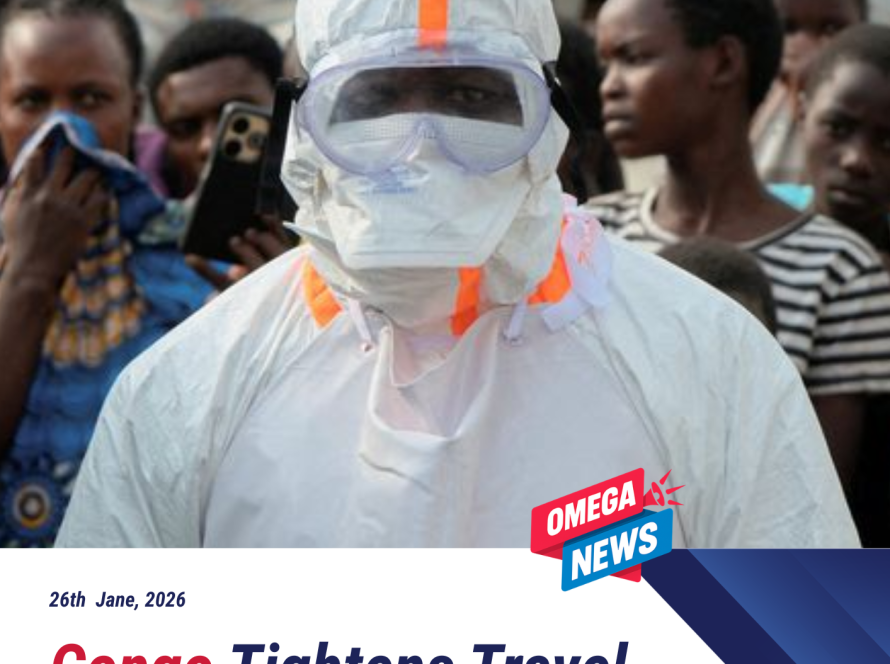
A Kenyan High Court has temporarily suspended plans for the United States to establish an Ebola quarantine facility in Kenya, following a legal challenge that raised constitutional and public health concerns.

In orders issued late Thursday, High Court Judge Patricia Nyaundi directed that Kenya must not admit any individuals exposed to or infected with Ebola under the proposed arrangement with the US until the matter is fully heard and determined in court.
The ruling came shortly after the White House confirmed that the United States intended to create a quarantine facility in Kenya for American citizens who may have been exposed to the Ebola virus. According to the proposal, US citizens who develop Ebola symptoms while abroad would not be immediately returned to the United States but could instead be transferred to a third country for treatment and isolation.
The announcement sparked immediate backlash in Kenya, with rights organisations and sections of the public questioning both the legality and transparency of the agreement.
Kenyan rights organisation Katiba Institute filed an urgent court application on Thursday challenging the plan. The group argued that the Kenyan government had failed to involve the public or Parliament before moving forward with such a sensitive international arrangement.
In court documents, the institute said the “secretive” and unilateral establishment of an Ebola quarantine facility raised serious constitutional issues linked to the rights to life, health, fair administrative action, public participation and parliamentary oversight.
The organisation also questioned whether Kenya had adequate safeguards in place to handle a potential Ebola-related emergency connected to foreign nationals.
Judge Nyaundi’s interim orders effectively halt any implementation of the agreement until the legal dispute is resolved. She scheduled the next hearing for June 2, when both sides are expected to present further arguments.
The case has quickly become a major topic of debate in Kenya, with critics expressing fears that the country could become a holding ground for infectious disease management on behalf of foreign governments without sufficient public consultation.
Supporters of the legal challenge say the issue goes beyond public health and touches directly on national sovereignty, transparency and accountability in government decision-making.
The Kenyan government has not yet publicly detailed the terms of the reported arrangement with the United States, including where the quarantine facility would be located, how it would operate, or what protections would be in place for local communities.
The White House announcement also raised broader questions about how countries are preparing for future outbreaks of Ebola and other highly infectious diseases. Health experts have repeatedly warned that global cooperation remains essential in responding to epidemic threats, particularly in Africa, where several Ebola outbreaks have occurred in recent years.
The current Ebola outbreak in the Democratic Republic of Congo has already prompted increased international concern. The World Health Organization has urged countries to strengthen surveillance, preparedness and emergency response systems while avoiding unnecessary travel bans and panic.
Kenya has previously dealt with regional health threats linked to outbreaks in neighbouring countries and remains an important transport and medical hub in East Africa. Authorities have often implemented strict monitoring measures at airports and border points during regional outbreaks.
However, the court challenge suggests that many Kenyans want greater transparency and public engagement before the country enters into sensitive health agreements involving foreign governments and potentially dangerous diseases.
The outcome of the case could influence how future international health partnerships are negotiated in Kenya and may also shape public trust in government handling of health security matters.