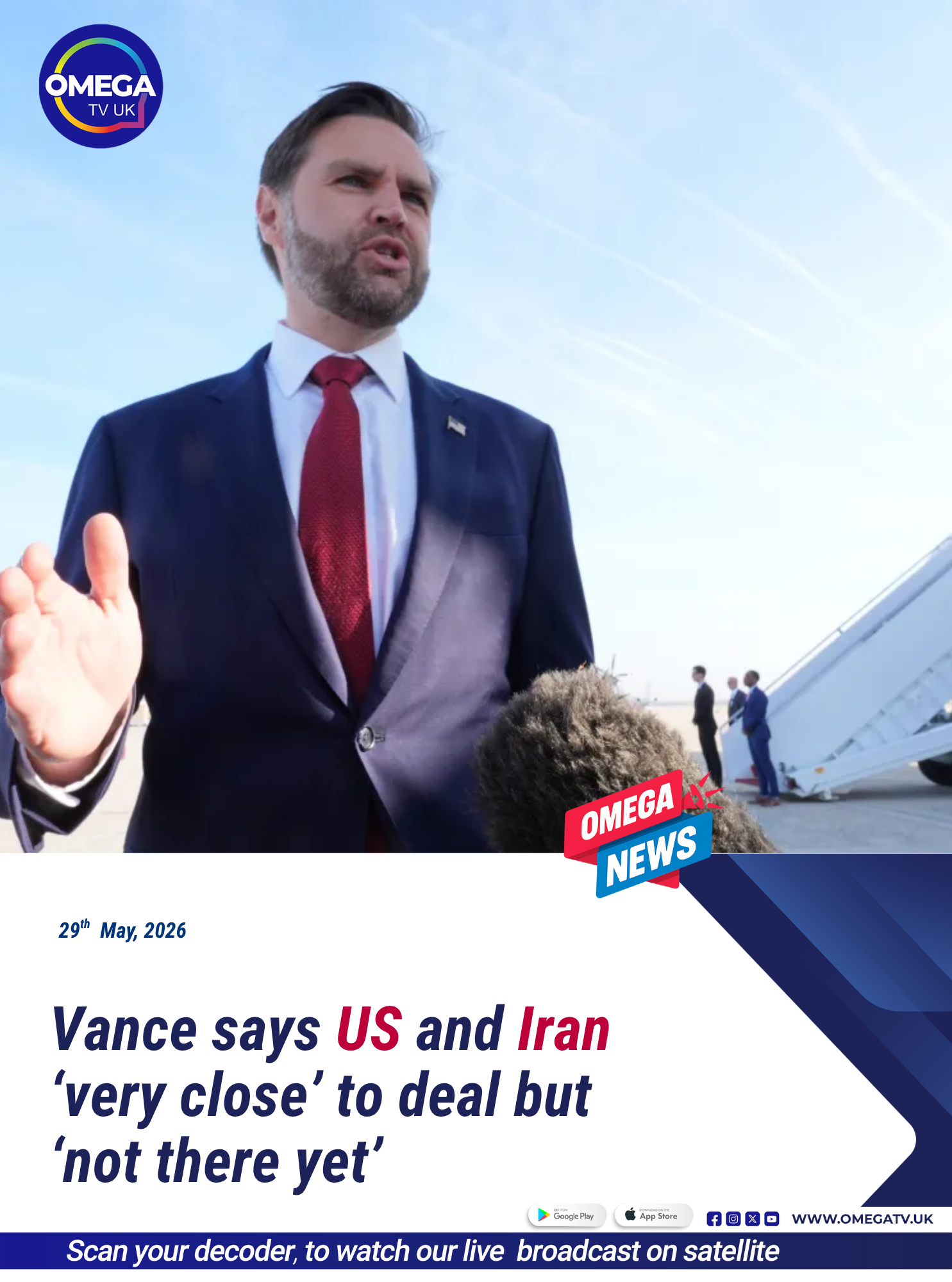
The United States and Iran remain close to a potential agreement to extend their fragile ceasefire and open structured talks on Iran’s nuclear programme, according to US Vice President JD Vance.

Speaking in Washington, Vance said negotiations were progressing but key disagreements still needed to be resolved, including issues around uranium enrichment and sanctions relief. He cautioned that it was still “too early to say when or if” a final deal would be reached.
Earlier reports suggested that US and Iranian officials had agreed in principle on a draft framework described as a memorandum of understanding, pending approval from President Donald Trump and Iran’s leadership. However, both sides have publicly contradicted elements of the reported draft, with the White House dismissing Iranian media claims as inaccurate and Tehran denying any final agreement.
According to officials familiar with the talks, the proposed framework could include a 60-day extension of the ceasefire, along with discussions on Iran’s nuclear programme, sanctions relief, and maritime security in the Strait of Hormuz — a critical global energy shipping route. Reports also suggest possible arrangements for easing restrictions on Iranian oil exports in exchange for nuclear concessions.
Despite the apparent momentum, both Washington and Tehran have emphasised that no formal deal has been finalised. Iranian officials maintain that their nuclear programme is peaceful, while the US continues to demand limits on uranium enrichment and tighter monitoring mechanisms.
The negotiations follow months of regional tensions, intermittent strikes, and diplomatic efforts aimed at preventing further escalation in the Middle East. Analysts say the talks remain highly fragile, with political pressure mounting on both governments to either secure a breakthrough or prepare for renewed confrontation.
The White House has said that while diplomatic progress is possible, military options remain on the table if talks collapse.