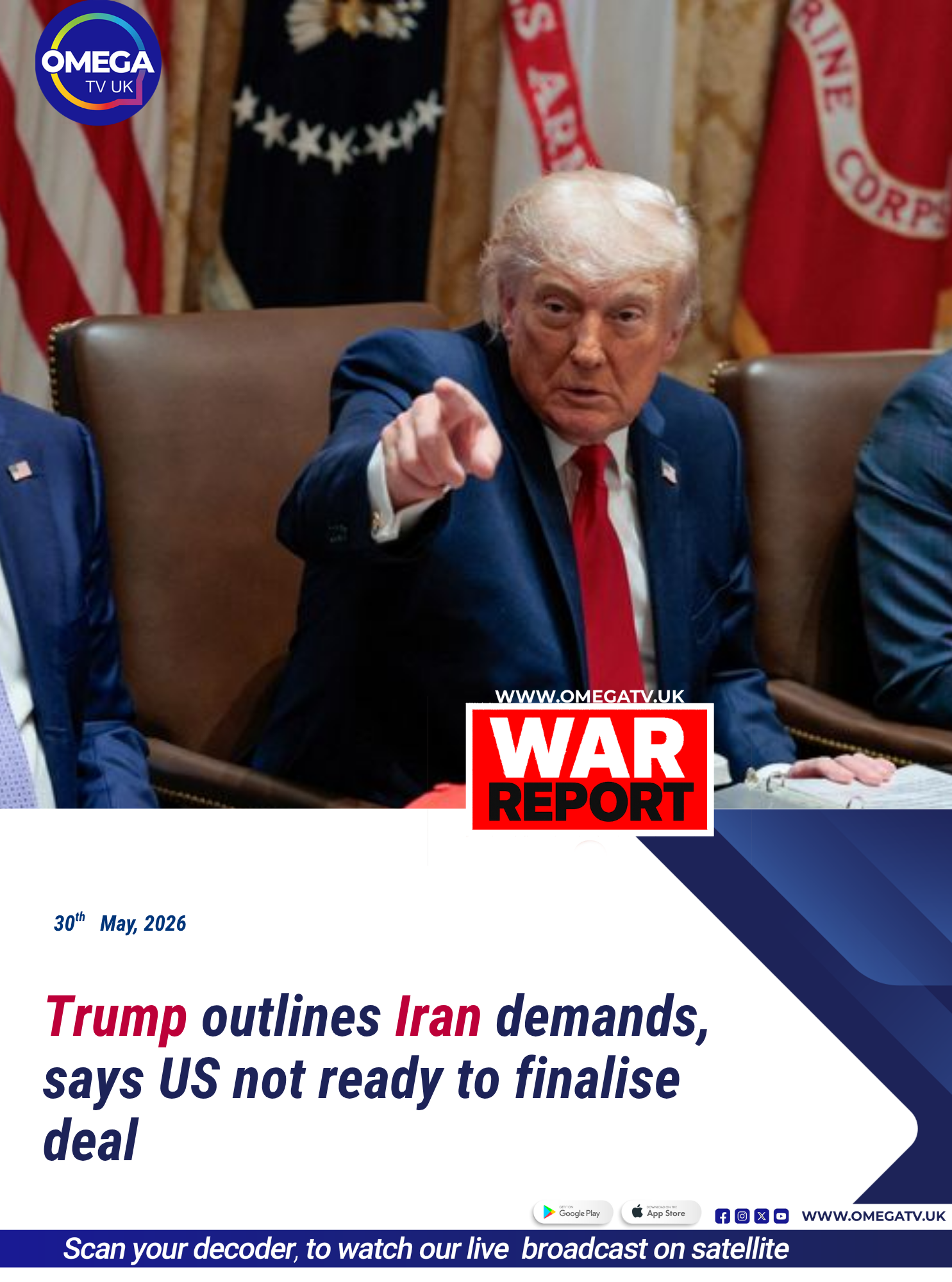
US President Donald Trump has outlined a series of demands for Iran as he met top advisers in Washington to make what he described as a “final determination” on a potential agreement to extend the fragile ceasefire and shape the future of the conflict.

The meeting, held in the White House Situation Room, ended on Friday without a clear decision, leaving uncertainty over whether Washington will move forward with a proposed framework deal with Tehran.
Trump has insisted that any agreement must include strict conditions, including Iran permanently agreeing not to develop nuclear weapons and allowing unrestricted international shipping through the Strait of Hormuz. He also said the waterway must be fully reopened, with all sea mines removed or destroyed.
According to Trump, the United States would also lift its naval blockade on Iranian ports under the terms being discussed, allowing commercial shipping to resume movement through the strategically important strait.
The US president has repeatedly framed the negotiations as a decisive moment, saying Iran must meet his conditions or face continued military pressure. He also stated that Iran’s enriched uranium stockpile would need to be destroyed under international supervision.
The Situation Room meeting brought together senior national security officials to assess whether the emerging framework agreement should be approved. However, officials later confirmed that no final decision was reached, and discussions will continue.
Meanwhile, US Defence Secretary Pete Hegseth told a security summit in Singapore that “any deal will be a good deal,” stressing that the administration remains patient but firm in ensuring Iran does not acquire nuclear weapons.
Hegseth also warned that the US military remains prepared to resume strikes if diplomatic efforts fail, underscoring the continued military pressure surrounding the negotiations.
The developments come after several days of conflicting reports about the status of talks between Washington and Tehran. While US officials have suggested progress toward a memorandum of understanding, Iranian authorities have insisted that no final agreement has been reached.
Iranian representatives have maintained that negotiations remain ongoing and that any resolution must respect their national interests, particularly regarding their nuclear programme, which they insist is peaceful.
Tensions have been further complicated by ongoing accusations of ceasefire violations on both sides, with reports of limited strikes and counterstrikes in recent days.
The Strait of Hormuz remains a central issue in the talks, as it is a critical global energy route through which a significant portion of the world’s oil and gas supply passes. Any disruption to its operation has previously caused sharp fluctuations in global energy prices.
As negotiations continue, both sides appear to remain far apart on key issues, despite public statements suggesting possible progress. For now, the future of the ceasefire and any potential long-term agreement remains uncertain.